A 61-year-old company drilled into Nevada’s hot rock before anyone cared, and now America’s geothermal comeback is attracting billions
Beneath the American West, a massive heat source has been building for thousands of years. It holds enough energy to power entire cities. Yet for decades, the geothermal industry sat completely still. More than. . .
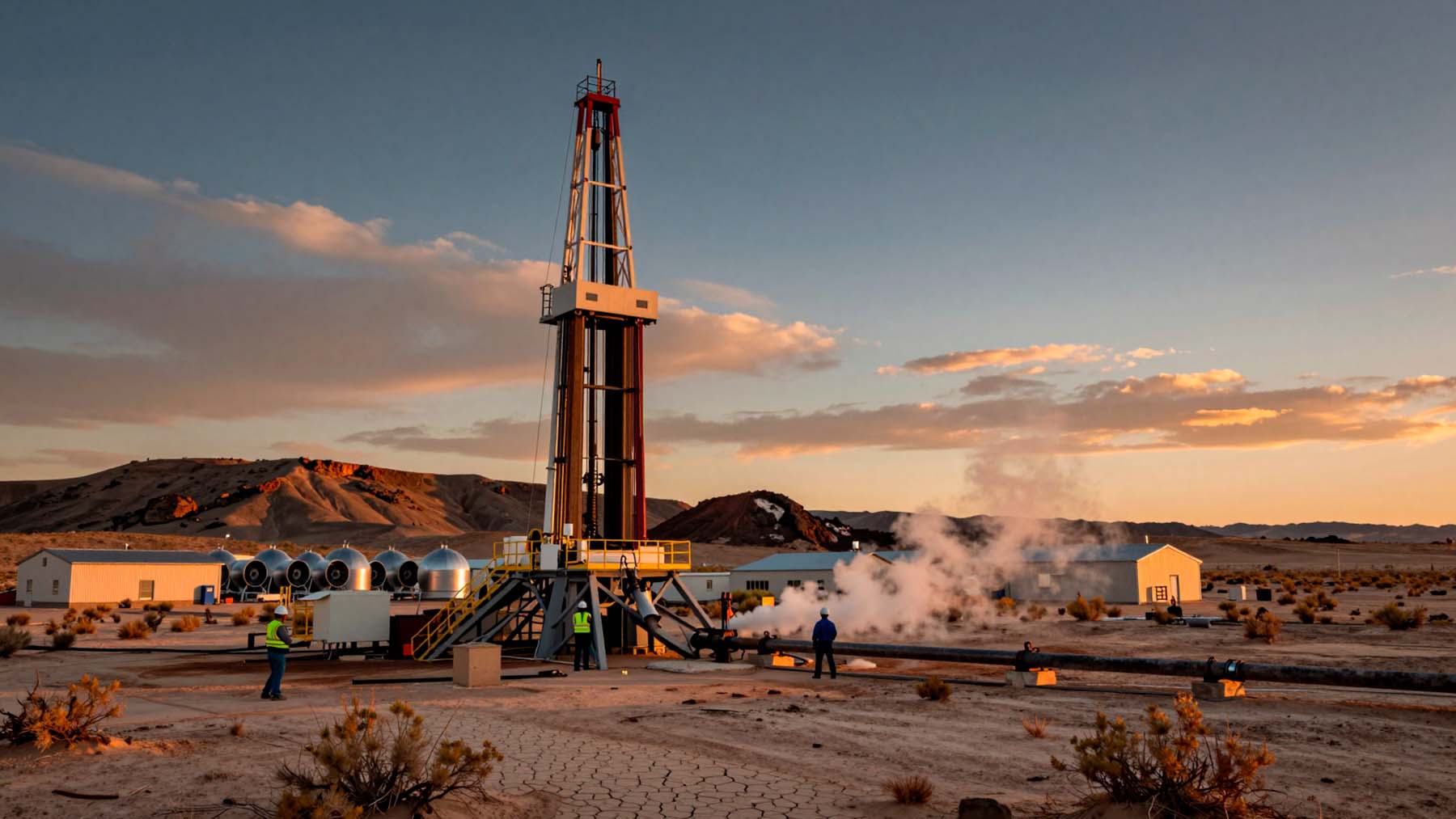
Beneath the American West, a massive heat source has been building for thousands of years. It holds enough energy to power entire cities. Yet for decades, the geothermal industry sat completely still. More than twenty years ago, one forward-thinking company quietly drilled into a dry stretch of land in Nevada. They tried an experiment that almost no one else was attempting. The project drew very little attention back then. Today, it looks like a preview of a clean energy revolution. A slow burn: Why geothermal never took offThe numbers show along story of stagnation. She has a talent for turning complex ideas into sharp, memorable insights that stay with readers long after they’ve finished reading. The U. S. currently has about 3. 9 gigawatts of geothermal capacity spread across roughly 93 operational plants. More than half of these facilities are located in California. Together, they supply just 0. 4% of America’s total electricity. That market share barely budged for decades. Geography explains most of the delay. Traditional geothermal plants rely on natural hydrothermal reservoirs. These are underground pockets of hot water and steam. They usually exist near active tectonic boundaries. That limits where developers can build. You cannot simply place a plant anywhere like a solar farm. Economics made the problem even worse. Exploratory drilling can cost tens of millions of dollars per well. Success is never guaranteed. When national power demand remained flat,taking that financial risk made little sense. Enhanced geothermal systems (EGS) offered a potential solution. Engineers drill deep into hot, dry rock. They pump fluid down to create artificial underground reservoirs. Researchers studied this method for over 50 years. Yet, turning the theory into a profitable power plant proved extremely difficult. What changed: Data centers, higher power prices, and drilling breakthroughsThree major forces collided to trigger the current boom. First, electricity demand started soaring. Tech companies are building massive data centers. States like California, Oregon, and Washington are pushing hard to electrify cars and buildings. Energy developers are suddenlyrushing to find reliable power sources. Second, power prices shot upward. Long-term contracts for on-demand electricity have doubled or tripled since 2021. High prices fundamentally changed the math for risky projects. Third, drilling tech advanced at record speed. A startup called Fervo Energy adapted horizontal drilling tools from the oil and gas sector. Between 2022 and 2024, Fervo cut its drilling times by 70%. It slashed per-foot drilling costs by roughly 50%. Those massive savings unlocked brand-new markets. Fervo later raised $244 million in private funding rounds, proving investors were taking notice. Ormat’s return to its roots—and its bet on what comes nextFew companies watched this transformation with more interest than Ormat Technologies. The 61-year-old firm completed a major DOE-backed enhanced geothermal project in 2013. But as market economics stalled,Ormat stepped back from EGS. The company focused on traditional hydrothermal plants instead. Now, Ormat is jumping back in. The company is partnering with oilfield giant SLB to commercialize advanced geothermal technology. It also teamed up with Houston startup Sage Geosystems. Ormat backed that partnership with a$17 million strategic investment. “We’re going back to where we started the journey, and it feels a bit like closing the loop,” said Daniel Moelk, Ormat’s executive vice president for subsurface, wells, and next-generation geothermal. Ormat recently introduced a 100-MW power generation unit built for extreme temperatures. The company holds leases on roughly 400,000 acres across six states. It also secured federal approvals for its 60-MW Pearl project in Nevada. A new generation of startups pushing the frontierOrmat is not alone in this race. A wave of agile startups is moving fast. Fervo’s 400-MW Cape Station project in Utah is aiming to become a major EGS success story by 2028. That scale represents a massive leap for the sector. Meanwhile,Quaise Energy raised $21 million in 2024to advance superhot geothermal technology near an Oregon volcano. The company uses high-frequency millimeter waves to vaporize hard rock miles underground. Other startups are using cutting-edge software. Zanskar uses artificial intelligence and field data to locate hidden heat sources. It recently identified acommercially viable “blind” geothermal system—a deposit with no visible surface vents. Elsewhere, XGS Energy is testing a novel closed-loop system that circulates fluid through sealed underground pipes. How big could geothermal get, and what still stands in the way?The U. S. Department of Energy projectsgeothermal could reach 90 gigawatts of capacity by 2050. That represents more than twenty times current levels. Reaching that goal requires constant cost reductions and proven commercial scale. Permitting remains a significant hurdle. Over 90% of top U. S. geothermal resources sit on federal land. Getting government permits can take years. Federal agencies are working to streamline approvals, but red tape still slows progress. Enhanced geothermal is finally moving from small tests to commercial power plants. The ultimate success depends on key milestones. Costs must keep falling. Large projects must deliver on their promises. Permitting speed must improve. If those pieces fall into place, America’s long energy search will end right back where that quiet Nevada experiment began decades ago: at the historicDesert Peak site near the Hot Springs Mountains. The heat beneath the Westwas waiting there all along. Author ProfileKelly LippkeStaff WriterKelly is an experienced writer with 15 years of experience exploring the big stories that shape our world, from tech breakthroughs and space exploration to climate, energy, and the fascinating quirks of science. She has a talent for turning complex ideas into sharp, memorable insights that stay with readers long after they’ve finished reading. Kelly LippkeKelly is an experienced writer with 15 years of experience exploring the big stories that shape our world, from tech breakthroughs and space exploration to climate, energy, and the fascinating quirks of science. She has a talent for turning complex ideas into sharp, memorable insights that stay with readers long after they’ve finished reading.