A Fool and His Money? Why Nigel Farage’s by-election gamble could backfire - UK in a changing Europe
Ben Worthy and Laura Richards-Gray make the case that in triggering the by-election in Clacton, Nigel Farage sparked a conflict which he hoped he could control. They argue his gamble has not paid off since he has not been able to do so.
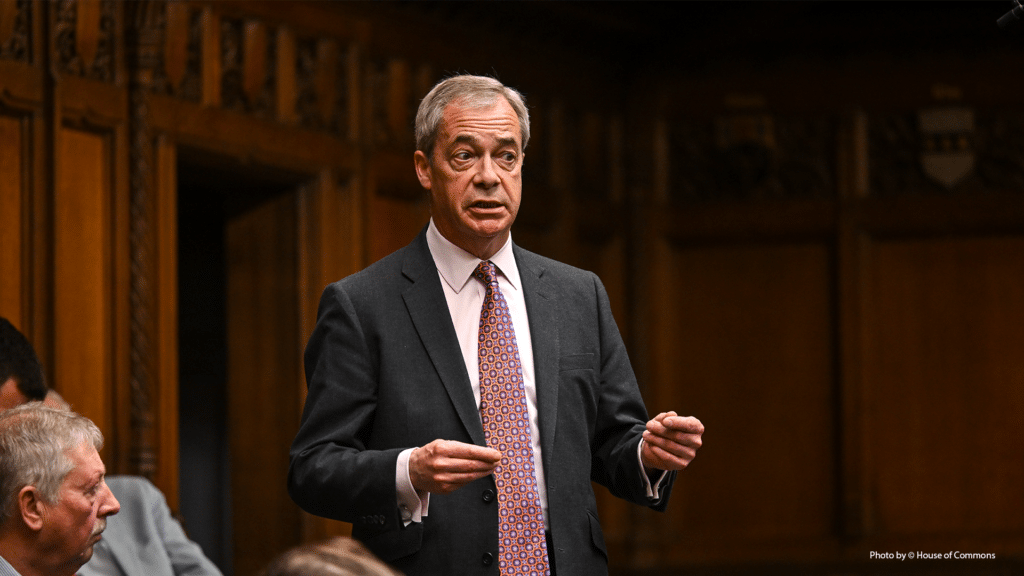
Ben Worthy and Laura Richards-Gray make the case that in triggering the by-election in Clacton, Nigel Farage sparked a conflict which he hoped he could control. They argue his gamble has not paid off since he has not been able to do so. Nigel Farage’s decision to call a by-election has beenpored over in detail. In an attempt to stymie an investigation into his finances, the Reform leader once again tried to place himself several moves ahead. Yet what was intended as a strategic masterstroke has now become a pointless by-election againstsomeone in a bin. And one that has triggered a renewed bout of scrutiny of Farage’s finances. Inspired by David Karpf’saccountabout his public spat with a Republican politician, one way to look at Farage’s decision is through the lens of the logic of conflict (and having a fight). Back in the 1960s E. E. Schattschneider wrotea short bookwhich challenged then conventional views of pluralism in a democracy. Put simply, he argued that democracy was all about conflict. Which fights get dragged into the open or kept out of sight, and how they unfolded, determined how democracies work. Every conflict, Schattschneider argued, was decided by three things: who was involved, what the fight was about, and how long it lasted. Whoever could control these things would win. In setting up his Clacton clash, Farage deliberately triggered a conflict which he hoped he could control. Behind his decision were a series of assumptions. First, that the by-election would involve all the major political parties. Second that this would lead to a ‘people versus the establishment by-election’. Finally, he seems to have believed that calling the by-election would bring the numerousParliamentary investigations to a halt, and make the people of Clacton ‘the judges of my actions’. All three assumptions have been proven wrong. Farage lost control ofwho was involved, when themajor parties pulled out. He is now not facing the ‘establishment’but instead Count Binface, Laurence Fox and Mr Fishfinger. He is fighting thin air and silliness. The public in general support Binface over Farage, perhaps swayed by hispromises of capping of croissant prices at £1 and a return to 99 flakes costing 99p. Consequently Farage could not controlwhat the fight was about. Polling shows, asthis headlineput it, ‘Brits aren’t buying Farage’s anti-establishment crusade’. Rather, the fight is likely to be about Farage and his money. Ever since it was revealed in April that he wasgiven £5 million by a crypto billionaire, this issue has dominated discussion. AsWill Jenningscommented ‘Raising the salience of your personal financial scandals is a bold move’. The media are alreadyraising questionsand digging intodifferent aspectsof Farage’s financial dealings. There are now two separate Parliamentary investigations (on hold but very much not stopped) as well as possible investigations fromthe National Crime Agencyand theMet Police. And it has had an effect. A majority of voters see Farageas sleazy. Perhaps more worrying from his point of view, fewer thanhalfof Reform UK voters (40%) think he has been honest, while only 22% think he has been dishonest and 39% are unsure. Importantly, Farage’s gamble in Clacton is part of a wider conflict – Reform’s battle to replace the Conservatives. Polling suggestsReform may have hit a ceiling, and they have certainly been under-performing in by-elections. Its rise is neither as solid nor inevitable as it looks. By focusing on his conflict Clacton, Farage is neglecting the broader battle. One of the secrets of Farage’s success has been to challenge the rules of the game and dictate the narrative. In this instance, he has lost control of the conflict. ByDr Ben Worthy, Lecturer in Politics, Birkbeck, University of London andDr Laura Richards-Gray, Senior Lecturer in British Politics, Birbeck, University of London. MORE FROM THIS THEMEBlogsWhat’s at stake in the biggest by-election in British historyBlogsBlitzed by BurnhamBlogsLessons from the local elections: what can Labour learn from the result in Birmingham?BlogsShould Andy Burnham face the House of Commons before summer recess?BlogsHow Andy Burnham should approach governingSubscribe to the UKICE newsletterWe will not sell or distribute your email address to any third party at any time. View ourPrivacy Policy. Stay informedEvery FridayDirect to your inbox