A subject takes root - Business News
Agribusiness is no longer confined to the farm gate. Jesse Wood explores how a Waikato initiative is opening students’ eyes to one of New Zealand’s most important industries. What started as a classroom experiment at St Paul’s Collegiate in Hamilton has grown into a nationwide programme introducing students to the opportunities that exist beyond theRead More
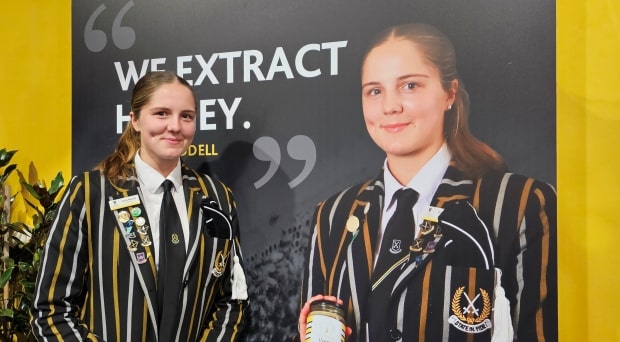
Agribusiness is no longer confined to the farm gate. Jesse Wood explores how a Waikato initiative is opening students’ eyes to one of New Zealand’s most important industries. Students Ava Hoy, Sadee Rogers and Olivia Dunn show off their hemp heart bliss balls at St Paul’s Collegiate. What started as a classroom experiment at St Paul’s Collegiate in Hamilton has grown into a nationwide programme introducing students to the opportunities that exist beyond the farm gate. Agribusiness started in 2013 and has since spread across the Waikato, Bay of Plenty and the rest of New Zealand, with 128 schools teaching the subject last year. Nathan Guy, the minister for Primary Industries at the time, set ambitious targets of doubling primary sector exports by 2025. He estimated the industry needed to employ another 50,000 people, half requiring tertiary or Level 4 qualifications. MPI research in 2014 showed a need for an additional 25,000 graduates in the primary sector by 2025. St Paul’s-based Agribusiness in Schools advisor Melanie Simmons helps educators bridge the gap between the classroom and one of New Zealand’s biggest industries. Most people may not understand the breadth and depth of careers within the agri-sector, she says. “In 2013, there were 10 other lead schools alongside St Paul’s. I was at Feilding High School at the time, and that was one of them. “First funders Gallagher, Dairy NZ and Beef + Lamb New Zealand helped bring two teachers from each of those 10 schools – a science teacher and a commerce teacher – to St Paul’s for two days every term for two years. “That’s how we wrote the agribusiness standards and then pitched them to the Ministry of Education. “Kerry Allen was employed to be the curriculum director. We would all write a bunch of ideas and Kerry would pull it together and make it into something that encompassed what we were trying to create,” says Simmons. At the end of 2017, once the standards had been piloted, Agribusiness was registered by the Ministry of Education on the NZQA framework. St Paul’s Collegiate and the agribusiness programme decided to get a full-time advisor. That’s when Simmons moved north. “I have been doing that ever since, encouraging and supporting teachers in schools to implement agribusiness. ”Victoria Watson making hemp heart bliss balls. There are 29 agribusiness teachers from urban and rural schools across the Waikato and Bay of Plenty. “Some of the schools just add one or two achievement standards through their existing course to revitalise or add an Agri-spin to elements of their assessment,” Simmons says. “Other schools have full agribusiness courses – Level 2 and 3, teaching it as an entire subject. But everybody gets the same support. ”At St Paul’s, Agribusiness is taught through the strands of Agri-science, Agri-marketing, Agri-management and Finance, and Agri-innovation, with a strong emphasis on industry engagement, experiential learning and real-world problem solving. Students have made cheese, biltong, kombucha and mead from excess honey. It’s not all about orchards and milking, says Simmons. “We look at new and innovative ideas and products as well as new ways of using organisms – dung beetles, hemp, crickets for protein – to meet future needs. “It’s a great way to bring the industry and cutting-edge thinking and products into the classroom, and great conversation/classroom discussion starters. ”Even if you work in a city, your industry will likely cross over with the primary industries. With this in mind, Simmons says it’s great to see big urban schools teaching agribusiness. “Just because the students are learning in a city, doesn’t mean they’ll stay in the urban area for their entire life. “At Fieldays there were rural bankers, accountants, marketers and branding specialists – someone with a graphic design degree produced those concepts. “They wouldn’t consider themselves as working in the primary sector but their organisation supports the primary sector. “It is our second largest industry – with service being the largest – but when you think about service, many are serving products from the agri-sector. “It’s amazing how many jobs cross over with the primary sector. Eighty per cent of New Zealand’s export earnings came from the primary sector last year. ”Agribusiness in Schools advisor Melanie Simmons. Biltong finished product branded for marketing. Although agricultural and horticultural science had been around for a long time, the teaching was “ring-fenced”. It was “on-farm, on-boat and on-orchard” learning but stopped at the farm gate. Agribusiness shows students what’s past the gate and teaches them about the primary industries from their own perspectives. “Agribusiness looks at science and business on-farm, on-boat, on-orchard but it also looks at the entire value chain – right through to marketing, logistics, production and anything that supports those industries,” Simmons says. “It’s a much broader mandate. ”For an industry searching for its next generation of talent, the classroom is proving a good place to start. Gathering consumer preferences around honey. Waikato schools that provide agribusiness, including St Paul’s Collegiate, are Fraser High School, Hamilton Boys’ High School, Hamilton Christian School, Hamilton Girls’ High School, Hillcrest High School, Matamata College, Morrinsville College, Rototuna Senior High School, St John’s College, St Peter’s Cambridge, Te Awamutu College and Waikato Diocesan School. In the Bay of Plenty, Aquinas College, John Paul College, Katikati College, Mount Maunganui College, Ōtūmoetai College, Pāpāmoa College, Tauranga Boys’ High School, Tauranga Girls’ High School, Te Puke High School, Western Heights High School and Whakatāne High School provide the subject. Head girl Olivia Waddell at St Paul’s Collegiate Fieldays stand this year promoting Agribusiness. Photo: Mary Anne Gill