Afghan health minister, Gavi discuss expanding routine immunization | Ariana News | Afghanistan News
Afghanistan’s public health minister, Noor Jalal Jalali, discussed expanding routine immunization and primary healthcare services with Gavi officials and representatives of the World Health Organization and. . .
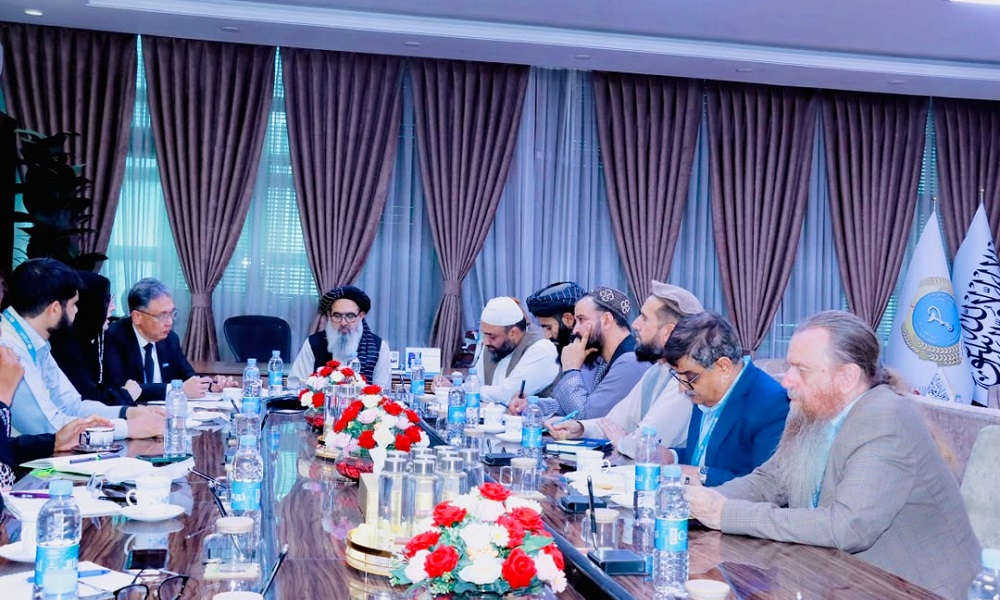
Afghanistan’s public health minister, Noor Jalal Jalali, discussed expanding routine immunization and primary healthcare services with Gavi officials and representatives of the World Health Organization and UNICEF, the Ministry of Public Health said on Tuesday. According to the ministry, the talks focused on strengthening primary healthcare, expanding routine vaccination and Gavi’s support for Afghanistan’s health sector. The ministry said Jalali described efforts to combat measles, polio and other communicable diseases as priorities, adding that the ministry was also working to expand preventive and primary healthcare services. Jalali said Afghanistan’s national vaccination strategy and national health strategy would soon be finalized and shared with relevant stakeholders for implementation. Gavi officials said Afghanistan remained one of the alliance’s priority countries and pledged to continue supporting health and immunization programmes, the ministry said. HealthMuttaqi calls for stronger health cooperation, says polio efforts must remain free of politicsMuttaqi reiterated his support for polio eradication initiatives and highlighted the need to establish advanced cancer diagnosis and treatment centres. Published1 week agoonJuly 5, 2026Afghanistan’s Acting Foreign Minister Amir Khan Muttaqi has called for closer international cooperation to strengthen the country’s healthcare system, stressing that health and humanitarian assistance should remain separate from political considerations. During a meeting with Hanan Balkhy, the World Health Organization’s Regional Director for the Eastern Mediterranean, and her delegation, Muttaqi discussed ways to improve Afghanistan’s health sector and accelerate efforts to eradicate polio, according to the Ministry of Foreign Affairs. Balkhy reaffirmed the WHO’s commitment to supporting Afghanistan’s healthcare system and appealed for the continued cooperation of the Islamic Emirate in implementing nationwide polio vaccination campaigns. Muttaqi reiterated his support for polio eradication initiatives and highlighted the need to establish advanced cancer diagnosis and treatment centres, improve medical equipment in health facilities, and strengthen the skills of healthcare professionals. He also emphasized that health, humanitarian and trade cooperation should not be influenced by political issues, saying that keeping these sectors separate is essential to ensuring aid and critical health services reach the Afghan people. HealthAfghanistan, Uzbekistan move to expand cooperation in pharmaceutical sectorThe two sides discussed expanding cooperation in the production and regulation of medicines and health products. Published3 weeks agoonJune 21, 2026Afghanistan’s Ministry of Public Health has announced that Abdul Basir Qane, Director General of Drug and Health Products Regulation at the ministry’s Food and Drug Deputy, held talks with Uzbek health officials during his visit to Uzbekistan to strengthen bilateral cooperation in the pharmaceutical sector. According to a statement issued by the ministry, Qane and his technical delegation met with Abdullah Azizov, head of Uzbekistan’s regulatory authority for medical and pharmaceutical industries, along with other senior officials. The two sides discussed expanding cooperation in the production and regulation of medicines and health products, facilitating the entry of Uzbek pharmaceutical manufacturers into the Afghan market, implementing inspections in line with Good Manufacturing Practice (GMP) standards, streamlining the registration process for medicines, and increasing bilateral trade in pharmaceutical products. The discussions also covered the development of laboratory infrastructure, capacity building and training for specialists, the exchange of expertise in regulatory and inspection fields, and broader technical and professional cooperation between the two countries. At the conclusion of the meeting, both sides reaffirmed their commitment to strengthening long-term cooperation in the pharmaceutical and health products sector, supporting the activities of pharmaceutical companies in both markets, and continuing dialogue on mutually beneficial joint projects, the ministry said. HealthPolio cases in Afghanistan rise to six in 2026 as two new cases confirmedAccording to the WHO, one of the newly confirmed cases was identified in Nari district of Kunar province, while the other was reported in Nahr-e-Siraj district of Helmand province. Published4 weeks agoonJune 18, 2026The World Health Organization (WHO) has announced that the number of confirmed polio cases in Afghanistan has risen to six in 2026, following the detection of two new infections in the country. According to the WHO, one of the newly confirmed cases was identified in Nari district of Kunar province, while the other was reported in Nahr-e-Siraj district of Helmand province. The organization also stated that 34 positive environmental samples of wild poliovirus have been recorded in Afghanistan so far this year. The report adds that in 2025, a total of 52 wild poliovirus type 1 cases were confirmed across Afghanistan and Pakistan, including 21 cases in Afghanistan and 31 in Pakistan. WHO further noted that in 2026 so far, nine wild poliovirus type 1 cases have been reported across both countries, with six in Afghanistan and three in Pakistan. Health experts say that low public awareness, resistance from some families to vaccination campaigns, and limited access to remote areas remain key factors behind the continued spread of the disease. They emphasize that polio is incurable and vaccination is the only effective way to prevent infection. Public health specialists also stress the need to expand immunization coverage, particularly in hard-to-reach areas, and to strengthen public awareness campaigns, warning that eradication efforts will remain difficult without broad community cooperation. Afghanistan and Pakistan remain the only two countries in the world where wild poliovirus is still endemic and has not been fully eradicated.