'Beijing's Rapid, Opaque Nuclear Weapons Buildup': US Sees Red Over China's Pacific Missile Test
Last Updated:July 07, 2026, 10:54 ISTUS State Department spokesperson Tommy Pigott said Washington was "concerned" by China's continuing expansion of its nuclear arsenal and the lack of transparency. Rapid. . .
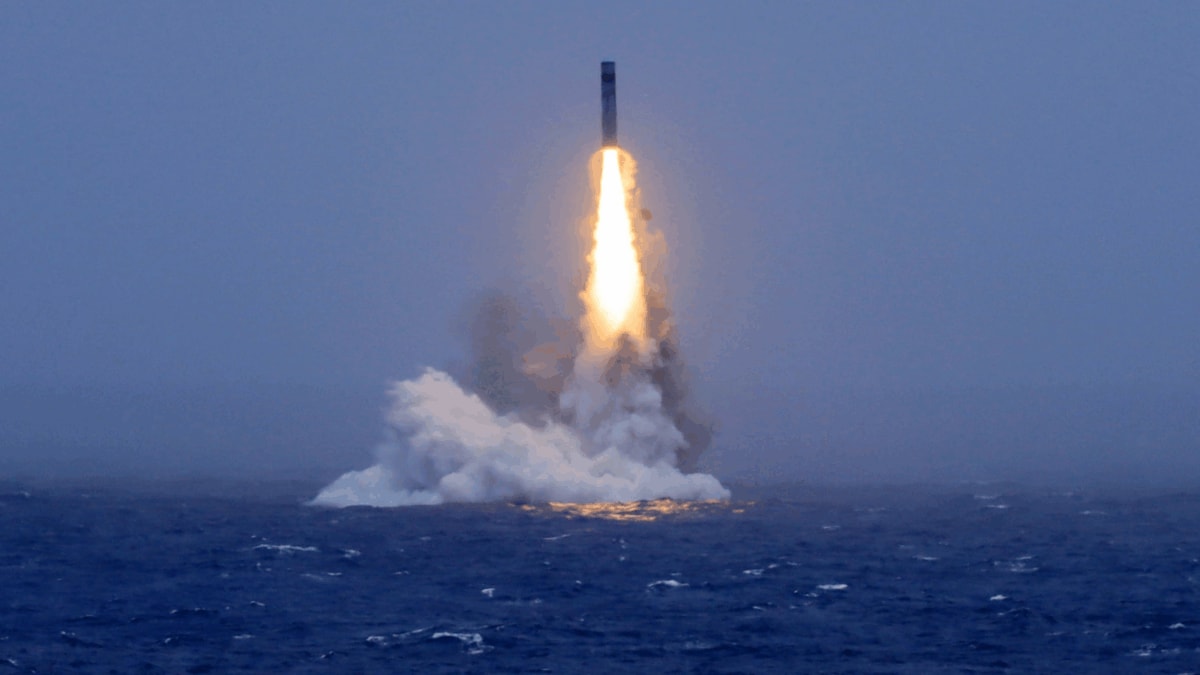
Last Updated:July 07, 2026, 10:54 ISTUS State Department spokesperson Tommy Pigott said Washington was "concerned" by China's continuing expansion of its nuclear arsenal and the lack of transparency. Rapid ReadRapid ReadSummarized by AI. +US concerned by China's nuclear buildup. China conducted Pacific missile test. Test shows China's sea-based nuclear deterrent. A long-range ballistic missile bursts out of the sea during a test launched from a Chinese nuclear-powered submarines in the South Pacific on Monday, July 6, 2026. (Xinhua via AP)The United States has voiced fresh concern over China’s rapidly expanding nuclear capabilities after Beijing carried out a rare long-range missile test over the Pacific Ocean, a move that has also prompted criticism from Australia, Japan, New Zealand and Taiwan. Responding to the launch, US State Department spokesperson Tommy Pigott said Washington was “concerned" by China’s continuing expansion of its nuclear arsenal and the lack of transparency surrounding its strategic weapons programme. Recommended StoriesWho Controls The Panama Canal And Why Trump Is Worried About China'China Out Of Tibet': Activist’s Fatal Protest Outside UN Sparks Global Outcry Over Beijing’s New Ethnic Law | Exclusive DetailsChina Tests Long-Range Missile Just As Australia-Fiji Make Defence Deal, Pacific Nations On EdgeOpinion | Modi And Takaichi And The Playbook For Asia’s Middle PowersAt a time when the United States is working harder than ever to prevent nuclear proliferation, China is doing the opposite," State Department spokesman Tommy Pigott said. “Beijing’s rapid and opaque nuclear weapons buildup is of great concern to the region and the world," he said, while adding that the US had monitored the missile launch. He also reiterated Washington’s call for Beijing to engage in meaningful discussions on nuclear risk reduction and arms control. The launch marks one of China’s most significant demonstrations of its sea-based nuclear deterrent in recent years and is being viewed as far more than a routine military exercise. What Did China Test?China’s People’s Liberation Army (PLA) Navy on July 6 launched a long-range ballistic missile from a nuclear-powered submarine into the Pacific Ocean. According to Chinese state media, the missile carried a dummy, or training, warhead and landed in a designated area of international waters after being fired at around 12:01 pm local time. Although Beijing did not officially identify the missile, defence analysts believe it was most likely the JL-3 submarine-launched ballistic missile (SLBM), China’s newest and most capable sea-based nuclear missile. The JL-3 is believed to have a range exceeding 10,000 kilometres, allowing it to strike targets as far away as the continental United States without Chinese submarines venturing deep into the Pacific. China insisted the test was “a routine arrangement" under its annual military training programme and was “not directed against any specific country or target. "Foreign Ministry spokesperson Mao Ning defended the exercise, saying it was conducted “safely, in a standardised and professional manner throughout" and urged other countries “not to over-interpret the matter. "Why Has The Launch Caused Concern?Unlike previous Chinese ballistic missile tests that largely remained within its own territory, this launch sent a strategic missile deep into the Pacific Ocean, demonstrating Beijing’s growing confidence in its submarine-based nuclear force. The test also came at a sensitive geopolitical moment. It was conducted just as Australia and Fiji signed a new defence agreement aimed at strengthening security cooperation in the Pacific, leading analysts to believe the timing carried strategic messaging beyond routine military training. Military experts say submarine-launched ballistic missiles form a critical component of a country’s “second-strike" capability – the ability to retaliate with nuclear weapons even after suffering a nuclear attack. By showcasing this capability, China signalled that its nuclear deterrent is becoming more survivable and harder for adversaries to neutralise. Australia Calls The Move DestabilisingAustralia was among the strongest critics of the launch. Prime Minister Anthony Albanese described the missile test as “provocative," warning that a weapon of such capability could cause “considerable damage" if armed with a nuclear warhead. Deputy Prime Minister and Defence Minister Richard Marles said the launch demonstrated “China’s enhanced long-range nuclear capability" and argued that it had “no strategic justification," calling it a destabilising development for the region. Foreign Minister Penny Wong also questioned the lack of advance notification, saying the launch increased the risk of miscalculation. Japan, New Zealand Demand Greater TransparencyJapan also expressed concern over what it described as China’s expanding military activities and growing opacity. Chief Cabinet Secretary Yoshimasa Hayashi said Tokyo was “seriously concerned" about China’s military build-up and urged Beijing to improve transparency over its defence activities. New Zealand criticised the limited notice given before the launch, saying the test ignored longstanding regional sensitivities surrounding military activity in the South Pacific. Foreign Minister Winston Peters said the missile test was “an unwelcome and concerning development," adding that it was inconsistent with the Pacific region’s long-standing commitment to peace and stability under the South Pacific Nuclear Free Zone. Taiwan, meanwhile, condemned the launch as an act of intimidation and said it reflected Beijing’s increasingly assertive military posture in the region. The timing of the launch is widely being interpreted as strategic signalling amid intensifying competition between China and the US and its allies across the Indo-Pacific. With Beijing expanding its nuclear arsenal, strengthening its navy and increasing military activity around Taiwan and the South China Sea, the latest missile test underscores how the Pacific is becoming an increasingly contested strategic theatre. News18 NewsletterHandpicked stories, in your inboxA newsletter with the best of our journalismAbout the AuthorNews DeskThe News Desk is a team of passionate editors and writers who break and analyse the most important events unfolding in India and abroad. From live updates to exclusive reports to in-depth explainers, . . . Read MoreLocation :First Published:July 07, 2026, 10:54 ISTNewsworld'Beijing's Rapid, Opaque Nuclear Weapons Buildup': US Sees Red Over China's Pacific Missile TestDisclaimer: Comments reflect users’ views, not News18’s. Please keep discussions respectful and constructive. Abusive, defamatory, or illegal comments will be removed. News18 may disable any comment at its discretion. By posting, you agree to ourTerms of UseandPrivacy Policy. Loading comments. . . Read More