Canadians and Mexicans now view China more positively than the US
The Canadian, Mexican and U. S. flags are displayed in Ottawa in 2017. (Lars Hagberg/AFP via Getty Images)For the first time in almost two decades of Pew Research Center surveys, both Canadians and Mexicans. . .
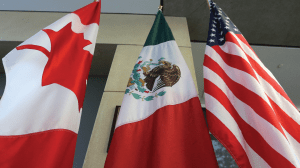
The Canadian, Mexican and U. S. flags are displayed in Ottawa in 2017. (Lars Hagberg/AFP via Getty Images)For the first time in almost two decades of Pew Research Center surveys, both Canadians and Mexicans now view China more favorably than their neighbor, the United States. Canadians and Mexicans now view China more positively than the U. S. % ofCanadianadults who have afavorableview of …% ofMexicanadults who have afavorableview of …Source: Spring 2026 Global Attitudes Survey. PEW RESEARCH CENTERCanadians and Mexicans now view China more positively than the U. S. YearCountryU. S. China2026Canada33442025Canada34342024Canada54212023Canada57142022Canada63212021Canada61232020Canada35222019Canada51282018Canada40442017Canada43472016Canada64452015Canada68392014Canada2013Canada64432012Canada2011Canada2010Canada2009Canada68542008Canada2007Canada55512005Canada59592003Canada632002Canada712026Mexico40592025Mexico29562024Mexico61562023Mexico63572022Mexico2021Mexico2020Mexico2019Mexico35502018Mexico33462017Mexico29432016Mexico2015Mexico66482014Mexico63442013Mexico66462012Mexico56402011Mexico52392010Mexico55392009Mexico68392008Mexico47382007Mexico56432005Mexico2003Mexico2002Mexico64Source: Spring 2026 Global Attitudes Survey. PEW RESEARCH CENTEROur spring 2026 global survey marks the first time that Canadians have expressed a significantly more positive view of China than the U. S. Mexicans, by contrast, have viewed China more favorably than the U. S. in several previous Center surveys – all of them conducted during President Donald Trump’s time in the White House. Canadians and Mexicans also now view Chinese President Xi Jinping more positively than Trump, even as relatively few people in both countries have confidence in the two leaders. In Canada, 35% of adults have confidence in Xi to do the right thing regarding world affairs, compared with 20% who say the same of Trump. In Mexico, 35% of adults have confidence in Xi and 11% in Trump. Related:People in Many Countries Now View China More Positively Than the U. S. In our2025 survey, Canadians and Mexicans both named the U. S. as their country’s top allyandtop threat. About this researchThis Pew Research Center analysis looks at how adults in Canada and Mexico view China and the United States. Why did we do this?Pew Research Center does research to help the public, media and decision-makers understand important topics. This analysis brings together several topics we regularly study:global views of the U. S. and China, as well as views of the U. S. inCanadaandMexico. Learn moreabout Pew Research Centerand ourinternational surveys. How did we do this?We surveyed 1,020 adults in Canada and 1,017 adults in Mexico from Feb. 12 to April 14, 2026. We designed the surveys so we could talk about the views of the adult population in each country. Here are thesurvey questionsused for this analysis, along with responses, and thesurvey methodology. Views by age and ideologyMost younger adults in Canada and Mexico have favorable views of China% ofCanadianadults who have afavorableview of ___, by age% ofMexicanadults who have afavorableview of ___, by ageNote: Statistically significant differences are inbold. Source: Spring 2026 Global Attitudes Survey. PEW RESEARCH CENTERMost younger adults in Canada and Mexico have favorable views of ChinaCountryTopic18-3435-4950+Youngest-oldest diffCanadaChina61413922CanadaU. S. 3244275MexicoChina70614426MexicoU. S. 52392824Note: Statistically significant differences are inbold. Source: Spring 2026 Global Attitudes Survey. PEW RESEARCH CENTERIn both Canada and Mexico, adults under 35 have a much more positive view of China than those ages 50 and older, consistent with apattern we’ve seen in many other countries. For example, 70% of Mexicans under 35 view China favorably, compared with 44% of older Mexicans. Younger adults in Mexico also view the U. S. more positively than older adults do. But in Canada, there is no significant difference in views between those under 35 and those ages 50 and older. Despite these differences,both younger and older adults in Canada and Mexico have a more favorable view of China than of the U. S. Views of the two countries also differ by political ideology. Canadians who place themselves on the ideological left are much more likely than those on the right to have afavorableview of China and anunfavorableview of the United States. Canadians on the left and in the center are more favorable toward China now than in 2025, while views on the right have not changed much. In Mexico, views of the U. S. and China don’t differ much by ideology. What’s behind these changing views of China and the U. S. ?Few Canadians and Mexicans say the U. S. and Chinese governments respect their people’s freedoms% ofCanadianadults who say each country’s governmentrespectsthe personal freedoms of its people% ofMexicanadults who say each country’s governmentrespectsthe personal freedoms of its peopleSource: Spring 2026 Global Attitudes Survey. PEW RESEARCH CENTERFew Canadians and Mexicans say the U. S. and Chinese governments respect their people’s freedomsYearCountryU. S. China2026Canada34132021Canada6072018Canada38132017Canada45122016Canada57102015Canada5452014Canada2013Canada75132008Canada2026Mexico20352021Mexico2018Mexico31302017Mexico32312016Mexico2015Mexico56322014Mexico38252013Mexico55342008Mexico5033Source: Spring 2026 Global Attitudes Survey. PEW RESEARCH CENTERIn both Canada and Mexico, confidence in Trump is lower than confidence in his predecessor, Joe Biden. Canadians and Mexicans also now rate the U. S. more negatively on both its domestic and foreign policies. Few in both countries now say that the U. S. and China respect their people’s personal freedoms. In Mexico, the share of adults who say the U. S. government respects its people’s freedoms has reached an all-time low in our surveys. And for the first time in the nearly two decades we’ve asked this question, Mexicans are now more likely to say this about the Chinese government than the U. S. government. More Mexicans now say China contributes to global stability than the U. S. % ofMexicanadults who say each country contributesa great deal/a fair amountto peace and stability around the worldSource: Spring 2026 Global Attitudes Survey. PEW RESEARCH CENTERMore Mexicans now say China contributes to global stability than the U. S. % ofMexicanadults who say each country contributesa great deal/a fair amountto peace and stability around the worldYearU. S. China2023504120262847Source: Spring 2026 Global Attitudes Survey. PEW RESEARCH CENTERMexicans’ views of the United States’ approach to foreign policy have also worsened significantly over the last several years. While half of Mexican adults said in 2023 that the U. S. contributed to peace and stability around the world, 28% say the same today. Mexicans are now much more likely to say that China contributes to global stability than to say this about the U. S. Mexicans are also more likely to say that the U. S. interferes in the affairs of other countries than to say this about China (73% vs. 45%). And while Mexicans are divided on whether China takes the interests of countries like Mexico into account when making international policy decisions, around three-in-four say that the U. S. doesnottake these interests into account. Mexicans are also much more likely to call China a reliable partner to Mexico than to say this about the U. S. (58% vs. 34%). This is the largest gap on this question across thesix Latin American countries we surveyed this year. Note: Here are thesurvey questionsused for this analysis, along with responses, and thesurvey methodology. Jonathan Schulmanis a research associate focusing on global attitudes research at Pew Research Center. William Mineris a research analyst focusing on global attitudes and religion at Pew Research Center. Sofia Hernandez Ramonesis a research assistant focusing on global attitudes at Pew Research Center.