Chikane defends decision not to oppose pardons for men who poisoned him - Inside Politics
By Simon Nare Anti-apartheid activist Reverend Frank Chikane has defended his decision not to oppose pardons for two former apartheid security chiefs who were involved in an attempt to poison him in 1989, saying he was satisfied after they confessed to the crime. Testifying at the Truth and Reconciliation Commission (TRC) cases inquiry on Thursday, […]
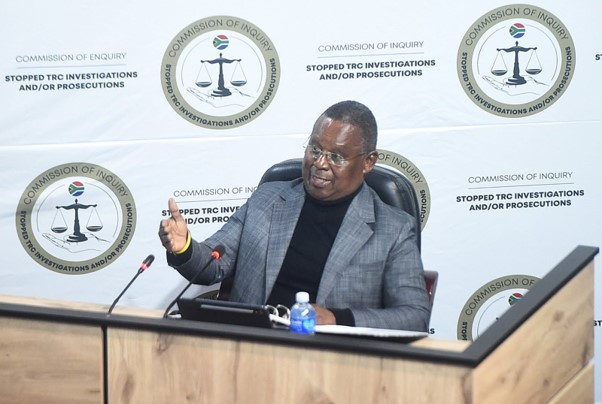
-apartheid activist Reverend Frank Chikane has defended his decision not to oppose pardons for two former apartheid security chiefs who were involved in an attempt to poison him in 1989, saying he was satisfied after they confessed to the crime. Testifying at the Truth and Reconciliation Commission (TRC) cases inquiry on Thursday, Chikane said he had made a personal decision regarding the attempt on his life and saw no reason to pursue the matter further after former apartheid police minister Adriaan Vlok and former police chief Johann van der Merwe confessed to their roles. Chikane nearly died after being chemically poisoned while travelling to the United States in 1989. He collapsed several times, suffered severe vomiting and respiratory failure, and doctors in the US observed that his symptoms recurred whenever he opened his luggage. Vlok and Van der Merwe later accepted responsibility for the attempt and were sentenced to 10 years’ imprisonment, wholly suspended, as part of a plea bargain. Chikane’s decision not to oppose pardons for the two former apartheid officials drew criticism from human rights lawyer and former TRC commissioner Yasmin Sooka, who accused him of failing to take a moral stand and join her campaign against political pardons for apartheid perpetrators. In his response before the commission, chaired by retired Constitutional Court Justice Sisi Khampepe, Chikane said Sooka was not justified in attacking him or using his painful experience to advance her campaign. Following Chikane’s testimony earlier this year, Sooka deposed an affidavit criticising him for refusing to publicly oppose political pardons, arguing that this was necessary to preserve the integrity of the TRC and stand with families of victims seeking justice. Sooka had called for Chikane to oppose the pardons and demanded full disclosure from Vlok and Van der Merwe. Chikane, however, argued that his personal case was separate from the question of whether the two men had made full disclosures about other atrocities. Sooka made the request during a 2012 meeting with Chikane, which he conceded on Thursday had not ended well. He said he was particularly disturbed by Sooka’s revelation that she remained “bitterly” disappointed in him years later, arguing that she could have pursued her campaign through other avenues. “I had choices to make and as a lawyer she can’t be bitter and disappointed by my choices. At that particular moment, when he declined Sooka’s request, I am going through… remember I am going through a real-life experience. It’s not just a show. It’s a real-life experience,” he said. Chikane said he had repeatedly been forced to relive the trauma of the poisoning when dealing with court proceedings and matters involving plea bargains for perpetrators of atrocities and the National Prosecuting Authority. He said he fell into a deep depression after one court appearance. Chikane told the commissioners that this was one of the reasons he had initially been hesitant to appear before the inquiry, fearing that he would once again become the focus of media attention. “Every time I go and deal with these matters, there is controversy I must deal with. I am the person who went through this pain. I am the victim actually and I become the centre of all the debates even when you read the files and statements it’s about my case,” he said. He said victims who became involved in TRC-related cases often ended up being targeted themselves. “Now they want me to go through another process again. Nobody worries about the pain I went through. Nobody! Nobody talks about how I lost consciousness that evening in Wisconsin and only opened my eyes at 2am,” he said. Chikane said he had not appeared before the original TRC because he had accepted the confession by Vlok and Van der Merwe, who had admitted responsibility for his poisoning. He said Vlok’s controversial washing of his feet, which was widely described as a “Damascus moment”, was not the reason for his decision. Chikane acknowledged, however, that he learnt new information about apartheid-era atrocities during the TRC process, including that he had been placed on a hit list. He also told the commission that he had reservations about some of the people entrusted with investigating and prosecuting TRC-related cases, saying the processes were “not done by the right people”. Chikane recounted an incident involving prosecutor Advocate Anton Ackermann and another senior official who had drafted a statement endorsing the process and allegedly tried to pressure him into signing it. He declined to sign the statement and later raised the matter with then National Director of Public Prosecutions Advocate Bulelani Ngcuka. Chikane also told the commission that there had been differing views within the African National Congress (ANC) about whether senior apartheid-era officials should be prosecuted, with some fearing that prosecutions could destabilise the country. He stressed that these were the views of individuals within the ANC and not an official position of the ANC government. The inquiry continues. INSIDE POLITICS