China flexes growing legal arsenal against U. S. as warning before Trump-Xi summit
Skip to ContentSubscribeOur OffersMy AccountManage My SubscriptionsFAQNewslettersCanadaCanadian True CrimeCanadian PoliticsHealthWorldIsrael & Middle EastFinancial PostNP. . .
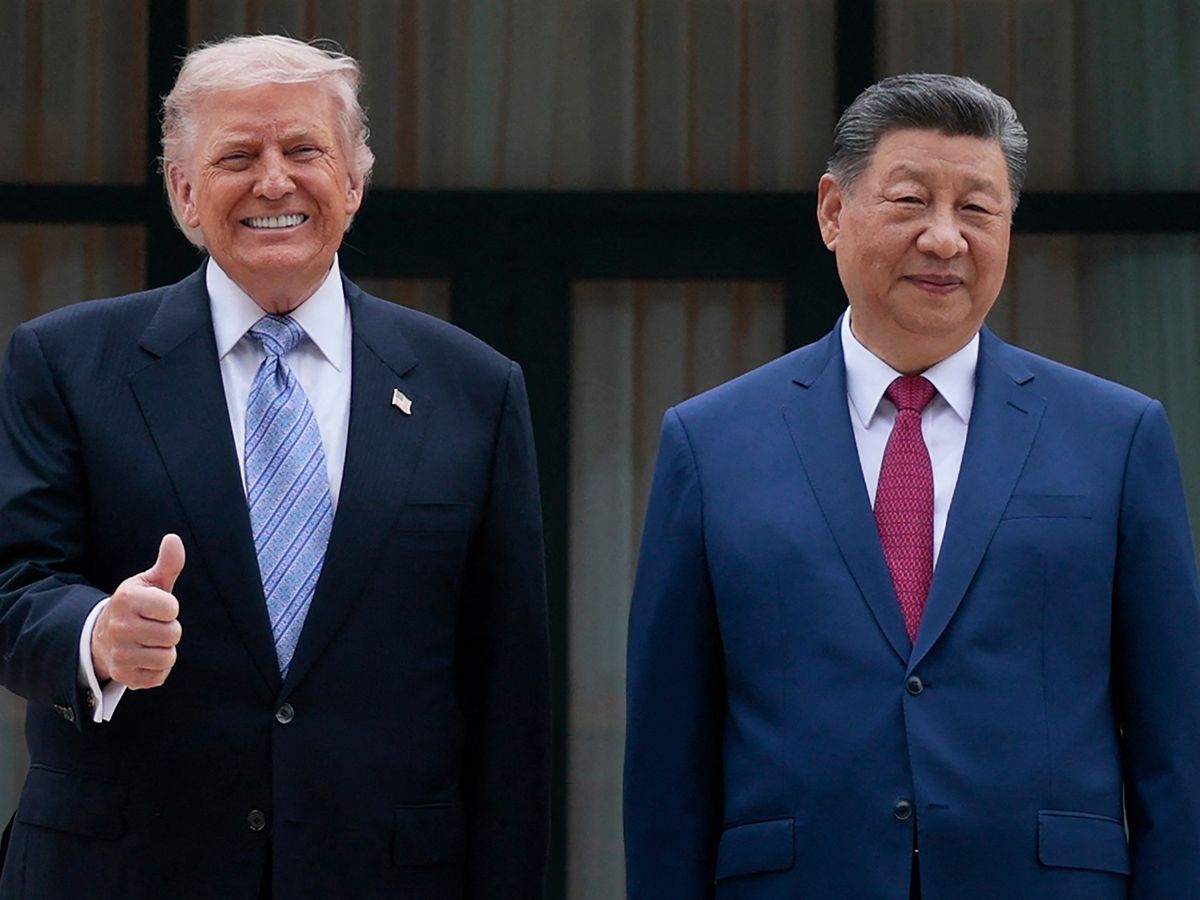
Skip to ContentSubscribeOur OffersMy AccountManage My SubscriptionsFAQNewslettersCanadaCanadian True CrimeCanadian PoliticsHealthWorldIsrael & Middle EastFinancial PostNP CommentLongreadsPuzzmoDiversionsComicsNP News QuizNew York Times CrosswordHoroscopesLifeEating & DrinkingStyleSponsoredPlay for OntarioTravelTravel CanadaTravel USATravel InternationalCruisesTravel EssentialsCultureBooksCelebrityMoviesMusicTheatreTelevisionBusiness EssentialsAdviceLives ToldTails ToldShoppingBuy CanadianHome LivingOutdoor LivingKitchen & DiningTechStyle & BeautyPersonal CareEntertainment & HobbiesGift GuideTravel GuideAmazon Prime DayDealsSavingsNational Post StoreMoreSportsHockeyBaseballBasketballFootballSoccerGolfTennisDrivingVehicle ResearchReviewsNewsGear GuideObituariesPlace an ObituaryPlace an In MemoriamClassifiedsPlace an AdCelebrationsWorkingBusiness AdsArchivesHealthingEpaperManage Print SubscriptionProfileSettingsMy SubscriptionsSaved ArticlesMy OffersNewslettersCustomer ServiceFAQNewslettersCanadaWorldFinancial PostNP CommentLongreadsPuzzmoDiversionsLifeShoppingEpaperManage Print SubscriptionHomeNewsWorldChina flexes growing legal arsenal against U. S. as warning before Trump-Xi summitA flurry of actions, including sanctions on seven American entities, shows China’s willingness and ability to turn up the trade pressure, while maintaining room for de-escalationAuthor of the article:You can save this article by registering for freehere. Orsign-inif you have an account. U. S. President Donald Trump with China's President Xi Jinping in Beijing on May 15, 2026. Photo by Evan Vucci/Pool/AFP via Getty ImagesChina’s latest barrage of countermeasures against the U. S. drew on an expanding legal arsenal, demonstrating Beijing’s growing capacity to retaliate while warning Washington against further tech curbs before Xi Jinping’s expected visit next month. Enjoy the latest local, national and international news. Exclusive articles by Conrad Black, Barbara Kay and others. Plus, special edition NP Platformed and First Reading newsletters and virtual events. Unlimited online access to National Post. National Post ePaper, an electronic replica of the print edition to view on any device, share and comment on. Daily puzzles including the New York Times Crossword. Support local journalism. Enjoy the latest local, national and international news. Exclusive articles by Conrad Black, Barbara Kay and others. Plus, special edition NP Platformed and First Reading newsletters and virtual events. Unlimited online access to National Post. National Post ePaper, an electronic replica of the print edition to view on any device, share and comment on. Daily puzzles including the New York Times Crossword. Support local journalism. Create an account or sign in to continue with your reading experience. Access articles from across Canada with one account. Share your thoughts and join the conversation in the comments. Enjoy additional articles per month. Get email updates from your favourite authors. Create an account or sign in to continue with your reading experience. Access articles from across Canada with one accountShare your thoughts and join the conversation in the commentsEnjoy additional articles per monthGet email updates from your favourite authorsSign In or Create an AccountorThe package announced Wednesday featured the first national security investigation under China’s recently revised Foreign Trade Law and tighter scrutiny of drone-related exports. It also included sanctions on seven American entities and a suspension of cooperation with the U. S. over the inspection of products destined for China. The speed and breadth of the action, revealed in a volley of five statements released one week after the U. S. moved to ban new foreign robots, shows China’s willingness and ability to turn up the pressure even as it preserved room for de-escalation. Get a dash of perspective along with the trending news of the day in a very readable format. By signing up you consent to receive the above newsletter from Postmedia Network Inc. A welcome email is on its way. If you don't see it, please check your junk folder. The next issue of NP Posted will soon be in your inbox. We encountered an issue signing you up. Please try againA day later, China’s cybersecurity authorities launched a formal security review of products sold in the country by U. S. technology firm Palo Alto Networks Inc. , citing the need to protect critical infrastructure. The brief statement didn’t specify whether it was a countermeasure taken against the U. S. , though Beijing had previously accused the firm of being connected to spy agencies. “What is most striking is not only that Beijing is continuing to strengthen its legal toolbox for retaliation — as long urged by Xi — but also that it is increasingly prepared to deploy these instruments in practice,” said Henry Gao, a law professor at Singapore Management University. “The signal is straightforward: Beijing is prepared to respond quickly and in kind, and to normalize tit-for-tat escalation as a standing feature of the relationship,” he said. The package materialized after the Federal Communications Commission on July 28 restricted some foreign-made robots and power inverters, sectors that China dominates. Three days later, the Department of Homeland Security blacklisted 43 Chinese companies over allegations that they used forced labor. Beijing appeared intent to impose enough costs to deter further U. S. escalation without jeopardizing the trade truce or Xi’s upcoming meeting with President Donald Trump that’s expected in late September. The one-year deal between Beijing and Washington — unveiled at the summit between Trump and Xi in South Korea and set to expire in November, unless extended — has led to a suspension of some tariffs, rare earth curbs and investigations into China’s shipbuilders. A Commerce Ministry spokesperson described the countermeasures as “generally restrained” and urged the U. S. to return to consultations to resolve differences. At the same time, the spokesperson warned that Beijing wouldn’t hesitate to deploy additional measures should Washington impose new restrictions against China. While China had hit back at the U. S. after their presidents steadied ties in a May summit, the measures were often largely symbolic because they targeted military suppliers with no business in the world’s second-largest economy. In June, for example, Beijing restricted exports to 10 U. S. military-related companies in response to the Pentagon’s decision to add some of China’s biggest tech firms to a roster of Chinese military backers. Some of the latest sanctions, however, targeted the infrastructure behind American restrictions, including companies and organizations involved in compliance, traceability, due diligence and auditing. “This round of countermeasures whip up some real compliance headaches for multinationals,” said Ryan Etzcorn, a senior director at Ankura China Advisors. China is using existing tools to retaliate directly against risk consultants and due-diligence providers, extending the scope of its measures “into daily supply chain compliance” for manufacturers across industries, he said. Six entities, including Applied DNA Sciences and Responsible Business Alliance, were sanctioned over their alleged involvement in U. S. restrictions on Chinese companies accused of using forced labor in Xinjiang. Beijing separately targeted Compliance Testing, an Arizona-based company it said had assisted the FCC in imposing restrictions against China. As part of the retaliation package, China’s certification regulator said it’s decided to suspend the authorization of U. S. -based certification bodies to conduct follow-up factory inspections for products certified under the China Compulsory Certification system known as CCC. CCC is a mandatory safety and quality certification required for designated products sold in China, whether made domestically or imported. As a result, U. S. manufacturers may have to arrange required follow-up inspections through authorized bodies outside the U. S. , potentially raising costs and causing delays. The Commerce Ministry also announced a national security investigation into printers, copiers, and other office imaging equipment that uses foreign-made software. The probe marks the first use of the mechanism created under China’s revised Foreign Trade Law, which took effect in March and expanded the government’s authority to respond to foreign sanctions and other restrictions. The timing of the decisions adds to the pressure on both sides to contain the dispute before Xi’s highly anticipated trip, while leaving Beijing with further tools to deploy if the Trump administration presses ahead with additional restrictions. “More aggressive actions — restricting Chinese open-weight AI models or curbing Chinese firms’ chip access through cloud services — would signal a step change in the administration’s approach and put the truce at risk,” Eurasia Group analysts including Dominic Chiu wrote in a note. The two governments are trying to preserve a fragile trade truce while a wide range of disputes continue to simmer. Senior officials from both sides discussed points of friction between their countries in a call last week. Chinese Vice Premier He Lifeng raised “serious concern” over recent economic and trade restrictions from Washington, while U. S. Treasury Secretary Scott Bessent called on Beijing to “fully meet” its commitments in providing access to rare earths and purchasing U. S. agricultural products. Beijing’s sweeping response has been welcomed by nationalist voices within China, who see it as evidence that their government now has a stronger arsenal at its disposal to push back against U. S. pressure. “China is no longer a nation that can only passively endure U. S. suppression, and its countermeasures are readily available,” Hu Xijin, former editor-in-chief of China’s state-backed nationalist tabloid Global Times, wrote on Weibo. “If the U. S. chooses to escalate bilateral trade friction and mutual technology export controls, China will, without a doubt, see it through to the end. ”Our website is the place for the latest breaking news, exclusive scoops, longreads and provocative commentary. Please bookmarknationalpost. comand sign up for our daily newsletter, Posted,here. Join the ConversationThis website uses cookies to personalize your content (including ads), and allows us to analyze our traffic. Read more aboutcookies here. By continuing to use our site, you agree to ourTerms of UseandPrivacy Policy.