China hawks are losing the public opinion battle
It sometimes seems easier to imagine the end of the world than the end of Washington’s anti-China obsession. Congressional Republicans, on one side, are championing a staggering $1. 5 trillion Pentagon budget. . .
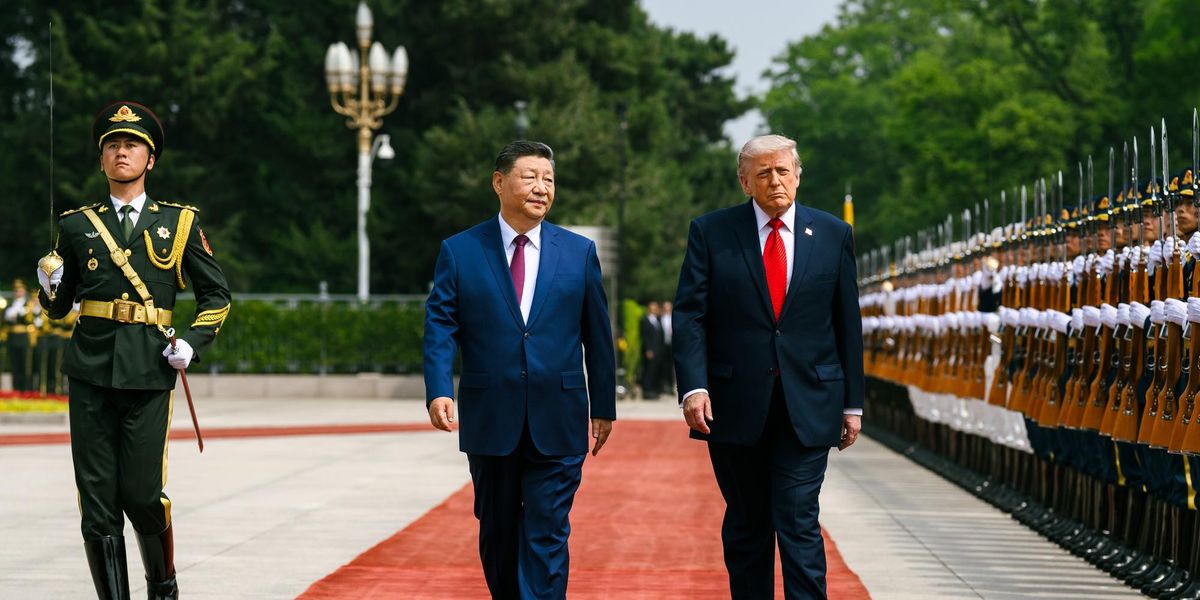
It sometimes seems easier to imagine the end of the world than the end of Washington’s anti-China obsession. Congressional Republicans, on one side, are championing a staggering $1. 5 trillion Pentagon budget that wouldcannibalizedomestic programs to "deter China. " Meanwhile, many of their Democratic colleaguesare attackingPresident Donald Trump due to his apparent lack of enthusiasm for confrontingChina. Yet under the surface, a crack is widening between how Beltway elites talk about China and how ordinary Americans view the U. S. -China relationship. In particular, younger Americans are roundly rejecting tough-on-China politics. Over time, this chasm will challenge the very foundation of Washington’s indefinite strategic competition with Beijing. While the Blob whips itself into an anti-Chinafrenzy, Americans are backing away from the so-called “China consensus. ” Over the past two years, national surveys by reputable pollsters haveconsistently foundthat Americans are warming up in their views on China and seeking closer ties between the two superpowers. There are reasons to believe this trend will continue. Indeed, as Americans increasingly struggle withaffordability,AI dislocations, and the rising cost of a possibleforever warin theMiddle East, Beltway China hawks — fixated on commandeering ever more national resources to confront Beijing — are revealing themselves to be a self-sustaining industry detached from both public sentiment andmaterial reality. This gap creates political space for a more grounded and productive approach to U. S. -China relations. Americans across the political spectrum are moving on from endless China-bashing. Their opinions about China, after years of declining, are meaningfully recovering. Gallupshows China’s favorability climbing 19 points and unfavorability dropping 23 points between 2023 and 2026. Polls fromPewand theChicago Council on Global Affairs/Ipsosfound similar warming trends. Though Republicans are still more hawkish towards China than independents and Democrats, even their views have appreciably moderated. Concurrently, Americans support closer ties with the rival superpower. TheChicago Council/Ipsosand theSearchlight Institute/Hartshow most Americans now favor improving relations and cooperating with China (53% in Ipsos, 50% in Hart) over limiting China’s power (44% in Ipsos, 40% in Hart), a sharp reversal from recent years’ antagonistic attitudes. Overall perception of China remains negative, with 61% of Americans tellingGallupthis year that they had an unfavorable view of the country. But crucially, the “enemy” framing has crumbled. PewandYouGovsurveysshow double-digit declines in percentages of Americans calling China an “enemy” over the past two years. Instead, Americans are developing more nuanced views. A characteristic 2026NPR/Chicago Council/Ipsospoll found Americans more likely to describe China as a “rival” (37%) than an “adversary” (21%); 18% of respondents described Beijing as a “partner. ”Notably, most Americans still see China as some form of threat. Hawks may welcome this as evidence of popular backing for their tough-on-China agenda, but that would be a grave mistake. While public perception of China as a threat is still broad given a decade ofhawkish narrative dominance, that perception is increasingly shallow. From2023to2025,The Economist/YouGovfound fewer and fewer Americans describing China’s various threats as “immediate and serious. ” Polls by theInstitute for Global Affairs/YouGovand theChicago Council/Ipsosalso reveal that Americans view China’s threats as “moderate” rather than “severe. ” Indeed,IGA/YouGovfound that only 3% of Americans worry about competition with China in their daily lives, underscoring how abstract the “China threat” is for most people. Americans may continue to hold unfavorable opinions of China, but there is little indication they will accept the enormous costs needed to contain China. Stark generational divides — fueled by radically differentlife experiencesandinformation environments— are propelling this opinion shift. Throughout all surveys, across party lines, adults under 45 and especially those under 30 simply do not see China as an adversary, ideological nemesis, or existential threat. An illustrative 2025Carnegie Endowment for International Peace/YouGovstudy found that 52% of Americans over 65 say China surpassing the U. S. in global power wouldmake their lives worse; however, those under 30 completely disagree, with 73% saying their lives would not worsen. Even on the right, younger Republicans are much more dovish towards China than their older counterparts. TheManhattan Institutefound that 45% of Republicans under 50 see China as a global power to cooperate with, and only 24% see it as an adversary; that ratio transforms to 18% vs. 67% for Republicans over 65. This shift is not occurring in a vacuum. Americans’ warming views on China coincide with China’s rising global approval, which hasovertakenthat ofthe U. S. Simultaneously, Americans increasingly accept the fact ofmultipolarity. ContraBeltway consensus, Americans now want the U. S. to either share leadership roles with other powersordrastically scale back international involvementrather thanclinging to global dominance. These mutually reinforcing trends further deflate any popular enthusiasm for the hawks’ grandiose project of leading a global coalition to take on China. What explains this unmistakable change in public opinion? Americans are not becoming pro-Beijing; they have simply become skeptical of Washington’s interminable crying wolf about China. Meanwhile, they see that their own government, which frames confronting China as essential to safeguarding American democracy and prosperity, consistentlyignores their democratic willand increasinglyfails to meet their basic needs. The rapprochement Americans want is not about capitulating to China, as some hawks claim, but smart pragmatism. More and more voters recognize the reality of China’s rise and want peace and mutually beneficial outcomes, not ideological crusades the country can’t afford and is unlikely to win. Skeptics of this public opinion shift may attribute changes only to Trump’s reshuffling of U. S. foreign policy priorities and thebacklashagainst him, expecting faith in U. S. hegemony to recover and robust strategic competition against China to return once Trump leaves office. But that would be foolish. While those factors (along with fading COVID-related hostilities) certainly played a role, they can’t explain, for example, why Democratic voters — who oppose nearly everything Trump does — still predominantly support improving ties with China despite the fact that Trump is the one driving that approach. Nor can they explain the stark generational divides, and why younger Americans across party lines simply refuse to see China as an enemy. Rather, Americans’ rejection of Beltway China hawkishness is likely driven more by bigger forces like young people’snear-totaldisillusionment with theAmerican dreamandAmerican exceptionalism, growingwearinesswith U. S. hegemony, mountingconstraintsonAmerica’sabilitytocoerceChina, and increasing acceptance of China’s still-rising power. Public sentiments may fluctuate, but these structural trends will persist. If policymakers ignore these trends and insist on an unrealistic grand strategy centered on confronting China, they risk not only profound policy failures but also a dangerous democratic deficit. As the “guns vs. butter”tension heightensand politicians choose sustaining militarism over addressing worsening domestic needs, populist anger and political instability will only intensify. But the good news is that the political space for averting a “New Cold War” with China is real and growing. If the U. S. wants to focus on domestic regeneration, it needs to secure a peaceful and productive relationship with China. The lane is wide open for a potent vision of renewal that promises to shift Washington’s focus away from dominating the world and confronting China and toward solving urgent problems and bettering Americans’ lives at home, offering voterstangible benefitsfrom peace and cooperation. The question is whether any political coalition — particularly after Trump leaves office with his improvisational détente with China still unfinished — will have the courage tooccupy it.