China Walks Away From Georgia's Strategic Deep-Water Port Project | OilPrice. com
Georgia has abandoned its partnership with a Chinese consortium on the Anaklia Deep Sea Port and will instead develop the strategic Black Sea project under full state ownership while seeking multiple international operators.
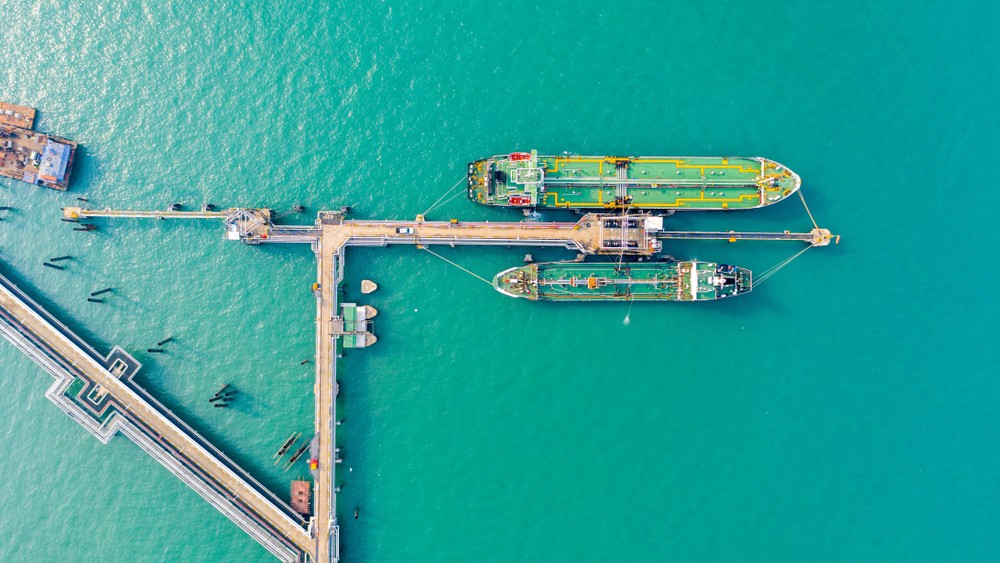
HomeGeopoliticsAsiaEurasianetEurasianet is an independent news organization that covers news from and about the South Caucasus and Central Asia, providing on-the-ground reporting and critical perspectives on…More InfoSet us as your preferred Google sourcePremium ContentByEurasianet- Jul 09, 2026, 1:00 PM CDTGeorgia will develop the Anaklia Deep Sea Port under a state-owned "landlord" model after negotiations with a Chinese consortium ended. The government aims to make the port a major Middle Corridor logistics hub while retaining ownership of core infrastructure. Although construction is targeted for completion in 2029, no major investors or terminal operators have yet been confirmed. China has walked away from the Anaklia Deep Sea Port project, ending speculation over one of Georgia’s most important infrastructure projects. The Georgian government nowsaysit wants to develop and operate the port on its own. Few infrastructure projects in the Caucasus have been as geopolitically embattled as Anaklia. The project was launched in 2016, with a consortium of Georgian and US companies taking the lead in construction. The Georgian Dream government eventuallycanceledthe $2. 5 billion contract in 2020 andhit pausefor a few years. In mid-2024, Georgian officialsre-awardeda construction contract to a Chinese consortium, underscoring the government’s geopolitical pivot away from the US and European Union to Russia and China. Georgian officials now say the port will be developed under a “landlord” model, with the state retaining ownership of core infrastructure while bringing in international partners in limited capacities. The statement made no mention of the Chinese consortium previously selected for the project, a silence that effectively confirms months of speculation that Beijing lost interest in the venture. China’s state-owned China Communications Construction Company (CCCC) and its Singapore-registered subsidiary, China Harbour Investment, gained a 49 percent stake in the port in 2024. By late 2025, however, reports began circulating that the consortium was no longer involved. The July 6 announcement by the Georgian government appears to formalize that exit. “The ‘landlord’ model will give the state the opportunity to develop the Anaklia Port not with a single partner, as previously planned, but simultaneously in partnership with several states and companies. This will create the best conditions for attracting cargo to the port and, consequently, for ensuring its maximum efficiency,” Economy Minister Mariam Kvrivishvilisaid. Kvrivishvili noted the growing importance of the Middle Corridor, a trade route linking Asia and Europe while bypassing Russia, describing Anaklia as “not only regional but also internationally significant as a strategic infrastructure project. ” She argued that heightened foreign interest requires a model that safeguards state control. “The state will be the owner of the Anaklia Deep Sea Port. No one else will own a project that is so strategically important for our country,” she said. The government is targeting 2029 for the port’s first phase to become operational, though it has yet to name a single confirmed partner or investor. Kvrivishvili said Tbilisi “particularly welcomes” investment from countries along the Middle Corridor. Western nations, with whom Georgian Dream’s relations have soured considerably, went unmentioned. Uzbek officials recently visited the site and expressedvague interestin participating in the facility’s development. Georgia has plans to invest $7 billion into strategic transport infrastructure by 2032, a package that includes funding for the Anaklia project, the modernization of Georgian Railways and the completion of the country’s high-speed highway network. Critics note that construction has never been the hard part of any port project; keeping it running profitably for decades is. Many read Georgia’s move as consistent with a broader pattern from Bidzina Ivanishvili’s Georgian Dream government – a calculated move to secure for Georgia a Middle Corridor role while trying to win back some goodwill from Western partners it hasalienatedthrough itsauthoritarian drift. Full state ownership of the port fits into that strategy. ByEurasianetMore Top Reads From Oilprice. comU. S. LNG Exporter Reaps Windfall as Middle East Turmoil Drives Fees HigherOil Prices Jump After Iran Attacks Commercial VesselsUS Crude Oil, Product Inventories Fall Even As Hormuz Traffic Begins to FlowDownload The Free Oilprice App TodayBack to homepageEurasianetEurasianet is an independent news organization that covers news from and about the South Caucasus and Central Asia, providing on-the-ground reporting and critical perspectives on…More InfoLeave a commentEXXON Mobil-0. 35Open57. 81Trading Vol. 6. 96MPrevious Vol. 241. 7BBUY57. 15Sell57. 00