China's Navy test fires nuclear-capable missile into Micronesia
The Chinese People’s Liberation Army Navy last week launched a nuclear-capable ballistic missile from a submarine in the South Pacific as part of a “routine arrangement” of the PLA Navy’s annual training.
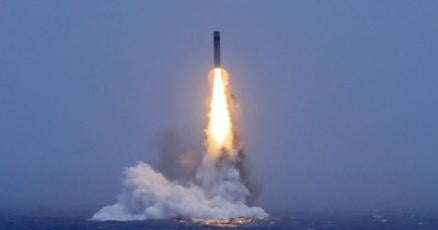
The Chinese People’s Liberation Army Navy last week launched a nuclear-capable ballistic missile from a submarine in the South Pacific as part of a “routine arrangement” of the PLA Navy’s annual training. According to China’s state-run media,Xinhua News Agency, the missile was carrying a dummy warhead and landed in the Pacific Ocean at 12:01 p. m. on July 6. Reporting fromRadio Free Asiasaid the missile’s trajectory spanned across the Philippine Sea and south of Guam before landing near the Republic of the Marshall Islands and Nauru. In a statement this past week, the Office of the President of the RMI expressed its concern over the test. “Although reportedly carrying a dummy warhead, no nation understands the weight of nuclear testing in Pacific waters better than ours,” the office wrote. “We call on China — as we have called on every nuclear power before it — to explain its intention in language as clear as the harm such tests can cause. ”The PLA Navy said the test launch complies with international law and international practices and was not directed at any specific country or target. Department of State spokesperson Thomas Pigott in a statement said the U. S. monitored the test launch. “At a time when the United States is working harder than ever to prevent nuclear proliferation, China is doing the opposite,” he said. “Beijing’s rapid and opaque nuclear weapons buildup is of great concern to the region and the world. ”China’s military more thantripledthe number of nuclear warheads in its arsenal between 2019 and 2025, going from 200 to 700 warheads in that span, the Pacific Daily News has reported. The PLA is projected to reach 1,500 warheads by 2035, and is growing its stockpile of nuclear-capable missiles like the DF-26, nicknamed the “Guam Killer. ”Last week’s missile test came off the heels of the U. S. ’s Valiant Shield 2026 military exercise and amid Exercise Rim of the Pacific, RIMPAC, 2026. ‘We can hit you’Pacific Center for Island Security chairman Robert Underwood told the Pacific Daily News the message the China is making to the U. S. is simple: “We can hit you. ”Underwood said Last week’s test was the first of its kind and signals even more military parity with the U. S. While missile tests aren’t new to the region, the launch coming from a submarine and China’s continued development into that capacity create an environment of “strategic uncertainty”. Underwood said if launched off the coast of China, the PLA Navy’s missiles can hit as far away as Fiji, and likely Hawaii and Alaska. How the U. S. and its allies respond to the test and growing militaristic tensions are important he added. “How do you deal with that strategic uncertainty?” he said. “How do we work towards peace?”The options are continued military investment or fostering economic and the diplomatic relationships with island territories and nations. Underwood said the Pacific islands want economic development, and military development continues to paint a bigger target on their backs, straining that desire. “If you’re a tourist and all you hear is that Guam is a possible area for conflict, why would you want to go there?” he said. “It’s not just defending ourselves against Chinese missiles. It’s about our economic futures and our possibilities. ”For the first time since World War II, Underwood said Guam and the Pacific Islands are the location for actual conflict. For Guam residents, he said they need to answer how much more involvement do they want in this conflict. “If we’re going to be a target, then how do we protect ourselves while being a target?” he said. More from this section