Cold Weather Health & Home Safety Checklist for Older Adults
A little preparation in October saves a lot of stress in January. Here’s the room-by-room checklist for getting a home ready for winter safely. Cold weather brings specific, well-documented risks for older. . .
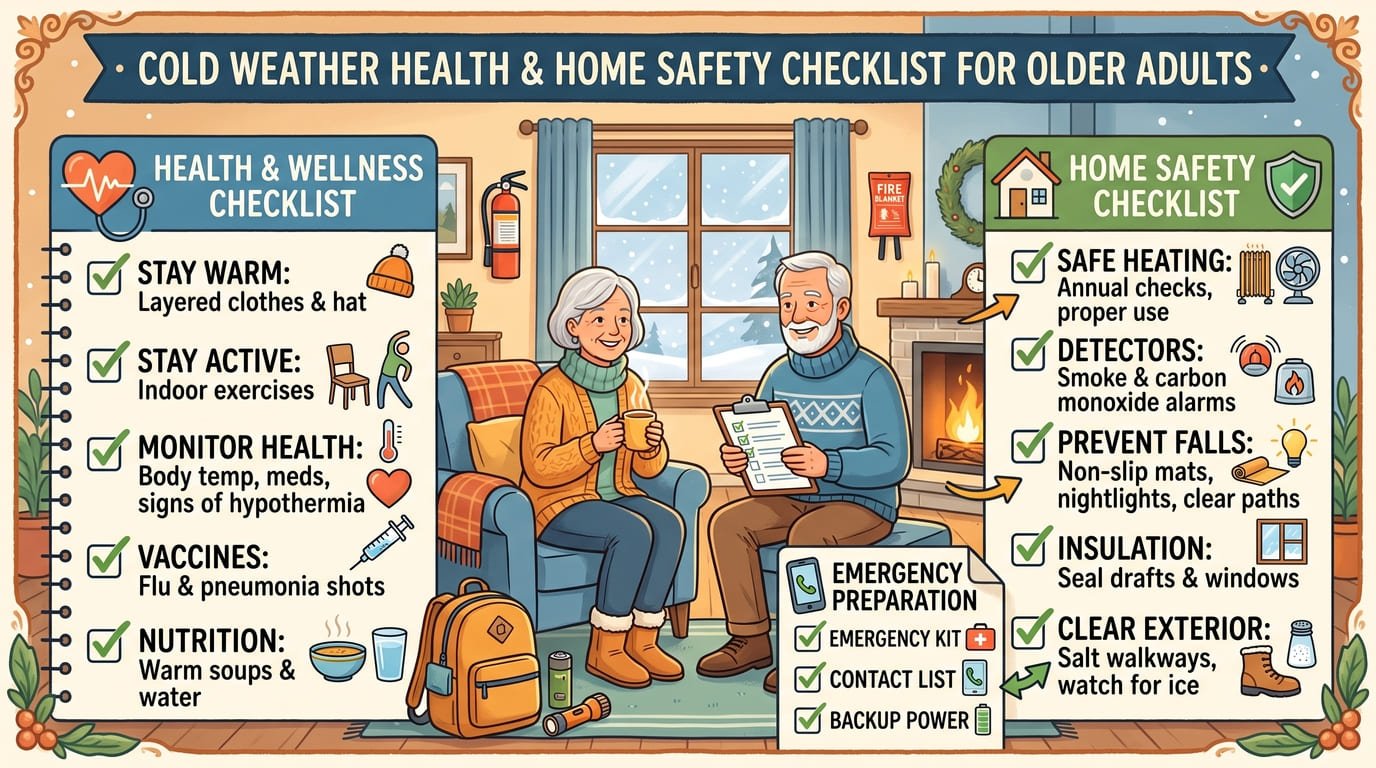
A little preparation in October saves a lot of stress in January. Here’s the room-by-room checklist for getting a home ready for winter safely. Cold weather brings specific, well-documented risks for older adults—from an increased risk of falls on icy surfaces to the cardiovascular strain that cold exposure can place on the body. Most of these risks are manageable with some preparation before the first hard freeze. This checklist walks through the home room by room, plus a few whole-house and health-related items worth addressing before winter fully sets in. Heating System & Energy SafetyHave the furnace or heating system inspectedbefore the season starts—a pre-winter service call is far cheaper than an emergency one in January. Replace furnace filtersand check that vents aren’t blocked by furniture. Test carbon monoxide detectorsand replace batteries; CO risk rises in winter as heating systems and space heaters see heavier use. Review space heater safety— keep them at least three feet from anything flammable, and never leave one running unattended or overnight. Check for draftsaround windows and doors and weatherstripping as needed to keep heating costs manageable. Entryways, Steps & WalkwaysAreaWhat to CheckFront and back stepsSecure handrails on both sides; add non-slip treads if steps are smooth or woodenDriveway and walkwaysHave ice melt or sand on hand before the first freeze, not afterOutdoor lightingEnsure entry points are well-lit for shorter winter days and early darknessDoormatsUse slip-resistant mats to catch snow and wet tracked in from outsideFall Prevention Starts at the Front DoorNon-slip step treads, secure handrails, and good outdoor lighting are some of the highest-impact, lowest-cost upgrades for winter fall prevention. Shop Home Safety Essentials →Indoor Fall PreventionSecure or remove loose area rugs that can slip on hard flooringAdd grab bars near tubs, showers, and toilets if not already installedEnsure hallways and stairwells are well-lit, including nightlights for overnight bathroom tripsKeep frequently used items within easy reach to avoid unnecessary reaching or step-stool useEmergency PreparednessWinter storms can knock out power for hours or days, which carries added risk for anyone relying on medical equipment, refrigerated medication, or a home heating system that requires electricity. A basic winter emergency kit should include:Flashlights and extra batteries (avoid candles as a primary light source due to fire risk)A battery-powered or hand-crank radio for weather updates during outagesA several-day supply of any critical medicationsExtra blankets and warm layers in case heating is temporarily lostA charged battery pack for phones in case of extended outagesA list of emergency contacts, including any home healthcare providersStay Connected During Winter OutagesA medical alert system with cellular backup keeps working even if the home phone or internet service goes down during a winter storm—one less thing to worry about. Compare Medical Alert Systems →Health Considerations for Cold WeatherCold exposure places extra strain on the cardiovascular system, and older adults are more susceptible to both hypothermia and cold-related complications from existing conditions like arthritis or circulatory issues. A few practical steps: keep the thermostat at a consistent, safe temperature (many experts recommend at least 68°F for older adults); dress in layers even indoors on especially cold days; and avoid overexertion when shoveling snow, which is a well-documented cardiac risk—consider hiring help or using a lightweight snow tool designed to reduce strain. Vehicle ReadinessIf you’re still driving through winter, a few checks matter: tire tread depth, working defrosters, an emergency kit in the car (blanket, flashlight, phone charger, basic supplies), and a full tank of gas during storm warnings in case of unexpected delays. A Simple Pre-Winter TimelineTimeframePriority TasksEarly OctoberSchedule furnace inspection, test detectors, and order ice melt/sandLate OctoberInstall outdoor lighting fixes, secure handrails, and weatherstrip doors/windowsEarly NovemberAssemble emergency kit, review medication supply planBefore first freezeFinal walk-through of steps, walkways, and entry pointsFrequently Asked QuestionsWhat’s the most important home safety upgrade before winter?Securing handrails and adding non-slip treads to outdoor steps tends to have the highest safety impact for the lowest cost, since falls on icy or wet steps are one of the most common winter injuries for older adults. What temperature should the thermostat be kept at for older adults in winter?Many health guidelines recommend keeping indoor temperatures at 68°F or above for older adults, since cold indoor environments are linked to increased cardiovascular strain and hypothermia risk. How can I prepare for a winter power outage?Keep flashlights, a battery or hand-crank radio, extra blankets, a several-day medication supply, and a charged phone battery pack on hand. A medical alert device with cellular backup is also worth considering, since it continues working even if home phone or internet service is disrupted.