Dangers Of Biohazard Exposure: Health Risks | Bio Recovery
The dangers of biohazard exposure include potential contact with bloodborne pathogens, infectious bacteria, viruses, bodily fluids, and other hazardous biological materials that may pose serious health risks. . . .
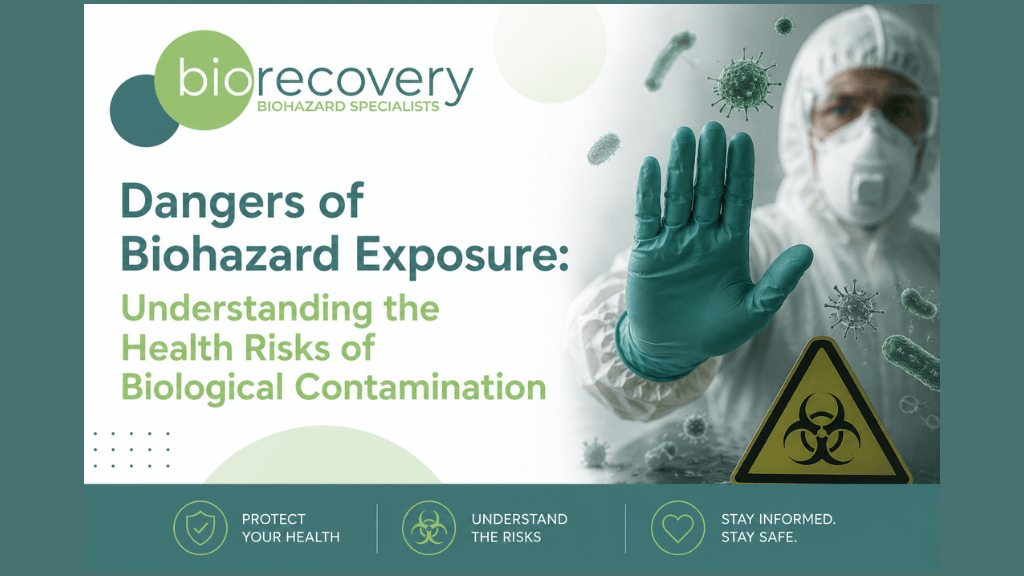
The dangers of biohazard exposure include potential contact with bloodborne pathogens, infectious bacteria, viruses, bodily fluids, and other hazardous biological materials that may pose serious health risks. Exposure can occur through direct contact, inhalation, accidental ingestion, or contact with contaminated surfaces and materials. Because many biological hazards are invisible to the naked eye, contamination may remain present even after visible blood, fluids, or waste have been removed. What Is Biohazard Exposure?Biohazard exposure occurs when a person comes into contact with biological materials that may contain harmful microorganisms or other potentially infectious substances. Examples include:BloodBodily fluidsHuman tissueDecomposition fluidsMedical wasteAnimal wasteContaminated sharpsDepending on the situation, exposure may present risks to homeowners, property managers, maintenance personnel, first responders, and cleanup workers. Common Types of BiohazardsBlood and Bodily FluidsBlood is one of the most common biohazards encountered during trauma scenes, accidents, and unattended deaths. Potential concerns include:Bloodborne pathogensCross-contaminationSurface contaminationThis is why professional remediation often follows strict safety procedures andOSHA biohazard cleanup guidelines. Decomposition ContaminationWhen a body remains undiscovered for an extended period, decomposition can create significant biological contamination. Potential issues include:Bodily fluid migrationStructural contaminationAir quality concernsOdor infiltrationDecomposition-related contamination often requires a specializedbiohazard cleanup processto safely remediate affected areas. Infectious Disease ContaminationCertain environments may contain contamination from infectious diseases or pathogens. Examples include:Healthcare settingsResidential propertiesPublic facilitiesCommercial buildingsProper cleaning and disinfection procedures are critical in these situations. Animal Waste and Hoarding ConditionsProperties affected by severe hoarding or animal waste accumulation may contain:BacteriaMoldParasitesAirborne contaminantsExposure risks can increase significantly as contamination accumulates over time. How Biohazard Exposure OccursMany people assume exposure only occurs through direct contact with blood or bodily fluids. In reality, exposure can happen in several ways. Direct ContactExposure may occur when contaminated materials come into contact with:Broken skinOpen woundsMucous membranesIndirect Surface ContactContaminated surfaces can transfer biological materials to:HandsClothingToolsEquipmentThis can contribute to the spread of contamination throughout a property. InhalationCertain contaminants may become airborne during:Cleaning activitiesMaterial removalStructural demolitionInhaling contaminated particles may increase health risks in some situations. Accidental IngestionTouching contaminated surfaces and then eating, drinking, or touching the face can create opportunities for exposure. Potential Health Risks Associated with Biohazard ExposureThe specific risks depend on the nature of the contamination and the individual’s circumstances. Potential concerns may include:Exposure to Bloodborne PathogensBloodborne pathogens are microorganisms that may be present in blood and certain bodily fluids. Examples can include:Hepatitis BHepatitis CHIVProfessional remediation is designed to reduce exposure risks associated with these hazards. Bacterial ContaminationCertain biological materials may support bacterial growth. Potential effects can include:Skin irritationRespiratory concernsGastrointestinal illnessAir Quality IssuesAdvanced decomposition, hoarding conditions, and extensive contamination may negatively impact indoor air quality. Potential symptoms may include:HeadachesNauseaRespiratory discomfortPsychological ImpactExposure to traumatic scenes can also affect emotional and psychological well-being. Many families and property owners find professional remediation helpful because it reduces direct interaction with traumatic environments. Warning Signs of Potential Biohazard ContaminationSome contamination is obvious, but other situations may be less apparent. Potential indicators include:Strong odorsVisible blood or bodily fluidsStaining on flooring or wallsInsect activityUnexplained discolorationEvidence of decompositionAnimal waste accumulationIf contamination is suspected, it is often best to avoid disturbing the area until it can be evaluated. Why Household Cleaning May Not Be EnoughMany household cleaning products are designed for routine cleaning rather than biohazard remediation. Challenges may include:Hidden contaminationPorous material absorptionIncomplete disinfectionImproper waste disposalUnderstandinghow to disinfect blood safelyis an important first step when evaluating contamination risks. When Professional Biohazard Cleanup Is RecommendedProfessional remediation may be appropriate when contamination involves:Large blood spillsTrauma scenesCrime scenesUnattended deathsAdvanced decompositionSignificant bodily fluid contaminationHoarding conditions with biological wasteProfessionals follow established remediation procedures designed to reduce exposure risks and restore safe conditions. Learn more abouthow crime scene cleanup works. What to Do If You Suspect Biohazard ExposureStep 1: Avoid Disturbing the AreaMinimize contact with contaminated materials whenever possible. Step 2: Restrict AccessKeep children, pets, and others away from the affected area. Step 3: Use Appropriate PPEIf interaction is necessary, use suitable personal protective equipment. Step 4: Seek Professional EvaluationA qualified remediation professional can determine the extent of contamination and recommend appropriate next steps. How Exposure Risks Affect Cleanup CostsThe severity of contamination is one of the largest factors affecting both remediation complexity and overallbiohazard cleanup cost. Extensive contamination often requires additional labor, protective equipment, material removal, and disposal procedures. In most situations, homeowners insurance may help cover the cost of professional remediation following a covered event. Learn more abouthomeowners insurance and biohazard cleanup. Frequently Asked QuestionsWhat are the dangers of biohazard exposure?Potential dangers include exposure to bloodborne pathogens, infectious materials, bacteria, viruses, and other biological contaminants that may pose health risks. Can dried blood still be hazardous?Because blood may contain infectious materials, it should be treated as potentially hazardous regardless of whether it appears fresh or dried. How does biohazard exposure occur?Exposure can occur through direct contact, inhalation, indirect surface contact, or accidental ingestion of contaminated materials. What are common examples of biohazards?Common examples include blood, bodily fluids, decomposition contamination, medical waste, animal waste, and other potentially infectious materials. Is professional biohazard cleanup necessary?Professional remediation may be appropriate when contamination is extensive, involves biological hazards, or presents potential health and safety concerns. Can household cleaners remove biohazards?Routine cleaning products may not address all contamination risks, particularly when biological materials have penetrated porous surfaces or structural materials. Key TakeawaysBiohazard exposure can involve contact with potentially infectious materials and contaminants. Risks may include bloodborne pathogens, bacterial contamination, air quality concerns, and other health hazards. Exposure can occur through direct contact, inhalation, surface contamination, or accidental ingestion. Proper safety procedures and remediation methods help reduce exposure risks. Professional biohazard cleanup is often recommended for significant contamination events.