EU's new entry system frustrates travellers: up to two-hour waits at Europe's major airports - ProtoThema English
Financial Times data show waiting times at Frankfurt, Munich and Amsterdam doubling this summer under the EU's new Entry/Exit System, prompting eight member states and Switzerland to request extended exemptions ahead of September's looming deadline
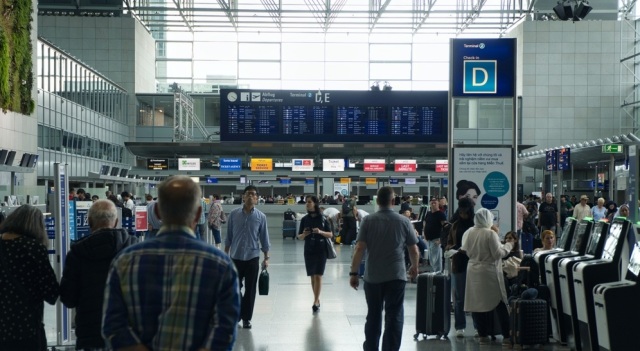
Maximum waiting times at major Europeanairportshave doubled this summer compared with last year, a consequence of the troubled rollout of the European Union’s new electronic border control system. According to data from travel analytics firm Qsensor, cited by the Financial Times, the maximumwaiting timeat Frankfurt airport reached 120 minutes in July amid the surge in summer travel,up from 60 minutes a year earlier. At Munich, the longest waits rose from 31 to 60 minutes, while at Amsterdam airport the maximum waiting time jumped from 80 to 120 minutes. The travel industry had repeatedly warned that the new systemwould cause major delays, pointing out that its design had not sufficiently accounted for the risk of bottlenecks, as airports struggle to process passenger checks quickly enough. The EU’s new entry and exit systemThe European Union introduced theEntry/Exit System (EES)in April, a new electronic border system requiring travellers from the UK and other non-EU countries to register their fingerprints, photograph and personal details on their first arrival. Ryanair chief executive Michael O’Leary said the system had been“designed wrong”and that the process should be carried out online. “Only Europeans could invent something so ridiculous,” he told investors last month, adding that the airline had recorded significant queues at around 15 airports. The system isdesigned to strengthensecurityat the EU’s external borders by recording who enters and exits the bloc. Among its aims is identifying those who overstay their visas in the EU, as well as helping to trace individuals wanted for crimes. However, its rollout has been marred by delays, technical problems and malfunctions in the necessary equipment. “Departure delays and operational problems”A spokesperson for Frankfurt airport said the new border checks had caused “departure delays and further problems with the airport’s operations. ”The data Qsensor supplied to the Financial Times give a picture of queue waiting times at specific points during the day, based on both passenger-reported data and publicly available information. “As waiting times rise, we are seeing growing concern among both British and North American travellers about how long they will have to wait in the queue,” said Oliver Maxfield, founder of Qsensor. The data records clear increases in waiting timesduring peak hours at the three airports, which are among Europe’s largest aviation hubs. At Munich, the rise in waiting times was evident only among passengers who had to go through manual checks, an indication that EES registrations contributed to the delays, since automated queues are reserved for EU passengers, who do not need to register with the new system. Airports temporarily suspend some checksMany airports have temporarily suspended certain EES procedures, such as not collecting fingerprints during peak hours, in order to ease pressure and reduce queues. This flexibility is due to end in September. However, eight EU member states, along with Switzerland, have asked the European Commission to extend the exemptions. The Commission is currently discussing with member states the possibility of extending the existing exemptions. “Regarding the period after summer, we are in close and constructive contact with the few member states facing challenges at specific border crossing points,” said a European Commission spokesperson. According to the spokesperson, the average EES registration time is 70 seconds, and “in most cases” the impact on travellers from outside the EU is limited. The Commission also stressed the “very clear security benefits” the new system offers, noting that 160 million entries and exits have been recorded since it came into operation. “Pressure points” at some airportsBritish Airways chief executive Sean Doyle told reporters the new system had caused“pressure points”at some airports, though he said it had not “significantly” affected the airline’s overall operations. EasyJet chief executive Kenton Jarvis, meanwhile, called on airports not making use of the temporary relaxation measures to show “common sense. ” “Use common sense and don’t leave people standing there for three hours,” he said. Ask me anythingExplore related questions> GreeceIn reverence, the emotional deposition in Jerusalem, see photos & videoThe Holy Temple of the Resurrection opened after many days due to the war between Israel and IranApril 10, 2026In the final stretch for the accreditation of joint master’s degrees: Aiming for their launch in the coming academic yearApril 10, 2026Schedule for Epitaph Procession today (10/4)April 10, 2026Perfect weather for Easter excursions, according to Tsatrafyllia’s forecastApril 10, 2026Easter in Greece: The customs that continue in Greek tradition – From Nafpaktos to CorfuApril 10, 2026