‘Heatwave is wake-up call to act’: RIBA urges more action on climate change
RIBA president Chris Williamson has called on the government to act faster in cutting carbon emissions and to promote sustainable technologies in response to the latest Climate Change Committee report
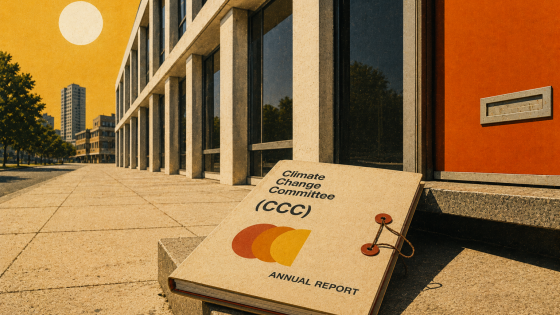
Williamson argued the heatwave currently affecting the country should come as a ‘wake-up call to act’ on climate change by increasing investment into energy-efficiency upgrades and implementing a ‘comprehensive National Retrofit Strategy’. The annual report sets out the government’s progress in reducing carbon emissions. Although the UK remains among the world leaders in moving towards net zero, the slow rollout of sustainable technologies has created a ‘significant gap’ between targets and credible plans to hit them, it says. The report describes the next 12 months as a ‘crucial year’ in which the possibility of meeting the Sixth Carbon Budget (2033-2037) will require rapid progress and Parliament will vote on the Seventh Carbon Budget, a bill which may meet serious political opposition. Williamson said: ‘This report could not have come at a more significant moment, as the UK enters its second heatwave of the year. With the last three years the hottest on record, we could be set for another record-breaking year – and this is a wake-up call to act. ’He added: ‘The government cannot ignore the urgent need to push forward essential energy efficiency improvements to homes and public buildings, which are critical to protecting people’s health and wellbeing as well as reducing energy costs and cutting carbon emissions. ’He added that building upgrades were being delayed due to ‘insufficient investment and targeted incentives’, and pointed to the RIBA’s longstanding advocacy of a National Retrofit Strategy as the ‘kind of clear action we need’. It was noted in the report that the UK is behind most of Europe in both its implementation and its ambitions to install heat pumps in homes, with the technology present in fewer than 2 per cent of households. Williamson continued: ‘We stand ready to work with the government to both mitigate and adapt to climate change and ensure our buildings help deliver a greener, more resilient future. ’Extreme weather across the UK, such as record heatwaves and increased flooding, were highlighted by the report as signs that the country is already experiencing the impacts of climate change. Taking measures to adapt to new climate norms, with buildings designed to withstand the heat for example, was considered cheaper and more effective than responding to damage as it happens. Reducing reliance on fossil fuels was also cited as critical in protecting households and business from volatile fuel prices caused by the war in Iran. Key points in the Climate Change Committee’s Progress in reducing emissions 2026 report to Parliament:UK climate action is progressing too slowly, particularly in reducing emissions from transport, buildings, agriculture, land use, and aviationElectrification is the biggest priority, requiring faster deployment of electric vehicles, heat pumps, industrial electrification, and low-carbon electricity. Current government plans are insufficient to meet the UK’s 2030 climate target, creating a significant gap to its Paris Agreement commitment and putting future carbon budgets at risk. Slow electrification weakens energy security, leaving households and businesses exposed to volatile fossil fuel prices and geopolitical shocks. Electric technologies reduce costs and emissions, with households using EVs and heat pumps far less affected by recent energy price increases than those relying on fossil fuels. Greater electrification could deliver major economic benefits, including lower energy bills, improved air quality, reduced inflationary pressures, and savings of nearly £8 billion in oil and gas imports by 2030. The Government’s long-term emissions strategy relies heavily on future carbon removals, but currently lacks a clear plan for delivering them at scale. Climate impacts are already being felt in the UK, with more frequent heatwaves, record temperatures, and severe flooding highlighting the urgency of reaching Net Zero and improving climate resilience.