How Oman and Europe can open the Strait of Hormuz for good
WASHINGTON—Israeli Prime Minister Netanyahu and US President Donald Trump, who met face-to-face on Tuesday for the first time since the Iran war began, havedivergentviews on how to proceed in the conflict. . . .
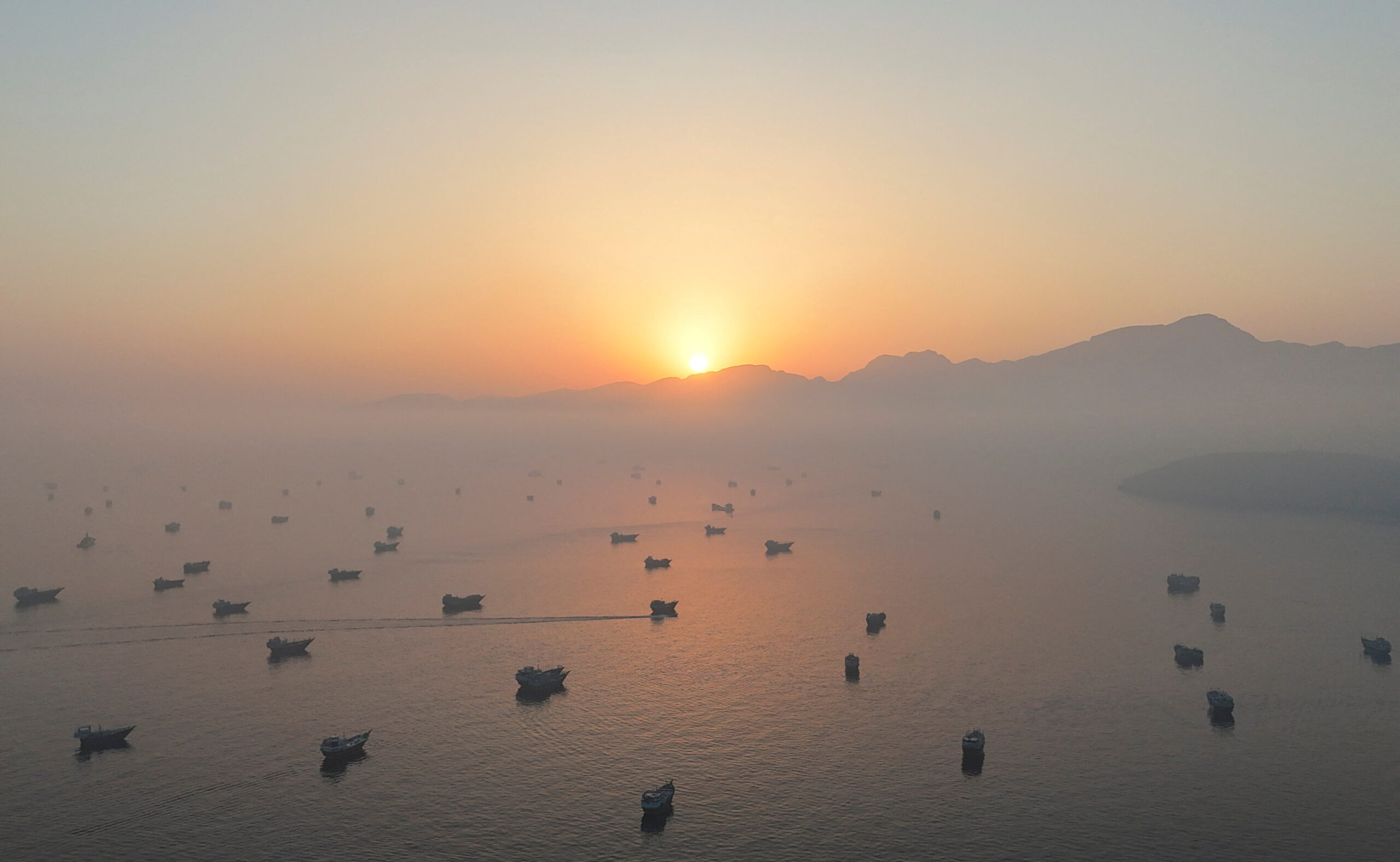
WASHINGTON—Israeli Prime Minister Netanyahu and US President Donald Trump, who met face-to-face on Tuesday for the first time since the Iran war began, havedivergentviews on how to proceed in the conflict. But they apparently share anassessmentthat Iran has not yet feltenough painto become more flexible in its negotiations. That assumption is mistaken. Iran’s leaders have repeatedly demonstrated theirwillingness to sacrificethe Iranian people and the country’s welfare to ensure the regime’s survival, making a return to major conflict—as Trump againthreatenedwith choice words today—more likely to harden Iran’s position than to compel it to make a deal. This dynamic requires a new approach to achieve an outcome that airpower cannot. Given the complete lack of trust between Washington and Tehran, the US cannot successfully lead that process. But it should do everything in its power to quietly support a process led by those in Europe, Asia, and the Gulf most impacted by the closure of the Strait of Hormuz. Tehran’s wagerThe Iranian regime’s decision-making has always been consensus-based, but the new leadershipappears dividedon how hard a line to take with the United States. The division is readily apparent in Iran’s inconsistent behavior just over the past ten days of back-and-forth strikes. Where Iranian leaders are likely united, however, is in theirrefusal to relinquishcontrol over the Strait of Hormuz. For the first time, Iran has two significant points of leverage in any negotiation, rather than one: its nuclear program and, now, the strait. And Iranian leaders are almost certainly betting, once again, that they can withstand greater pain than the United States and broader world—even at the cost oflost sanctions reliefand renewedUS strikes. And the pain to the wider world could be sharper this time. During the earlier phase of the conflict, crude oil never reached the $150 per barrelpredictions, in part becausedemandslowed and China’s reserves helped to buttress the shock. Those buffers may not appear again. And while the US is unlikely to face domestic energy shortages due to its domestic production capacity, neither Americans nor American companies will be fully insulated from the effect of higher global commodity prices. Four ways forwardGiven these circumstances, four future paths exist. First, and most likely, is managed instability: months of full-scale war or intermittent conflict buttressed by temporary ceasefires and memorandums of understanding, with little progress toward permanently ending hostilities. Second, and least likely, given the intensity of divides between the US and Iran on the strait and Iran’s nuclear program, the United States and Iran—via Pakistani and Qatari mediation—reach an updated and comprehensive deal that both sides interpret the same way to prevent a resumption of conflict. Third, the United States intensifies its military campaign with a ground invasion along the coast of the Strait of Hormuz, on Kharg Island, or both. Doing so would be a grave mistake. A ground invasion would dramatically raise the risk to US servicemembers’ lives while doing little to change Iran’s calculus. The result would be a game of chicken with no clear exit: US forces exposed on hostile ground for months or perhaps years before even a faint hope of a payoff. There is a fourth and final option. It is the most outside-the-box of the four, because it calls on more countries to get involved. But it nonetheless is the one world leaders should support. No country wants to see Iran initiate a toll in the Strait of Hormuz. Under theUN Convention on the Law of the Seathe strait is an international waterway even as it overlaps with the territorial waters of its two littoral states. Nevertheless,Tehran claimsbroader sovereign control over the strait. But if Iran can make that argument, so too can Oman. The global community should leverage that standing in two ways to prevent Iran from exercising unilateral control over the strait. First, the international community, led by European, Asian, and the other five Gulf countries’ leaders should work to convince Oman to declare that Iran’s claim cannot be unilateral. This group of leaders represents those most impacted by the closure of the strait but those who also have greater standing to make the pitch to Oman, all having also not been meaningfully consulted by the US before the war was launched. As the strait’s other littoral state, Muscat has an equal claim that it intends to assert for as long as Tehran asserts its own. Doing so would not upendOmani regional neutralitybut preserve it, as well as Muscat’s core foreign policy. If Tehran has de facto control of the strait, it will diminish Oman’s sovereignty, place its entire seaborne economy under Tehran’s influence, and undermine its claim as a neutral mediator for regional and global conflicts. Second, Oman should ask theBritish- and French-led maritime security missionto immediately deploy to the Strait of Hormuz within Omani territorial waters only. IfMuscat invitedthe mission, it would not be contesting Iran’s waters but operating at the invitation of one of the two states bordering the strait. Other Gulf capitals’view of Muscatranges from skepticism to hostility due to its continued defense of, and closeness to, Tehran, even as Gulf states arerepeatedly targetedand struck by Iran. Hosting such a mission would enable Oman to begin repairing relations with its Gulf neighbors. Conditions insistWashington and London arereportedto be planning a meeting on opening the strait, but many in Europe arealready dismissing it—disinclined to help Washington after the Trump administration dismissed building an alliance or even coordinating with European counterparts before the war began. Participants in the British- and French-led mission have long planned for the naval deployment to be launched “when conditions permit”—diplomatic-speak for not until the ceasefire is permanent and holding. Three weeks ago, mediareports indicatedthe mission might launch early, but it didn’t. The ongoing hostilities and global economic harm make it more imperative that London and Paris launch the mission immediately—for their own interests, irrespective of the US. Once the ships are deployed, Tehran would immediately face a different strategic choice: attack a multinational force operating at Muscat’s request in Omani waters or tolerate a mission that blunts its newest source of leverage. Iran would likely attack the mission in some form to test its resolve, in hopes of compelling the mission to redeploy out of the strait. But sustained Iranian attacks over months are less likely. Iranian leaders may be angered by a European and East Asian mission into the strait, but unlike bilateral conflict with Washington, constant attacks on a coalition of European and Asian nations would risk prompting the formation of a global counter-Iran alliance that does not currently exist. Such a move would be a risk for European leaders, and difficult to sell to their populations; having just entered office, British Prime Minister Andy Burnham, for example, is likely to be reluctant to expend political capital on a military effort sure to be unpopular with his base. French President Emmanuel Macron, who is alreadyunpopulardomestically, is ending his tenure next year and unlikely to risk further diminishing his governing ability and influence by risking the lives of French troops. But the benefits would be undeniable. It is European, Middle Eastern, and Asian countries that arestruggling the mostfrom the shipping disruptions. It is European countries that have been at the forefront of insisting on the need toensure their own securityout from under the US security umbrella. And it is European leaders who long toadvance relations with Gulfstates that have the capital to invest in energy and defense technologies, while Gulf Cooperation Council leaders will be more responsive if they view Europe as putting skin in the game. No country need abandon the legal principle that the Strait of Hormuz is an international waterway requiring freedom of navigation. But that principle can run in parallel with the realpolitik of the moment, to enable a maritime mission that helps open the strait and end the conflict. More US air strikes alone won’t generate greater flexibility from Iran. The better way to create an enduring ceasefire is through Muscat and Europe, not Tehran and Washington.