How to Build a Fertility App Like Oova and Alife Health
Key TakeawaysBuilding a fertility platform like Oova and Alife Health requires integrating consumer health data, AI analytics, and clinical decision support for personalized care. Key features include hormone. . .
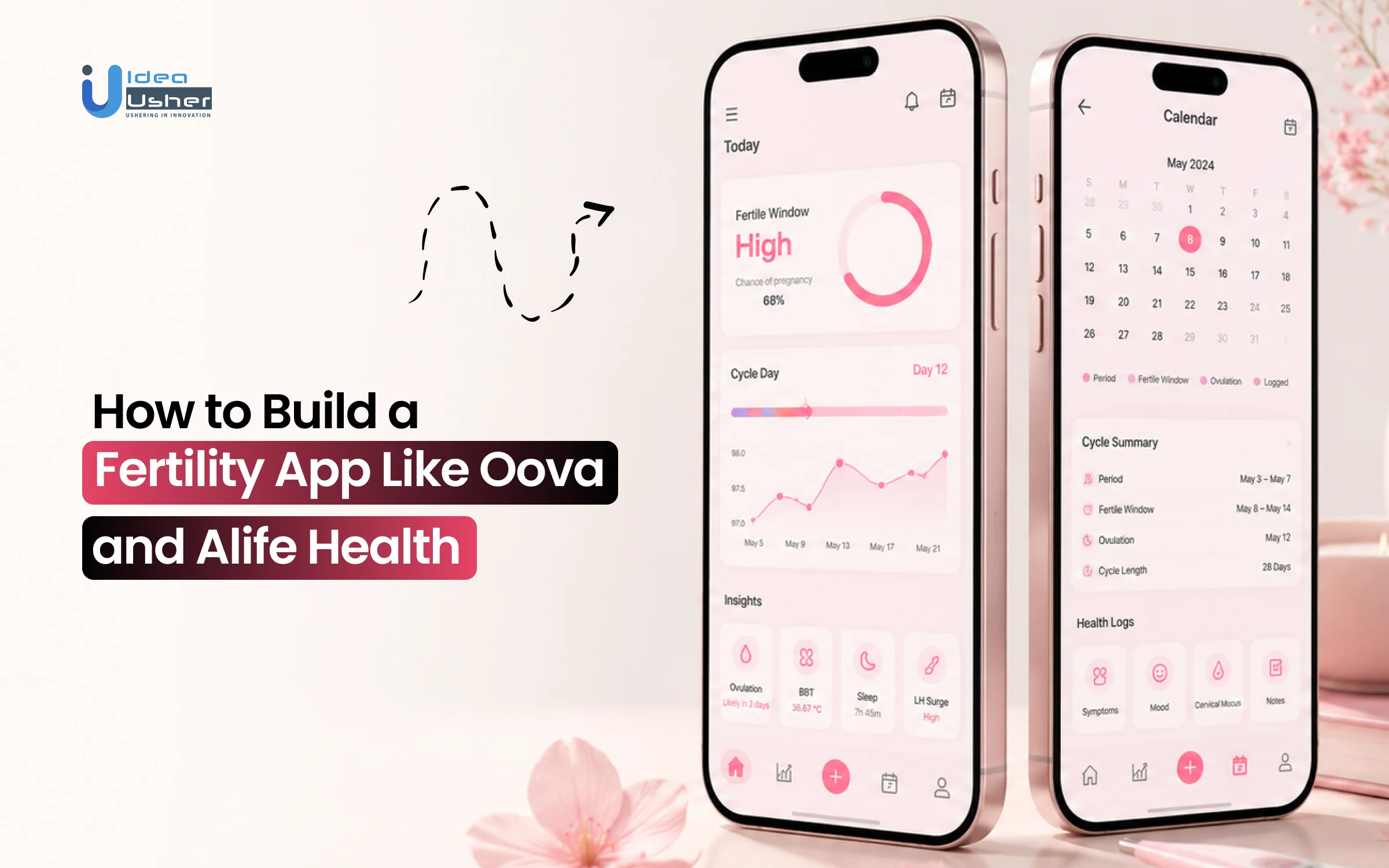
Key TakeawaysBuilding a fertility platform like Oova and Alife Health requires integrating consumer health data, AI analytics, and clinical decision support for personalized care. Key features include hormone tracking, AI-based predictions, ovulation confirmation, and seamless integration between patients and providers. A strong fertility platform combines hormone intelligence and AI clinical support for a unified care experience from tracking to IVF treatment. Successful development involves defining care models, designing user experiences, selecting technology stacks, and ensuring security and compliance. AI fertility apps generate revenue through subscriptions, software licensing, connected diagnostic tools, and healthcare partnerships. The competitive advantage in fertility care is no longer collecting more reproductive data. It is connecting every hormonal change to the next clinical decision. This shift is acceleratingAI fertility app development like Oova and Alife Health as healthcare innovators build intelligent unified fertility ecosystemscombining personalized hormone intelligence, AI-assisted IVF decision support and continuous patient engagement. Traditional fertility solutions addressed isolated stages like cycle tracking or IVF, creating fragmented patient experiences and disconnected clinical insights. Modern platforms unifyquantitative hormone testing, ovulation prediction, AI-powered hormone insights, embryo assessment, IVF analytics, medication management, EMR integration,and clinical decision support into a single ecosystem, connecting consumer reproductive data with evidence-based workflows to improve fertility outcomes. In this blog, we’ll explorehow to build an AI fertility app like Oova and Alife Health, covering core features, AI capabilities, technology stack, development costsand how IdeaUsher can developenterprise-grade fertility appthat unify at-home diagnostics with AI-powered clinical decision support into a continuous fertility care model. Why Fertility Apps Are Evolving Beyond Cycle TrackingThe digital women’s health sector is undergoing a major structural evolution, driven byat-home diagnostic hardware,machine learning, and expanding employer-sponsored benefits, with thefemtech market projected to reach $52. 9 billion to $145. 5 billion, at a CAGR of 15. 5% from 2026 to 2033, evolving from simple period-tracking calendars into a clinical technology vertical. As globalinfertility rates rise, affectingapproximately 1 in 6 adults worldwide, and couples delay parenthood, consumer expectations are shifting from passive period tracking tohigh-precision, diagnostic reproductive care, with next-generation fertility platforms transforming biological tracking intocontinuous, data-driven reproductive medicine. A. Rising Demand for Personalized Fertility CareStandard period apps rely on historical averages (such as a generic 28-day cycle with ovulation on day 14). However, clinical research shows thatfewer than 13% of women have a standard 28-day cycle, rendering calendar-based predictions unreliable for those managing complex hormonal or reproductive conditions. Clinical and market trends highlight several measurable shifts that are reshaping user expectations and driving demand for more intelligent fertility platforms. Addressing PCOS & Endometriosis:PCOS affects 8–13%of reproductive-aged women, making ovulation difficult to predict. Advanced fertility platforms combineBBT, LH urine strip analysis,andcervical mucus trackingto identify ovulation in irregular cycles. Shift to Quantitative Biomarkers:Users are moving from qualitative symptom logging toquantitative at-home diagnostics. Connected fertility platforms measurePdG (progesterone metabolite)levels to confirm successful ovulation rather than simply predicting fertile windows. Partner & Male Factor Integration:Male factor infertility contributes to nearly 50%of infertility cases. Modern platforms now supportat-home semen analysis, lifestyle tracking, and shared couple dashboards for comprehensive fertility management. B. Consumer Health Meets AI-Powered Fertility MedicineThe intersection of artificial intelligence, computer vision, and wearable biosensors is converting consumer smartphones into medical-grade diagnostic hubs:Technology & AI VectorTraditional App FunctionNext-Gen AI Fertility PlatformClinical & User ImpactOvulation Test Strip ProcessingManual visual interpretation of LH strips. Computer vision quantifiesLH test strip intensityvia smartphone camera. Eliminates visual error and improvesLH surgedetection accuracy. Continuous Temperature TelemetrySingle daily oral temperature reading. Continuouswrist/ring wearabletracking of overnight skin temperature. Detects subtle temperature shifts automatically, improving user compliance. Predictive Ovulation ModelingStandard mathematical averages (28-day rule)Machine learninganalyzes multi-variable biometric time-series data. Improves fertile window prediction byup to 40%over calendar methods. Virtual Clinic TriageSelf-reported fertility data only. DirectEHR integrationwith IVF clinics and fertility specialists. Shortens time-to-diagnosis for endocrine and structural infertility. C. Why Investors Are Backing Fertility TechnologyVenture capital, private equity, and institutional investors are injecting significant capital into advanced fertility technology platforms, driven by clear commercial and structural tailwinds:Strong VC Investment:Global femtech and digital reproductive health funding exceeds$2–2. 8B annually, with investors prioritizingclinical validation, FDA 510(k) clearance,and defensible health data assets. Corporate Benefit Expansion:Over60% of large U. S. employersnow offer fertility and family-building benefits via platforms likeMaven Clinic, Carrot Fertility,andProgyny, helping reduce high-risk pregnancy costs and avoid unnecessary IVF through proactive pre-conception care. Lowering Payer Costs:A singleIVF cycle costs $15K–$25K+. Continuous monitoring and earlier intervention improve outcomes while reducing unnecessary treatments and insurance claims. Expanded Lifetime Value (LTV):Fertility platforms now span the full reproductive journey frompre-conception and pregnancytopostpartum recoveryandperimenopause, increasing retention and long-term subscription revenue. The Enterprise Takeaway:Period tracking apps based solely on calendar math are becoming obsolete. The future of reproductive tech lies in integrated platformscombining bio-sampling, machine learning, and telehealth. These platforms can lower time-to-conception, reduce unnecessary intervention costs, and deliver continuous reproductive care. How Oova and Alife Health Are Transforming Fertility CareAs reproductive medicine shifts from reactive clinical interventions to continuous, data-driven management, platforms likeOovaandAlife Healthexemplify the dual pillars of modern fertility innovation:at-home physiological intelligenceandin-clinic AI decision support. Together, these technologies dismantle traditional barriers in reproductive healthcare, convertingsubjective physical evaluationsandsingle-snapshot lab drawsintostandardized, longitudinal data ecosystems. A. Oova: Personalized Hormone Intelligence at HomeDeveloped in partnership withMount Sinai Hospital,Oova is a clinical-gradeat-home diagnostic platform that translates multi-hormone fluctuationsinto actionable reproductive insights. Rather than forcing women onto standard 28-day model assumptions, Oova calculates an individual’s unique biological baseline. The platform combines quantitative hormone analysis, adaptive AI algorithms, and remote clinical monitoring to deliver personalized fertility insights beyond traditional cycle tracking applications. Quantitative Biomarker Triad:Using lateral-flow urine test strips scanned via a smartphone camera, Oova measures three vital hormonal markers quantitatively rather than returning binary positive/negative results:E3G (Estrogen metabolite):Detects the opening of the fertile window. LH (Luteinizing Hormone):Pinpoints the precise pre-ovulatory surge. PdG (Progesterone metabolite):Confirms that successful luteal-phase ovulation actually occurred. Algorithmic Baseline Learning:Oova’s machine learning engine adapts toirregular cycles caused by Polycystic Ovary Syndrome(PCOS) or perimenopause, calculating fertile windows based on individual trendlines rather than arbitrary population averages. Remote Patient Monitoring (RPM) Dashboard:Scanned test results populate immediately into aHIPAA-compliant portal for reproductive endocrinologists, allowing doctors to track patients’ cycles remotely and make real-time treatment adjustments. B. Alife Health: AI-Powered IVF Decision SupportWhile Oova empowers patients prior to clinical entry,Alife Health operates directly inside the in vitro fertilization (IVF) laboratory, across major networks (US Fertility, First Fertility, Europe’s FutureLife), harmonizing international clinical standards across dozens of clinics without new hardware. Alife Health delivers value through specialized AI products that optimize IVF workflows, improve clinical decision-making, reduce operational inefficiencies, and standardize treatment outcomes across fertility clinics. Alife Health Platform ProductCore Clinical Focus AreaPrimary Value DeliveredStim Assist™Ovarian stimulation dosing & trigger timing. Reduces gonadotropin costs by optimizing dosage for peak mature egg yield,fixing the 34% to 44% inter-observer disagreement rateamong embryologists. Embryo Predict™Objective embryo scoring & transfer selection. Provides neural network image analysis to rank embryo viability objectively, aiding transfer selection. Schedule Predict™Operating room & lab capacity management. Reduces over-capacity retrieval days by up to 65%, balancing clinical staffing and lowering clinic operating costs. Success Predictor™Patient conversion & expectation setting. Provides data-driven success probabilities,increasing patient conversion by >3%and improving satisfaction. C. What Businesses Should Learn from These PlatformsThe rapid scaling and enterprise adoption of Oova and Alife Health offer clear strategic directives for healthtech leaders and digital health developers:Operational DimensionOova Strategic TakeawayAlife Health Strategic TakeawayEnterprise Business AdvantageData InteroperabilityConnects at-home testingwith provider dashboards. Integrates directly withlab microscopes and EHRs. Zero Hardware Friction:Accelerates adoption without infrastructure changes. Clinical ValidationDeveloped withMount Sinaiand academic partners. Validated throughmulti-center randomized controlled trials. High Trust & Regulatory Confidence:Supports FDA clearance and provider adoption. B2B / B2C PositioningCombines DTC hardwarewith remote patient monitoring. Delivers enterprise SaaS for hospitals and fertility clinics. Diversified Revenue:Combines consumer sales with recurring enterprise SaaS revenue. D. Key Strategic Principles for Healthtech OperatorsLeading fertility platforms succeed by combining clinical evidence, intelligent technology, and scalable business strategies. These principles help improve patient outcomes, strengthen provider adoption, and create sustainable competitive advantages in digital fertility care. The following strategic principles reflect proven approaches adopted by successful AI fertility platforms to improve clinical value and long-term market growth. Move From Subjective to Objective Data:Software wins by eliminatinghuman guesswork. Alife replaces subjective visual grading withcomputer-vision scores, while Oova replaces qualitative paper test strips withquantitative digital readings. Prioritize the Provider-Patient Bridge:B2C consumer health tools achieve maximum retention andenterprise valuewhen they tie directly intoclinical workflows. DeliveringHIPAA-compliantdashboards that save doctors time creates a strongcompetitive moat. Build for Non-Standard Baselines:Designing algorithms for the “average user” fails the most profitable and needy patient segments. Algorithms that adapt dynamically toirregular physiological baselineswin higherclinical utilityand customer loyalty. The biggest takeaway fromOovaandAlife Healthisn’t that one model is better than the other. Together, they show that the future offertility technologylies in connectingconsumer health data,AI analytics, andclinical workflowsinto oneintelligent ecosystem. Businesses entering this space should build platforms that seamlessly connectpatients,fertility specialists,laboratories, and healthcare systems. Features to Build in a Fertility App like Oova and Alfie HealthBuilding afertility platform like Oova and Alife Healthgoes beyond ovulation tracking and IVF management. It must integrateconsumer health data,AI analytics, andclinical decision supportinto a unified ecosystem that delivers personalized insights, streamlines treatments, and ensures privacy, interoperability, and compliance. A. Features Inspired by OovaOova demonstrates howat-home hormone intelligencecan transformfertility trackingfrom simple calendar-based predictions intopersonalized reproductive health monitoring, combiningquantitative hormone testingwithAI-driven analysisto deliver an individualized fertility experience that keeps users engaged throughout their reproductive journey. FeatureWhat It DoesBusiness ValueQuantitative Hormone TrackingMeasures fertility hormones such asLH, E3G, and PdGthrough at-home testing kits and syncs results with the mobile application. Deliversclinically meaningfulfertility insights that go beyond traditional cycle-tracking methods. AI-Powered Fertile Window PredictionAnalyzes hormone trends, cycle history, and user behavior to predictfertile windowswith greater accuracy. Improves personalization while increasinguser trustand long-term engagement. Ovulation ConfirmationConfirms ovulation by analyzing post-ovulationprogesterone metabolite patternsinstead of relying solely on predictions. Provides users with greater confidence and supports informedfamily-planning decisions. Personalized Hormone InsightsConverts complex hormone data into actionablereproductive insightstailored to each user’s reproductive goals. Creates apremium user experiencewhile encouraging consistent platform usage. Cycle & Symptom TrackingCombines hormone measurements with menstrual history, symptoms, and lifestyle information forcomprehensive fertility monitoring. Buildsricher datasetsthat improve AI recommendations over time. Home Test Kit IntegrationAutomatically connects physicaldiagnostic test resultswith the digital health platform. Bridges at-home diagnostics withdigital healthcare, creating a seamless user experience. B. Features Inspired by Alife HealthWhileOovaempowers individuals with fertility intelligence at home,Alife Health showshow AI supports specialists by optimizing IVF treatments, improvingclinical workflows, and enablingdata-driven decision-making, prioritizingclinical efficiencywithout replacingmedical expertiseplatforms overall. FeatureWhat It DoesBusiness ValueAI-Based Embryo AssessmentUsescomputer visionandpredictive AI modelsto evaluate embryo quality and assist embryologists during selection. Supports moreobjective embryo evaluationwhile improving clinical consistency. IVF Treatment PlanningAnalyzes patient characteristics and historical treatment data to supportpersonalized IVF protocols. Helps fertility specialists make moreinformed treatment decisions. Ovarian Stimulation OptimizationRecommendsoptimized stimulation strategiesbased on predictive clinical models. Improves treatment planning whilereducing unnecessary interventions. Medication & Appointment ManagementGuides patients throughmedication schedules,treatment milestones, and upcoming clinical appointments. Improvestreatment adherenceand enhances the overall patient experience. Fertility Clinic DashboardProvides clinicians with centralized access topatient progress,treatment timelines, AI recommendations, and operational insights. Improvescare coordinationwhile increasingworkflow efficiencyacross fertility clinics. EMR & Clinical System IntegrationConnects seamlessly withelectronic medical records,laboratory systems, and fertility clinic software. Eliminates manual data entry while creating aconnected fertility care ecosystem. C. Why Combining Both Models Creates a Stronger Fertility PlatformOovaandAlife Healthshow the future offertility tech: integrated platforms combininghormone intelligenceandAI clinical support, enabling continuous, data-driven care from planning to assisted reproduction. A unified fertility platform offers several strategic advantages:End-to-End Fertility Journey Support:Enables seamless progression fromfertility trackingand conception planning toIVF treatmentand post-care monitoring within a unified platform. Connected Patient & Provider Experience:Securely shareshormone data, fertility insights,and treatment updates between patients and specialists to improve care coordination. Smarter AI with Unified Reproductive Data:Combineslongitudinal hormone datawith clinical outcomes to continuously improve predictions and treatment recommendations. Improved Patient Engagement:Delivers personalized insights, reminders, education, and progress tracking to drive sustained platform adoption. Enterprise-Ready Healthcare Ecosystem:Integrates withlaboratory systems, EMRs, diagnostic devices,and telehealth platforms for scalable clinical deployment. Future-Ready Platform Architecture:Supports expansion intofertility preservation, donor programs, reproductive wellness, remote monitoring,andAI-assisted care. Ultimately, the opportunity is to combineOova’s consumer health intelligenceandAlife Health’s AI clinical workflowsinto a unified fertility platform. This enablesbetter patient outcomes,smarter provider decisions, and astrong competitive advantagein the evolving fertility technology market. How to Build a Fertility App Like Oova and Alife HealthBuilding a successful fertility platform requires more than writing code. It involves aligningclinical workflows,AI capabilities,healthcare compliance, andscalable technologyinto a secure ecosystem that delivers personalized patient experiences while supporting fertility specialists with intelligent decision-making tools. 1. Define the Fertility Care ModelWe begin by understanding yourproduct vision,target audience, andclinical use case. Our team defines whether the platform serves fertility tracking, IVF management, or hybrid care while validating business goals, workflows, and monetization opportunities. Clinical Use Case Mapping:Identifies fertility tracking, IVF management, or hybrid care models based on patient and clinic requirements. Stakeholder Requirement Analysis:Gathers expectations from patients, doctors, embryologists, and administrators for aligned platform design. Revenue Model Structuring:Defines subscription, consultation, or clinic-based monetization strategies for sustainable business growth. Workflow Validation Framework:Ensures clinical and operational workflows align with real-world fertility treatment processes and standards. 2. Design Patient and Provider ExperiencesOur designers create intuitive workflows tailored to every stakeholder, including patients, fertility specialists, embryologists, and clinic administrators. Every interface is optimized to simplify complex fertility journeys while improving engagement, accessibility, and clinical efficiency. Patient Journey Mapping:Designs step-by-step fertility tracking experiences that reduce confusion and improve treatment adherence. Provider Dashboard Optimization:Builds clinician interfaces for quick access to patient data, reports, and treatment insights. Accessibility-First Interface Design:Ensures inclusive design for users with varying technical skills and medical literacy levels. Workflow Simplification Strategy:Reduces complexity in fertility processes through clear navigation and structured information hierarchy. 3. Select the Right Technology StackWe choose scalable technologies based on your platform’s functional requirements,AI roadmap, compliance needs, and expected growth. Every technology decision prioritizesperformance,interoperability,security, maintainability, and future product expansion. The table below outlines acore technology stackcommonly used to build modern AI-powered fertility platforms. Technology LayerRecommended TechnologiesPurposeMobile App DevelopmentFlutter, React NativeBuild high-performancepatient applicationswith a single codebase for iOS and Android. Provider Web DashboardReact. js, Next. js, TypeScriptDevelop responsiveclinical dashboardsfor fertility specialists, embryologists, and administrators. Backend FrameworksNode. js (NestJS), Python (FastAPI)ManageAPIs, authentication, AI workflows, patient records, and core business logic. AI & Machine LearningPython, TensorFlow, PyTorchPowerhormone prediction, embryo image analysis, personalized recommendations, and fertility analytics. Healthcare InteroperabilityHL7 FHIR, SMART on FHIR, Epic APIsEnable secure data exchange withEMRs, hospital systems, and fertility clinics. Database & Clinical Data StoragePostgreSQL, RedisStorepatient records, hormone data, AI outputs, and support fast clinical data retrieval. Cloud InfrastructureAWS, Microsoft AzureHost scalable,HIPAA-compliant infrastructurewith high availability and disaster recovery. Security & Identity ManagementOAuth 2. 0, OpenID Connect, AWS CognitoEnsure secureauthentication, role-based access control, and patient data protection. AI Data Pipeline & MessagingApache Kafka, Apache AirflowHandle real-timeclinical events, data streaming, and AI workflow orchestration. Note:This technology stack ensures a strong balance betweenscalability,compliance, andAI-driven intelligence, enabling fertility platforms to deliver accurate insights, secure data handling, and seamless patient–doctor collaboration. 4. Build the Core Fertility PlatformOur development team builds thepatient application,provider dashboard,backend architecture, APIs, authentication, and administrative portal. Each module is engineered for scalability, seamless integrations, and reliable performance across the complete fertility care ecosystem. Modular System Architecture:Develops independent components for patient apps, provider tools, and administrative systems. Secure API Development Layer:Enables safe and efficient data exchange between internal and external healthcare systems. Scalable Backend Infrastructure:Supports high-volume data processing for fertility records, reports, and real-time updates. Role-Based Access Control:Ensures users access only relevant data based on clinical or administrative permissions. 5. Integrate AI and Connected Health DataWe integrateAI models, hormone analytics, EMR connectivity, laboratory systems, wearable devices, and clinical decision support into a unified intelligence layer. This enables personalized fertility insights and data-driven treatment recommendations across the platform. Predictive Fertility Analytics Engine:Uses AI to forecast ovulation cycles, treatment outcomes, and success probabilities. Multi-Source Health Data Integration:Combines lab results, EMR records, and wearable data into unified patient profiles. Real-Time Clinical Decision Support:Provides doctors with AI-driven recommendations during fertility treatment planning. Personalized Treatment Optimization Models:Adjusts fertility protocols based on patient history and response patterns. 6. Ensure Clinical Compliance and SecurityOur developers implementHIPAA and GDPR compliance, encryption, consent management, secure authentication, audit logging, and cloud security best practices. Every safeguard is designed to protect sensitive reproductive health data while meeting regulatory requirements. End-to-End Data Encryption Standards:Protects patient fertility data during storage, transfer, and system processing stages. Regulatory Compliance Framework Implementation:Aligns platform operations with HIPAA, GDPR, and regional healthcare regulations. Consent and Privacy Management System:Allows patients to control data sharing and treatment information access permissions. Continuous Security Monitoring Setup:Detects vulnerabilities, unauthorized access, and system threats in real time. 7. Test, Launch, and Continuously ImproveBefore launch, we perform comprehensivefunctional,security,performance, andusability testingto ensure platform reliability. After deployment, we continuously optimize AI models, monitor user behavior, release enhancements, and scale the platform as adoption grows. End-to-End System Validation Testing:Ensures all platform modules function correctly under real-world clinical conditions. Performance and Load Testing:Evaluates system stability during high patient traffic and data processing demands. Post-Launch AI Model Optimization:Continuously improves prediction accuracy using real-world fertility data inputs. Continuous Feature Enhancement Cycle:Regularly updates platform capabilities based on user feedback and clinical needs. Cost to Build an AI Fertility App Like Oova and Alife HealthThe cost of building an AI fertility platform depends on scope, AI complexity, clinical integrations, compliance needs, and scalability, with consumer MVPs costing far less than enterprise systems for clinics and IVF workflows platforms designedA realistic budget should account for every stage of the development lifecycle, from product planning and UI/UX design to AI implementation, compliance, testing, and post-launch deployment. A. Phase-Wise Development Cost BreakdownBelow is a detailed phase-wise breakdown of the estimated cost to build an AI-powered fertility platform, highlighting each development stage, its scope, and corresponding budget range for clarity overview providedDevelopment PhaseEstimated CostWhat the Phase CoversProduct Discovery & Planning$5,000 – $25,000Business analysis, workflow planning, requirement gathering, user research, product roadmap, technical architecture, and project scoping. UI/UX Design$8,000 – $40,000User journey mapping, wireframing, interface design, clickable prototypes, accessibility improvements, and design system creation. Core Platform Development$25,000 – $250,000Patient application, provider dashboard, backend APIs, authentication, databases, admin panel, and platform infrastructure. AI & Healthcare Integrations$15,000 – $180,000AI models, hormone analytics, EMR integration, wearable connectivity, laboratory systems, and intelligent clinical workflows. Compliance & Security$7,000 – $60,000HIPAA, GDPR, encryption, audit logging, consent management, secure cloud infrastructure, and penetration testing. Testing & Deployment$5,000 – $45,000Functional testing, performance optimization, security validation, bug fixing, cloud deployment, and production launch. Total Estimated Cost$65,000 – $750,000+End-to-end development cost across all phases (approximate combined range)Note:These estimates represent typicalcustom development costsand may vary depending onAI complexity, healthcare integrations, compliance scope, development location, and the overall scale of thefertility platform. B. Development Cost by Platform LevelDevelopment costs also vary based on the platform’s functional depth, user ecosystem, AI capabilities, and enterprise requirements. Choosing the right product scope helps balance initial investment with long-term business growth and scalability. Platform LevelEstimated CostFeatures IncludedMVP$65,000 – $150,000User onboarding, cycle tracking, hormone logging, appointment reminders, basic analytics, secure authentication, and essential admin features. Mid-Level Platform$150,000 – $350,000AI fertility insights, provider dashboard, teleconsultation, wearable integration, notifications, reporting, cloud infrastructure, and advanced patient management. Enterprise Platform$350,000 – $750,000+AI-powered IVF workflows, embryo assessment support, EMR integration, laboratory connectivity, predictive analytics, compliance framework, multi-clinic management, and enterprise reporting. Note:Enterprise pricing increases withcustom AI model development,large-scale healthcare integrations, interoperability requirements,multi-region deployments, and advanced security or compliance certifications. C. Factors That Influence Development BudgetEvery fertility platform has unique technical and clinical requirements. The following factors have the greatest impact on the overall AI fertility app like Oova and Alife Health development budget and should be evaluated during the product planning stage. Clinical Workflow & Personalization Logic:Replicating IVF cycles, treatment pathways, protocol adjustments, and clinical decision rules requires complex backend logic,typically adding $150K–$400Kdepending on workflow depth. AI Model Sophistication & Data Requirements:Advanced clinical AI depends on large longitudinal datasets, multi-modal inputs, training infrastructure, and explainable models,contributing $200K–$600K+for data, training, and validation. Data Interoperability & Healthcare Integration:Integrating HL7, FHIR, EMR, and lab systems requires custom middleware and interoperability testing,typically adding $100K–$300Kbased on integration scope. Clinical Validation & Regulatory Readiness:Clinical studies, audit trails, risk frameworks, and compliance documentation significantly increase effort,often ranging from $250K to $1M+for full regulatory readiness. Real-Time Processing & System Reliability:Supporting labs, clinics, and wearable data requires scalable cloud infrastructure, low-latency processing, and high availability,adding $80K–$250K annuallyin engineering and infrastructure costs. Security & Data Protection:Ensuring HIPAA/GDPR compliance with encryption, access control, monitoring, and zero-trust architectureincreases costs by $120K–$350K+ dependingon security maturity. How an AI Fertility Apps Like Oova and Alife Health Make MoneyAI fertility platforms earn revenue by integratingconsumer health serviceswithclinical softwareandconnected diagnostic tools. Rather than relying on advertising, they usesubscriptions,AI-driven clinical solutions,at-home testing products, and partnerships with healthcare providers and fertility clinics globally. Revenue Model Overview TableThe table below summarizes the key revenue streams used by AI fertility platforms, highlightingpricing models,revenue potential, and the primaryvalue driversacross consumer, clinical, and enterprise segments. Revenue StreamPricing ModelTypical RangeAnnual Revenue PotentialKey DriversSubscription-Based Hormone MonitoringMonthly/annual subscription$30–$150+per month$360–$1,440+per userAI fertility tracking, hormone insights, clinician access, test kit discountsAI Software Licensing for ClinicsSaaS + usage-based fees$10K–$250K+per clinic annually$500K+for large networksIVF optimization, embryo assessment, workflow automation, decision supportConnected Diagnostic Test KitsConsumable product sales$50–$300per kit$300–$2,000+per user annuallyRepeat hormone testing, at-home diagnostics, AI cycle integrationEnterprise Healthcare PartnershipsEnterprise contracts + onboarding + support$100K–$5M+annuallyMulti-million per networkDeployment, integration, training, compliance, AI customizationThese revenue streams work together to create a diversified business model, combiningrecurring consumer subscriptions,clinical SaaS licensing,consumable diagnostics, andenterprise partnershipsthat scale across healthcare ecosystems globally. 1. Subscription-Based Hormone Monitoring MembershipPlatforms like Oova earn recurring revenue via$30–$150+ monthly subscriptionsofferingAI fertility tracking,hormone insights,cycle predictions,clinician messaging,education, anddiscounted test kits, generating$360–$1,440+ annually per userwith higher-value add-ons and repeat purchases. 2. AI Software Licensing for Fertility ClinicsAlife Health–style platforms licenseAI IVF softwareto clinics via$10K–$250K annual SaaS contracts, with large networks paying$500K+. Pricing includesembryo assessment,stimulation optimization,workflow automation,scheduling intelligence, anddecision support, plus$50–$200 per-cycle usage fees. 3. Connected Diagnostic Test Kit SalesFertility apps sell$50–$300 hormone test kitswith at-home or lab processing, generating$300–$2,000+ yearly per userthrough 2–12 kits annually. Revenue is driven by repeat consumables liketest strips and cartridgesintegrated withAI-powered real-time cycle tracking. 4. Enterprise Partnerships with Healthcare NetworksAI fertility companies secure$100K–$5M+ annual contractswith clinics, IVF networks, and hospitals, includingdeployment,integration,training,compliance, andAI customization. Additional revenue comes from$5K–$25K onboarding feesand$2K–$10K monthly per-site support retainers. Practical Challenges in Building an AI-Powered Fertility AppDeveloping an AI-powered fertility app like Oova and Alife Health involves complexclinical, technical, and regulatory requirementsbeyond traditional healthcare apps. Overcoming these challenges requires expertise inAI, healthcare interoperability, security, and product engineeringto build a reliable, scalable, and clinically valuable solution. 1. AI Model Accuracy with Limited Clinical DataChallenge:Developing reliablefertility prediction modelsis difficult because reproductive health datasets are fragmented, highly sensitive, and vary significantly across patients and treatment protocols. Solution:Our developers build secureAI pipelinesusing anonymized datasets, modularmachine learning models, and continuous validation with clinical experts. This ensures improvingaccuracy,privacy protection, and compliance with healthcare regulations. 2. Noisy At-Home Fertility Device Data QualityChallenge:Fertility platforms depend on at-home test kits andwearablesthat often produce inconsistent, missing, or inaccurate data affecting cycle predictions and clinical decision-making reliability. Solution:We implement real-timedata validation,anomaly detection, deduplication, andconfidence scoring systems. Our developers also add normalization layers and clinician review workflows to ensure only high-quality, reliable data drives AI insights. 3. Real-Time Sync for Fertility Devices and DashboardsChallenge:At-home fertility devices often face delayed uploads, offline usage, and calibration inconsistencies, leading to mismatched or outdated clinical dashboards and inaccurate fertility tracking outcomes. Solution:We buildoffline-first mobile systemswith resilientsync pipelines, timestamp reconciliation, and device calibration checks. Our developers ensure seamless, losslessdata synchronizationbetween patient devices and clinical dashboards in real time. How IdeaUsher Builds AI-Powered Fertility AppsIdeaUsheris a healthtech innovator and product engineering partner leveraging11+ years of industry masteryacross50+ countries. Driven by250+ niche experts,1,000+ completed projects, and a4. 9/5 Clutch credential, we construct high-capacity reproductive health platforms from scratch. We handcraft premium, HIPAA-compliant fertility apps optimized withpredictive ovulation algorithms, continuous basal body temperature (BBT) signal processing, and bi-directional EHR interoperability gatesfor undisputed digital health market dominance. A. Product Discovery and Clinical PlanningWe map your reproductive health platform’s technical architecture, aligning regulatory compliance rules and user experience frameworks before writing code. Protocol & Biomarker Mapping:We work with reproductive endocrinologists to definealgorithm thresholdsfor cycle tracking,LH surge detection, andIVF milestonemonitoring. Patient-Centric UI/UX Prototyping:Our designers build intuitive mobile interfaces that simplifycycle tracking, symptom logging, and long-term engagement. Regulatory Compliance Roadmap:We establish compliant data frameworks from the start, aligning withHIPAA, GDPR,andFDA Software as a Medical Device (SaMD)requirements. B. AI Model Development and IntegrationWe transform complex, non-linear biological data into predictive diagnostic microservices that provide accurate reproductive insights. Predictive Ovulation & Window Modeling:We train custommachine learning modelson longitudinal menstrual data to accurately predictfertile windowsand identify cycle irregularities. Wearable IoT Telemetry Processing:Our engineers build low-latency pipelines that continuously processtemperatureandheart-rate variability (HRV)data from wearable rings and sensors. Adaptive Hormonal Pattern Recognition:We developcomputer vision algorithmsthat analyze at-homeLHandprogesteronetest strip images, reducing user interpretation errors through automated analysis. C. Secure Healthcare Platform DevelopmentWe protect sensitive reproductive health data by building your app on ironclad, interoperable infrastructure. Isolated HIPAA & GDPR Cloud Containerization:We deploy backend services insegregated, encrypted cloud environmentsto securely protectPHIand sensitive reproductive health data. Bi-Directional FHIR & EHR Integration:We buildHL7 FHIR-compliantAPI integrations that synchronize cycle trends and lab results directly with fertility clinicEHRsystems. Role-Based Access Control & Encryption:We secure datain transit and at restwithAES-256 encryptionandrole-based access control (RBAC)to ensure authorized access and patient privacy. D. End-to-End Launch and Scaling SupportWe accelerate your platform’s commercial rollout while ensuring enterprise reliability and long-term tech independence. Modular Healthtech Accelerators:We usepre-audited code frameworksto accelerate development while maintaining data security and algorithmic accuracy. Rigorous Clinical & Field Testing:We perform end-to-end testing withlive sensor feedsand simulated patient data to validate prediction accuracy before launch. Zero Vendor Lock-In Asset Delivery:We deliverclean, well-documented, and auditable source codeafter AI fertility app like Oova and Alife Health development, giving your enterprise100% software ownershipand long-term flexibility. Ready to revolutionize reproductive care with an enterprise-grade, AI-powered fertility platform? Partner with Idea Usher’s principal healthtech and AI software architects to map out your custom product build today. ConclusionThe fertility technology market continues to evolve as AI, connected healthcare, and personalized reproductive care become central to patient experiences and clinical outcomes. A well-planned AI fertility app like Oova and Alife Health combines hormone intelligence, predictive analytics, and IVF workflow optimization can deliver long-term value for both users and fertility providers. IdeaUsher helps businesses transform these opportunities into secure, scalable, and compliant digital solutions through end-to-end product strategy, AI development, healthcare integration, and post-launch support tailored to evolving market demands. FAQsQ. 1. What features should an AI fertility app include?A. 1. A competitive AI fertility app like Oova and Alife Health should include hormone tracking, AI-powered fertility predictions, IVF workflow management, provider dashboards, EMR integration, secure patient records, and personalized reproductive health insights for comprehensive fertility care. Q. 2. How much does it cost to build an AI fertility app?A. 2. The cost to build an AI fertility app like Oova and Alife Health ranges from $80,000 to $500,000+, depending on complexity, AI features, and integrations, with advanced capabilities like EMR, IVF workflows, compliance, security, and cloud scaling increasing costs overall. Q. 3. What regulations apply to AI fertility app development?A. 3. AI fertility app like Oova and Alife Health must comply with healthcare regulations such as HIPAA and GDPR while implementing encryption, consent management, audit logging, secure authentication, and privacy controls to protect sensitive reproductive health information. Q. 4. How can AI improve IVF treatment outcomes?A. 4. AI analyzes clinical records, embryo images, hormone patterns, and treatment history to support embryo assessment, ovarian stimulation planning, and personalized recommendations, helping fertility specialists make more consistent, data-driven decisions.