Injured at the 2026 World Cup in Miami? Your Legal Rights Explained - The Law Firm of Anidjar & Levine, P. A.
Injured at the 2026 World Cup in Miami? Evidence disappears fast. We fight for full compensation — and we know exactly who to hold accountable. The 2026 FIFA World Cup has brought unparalleled energy to South. . .
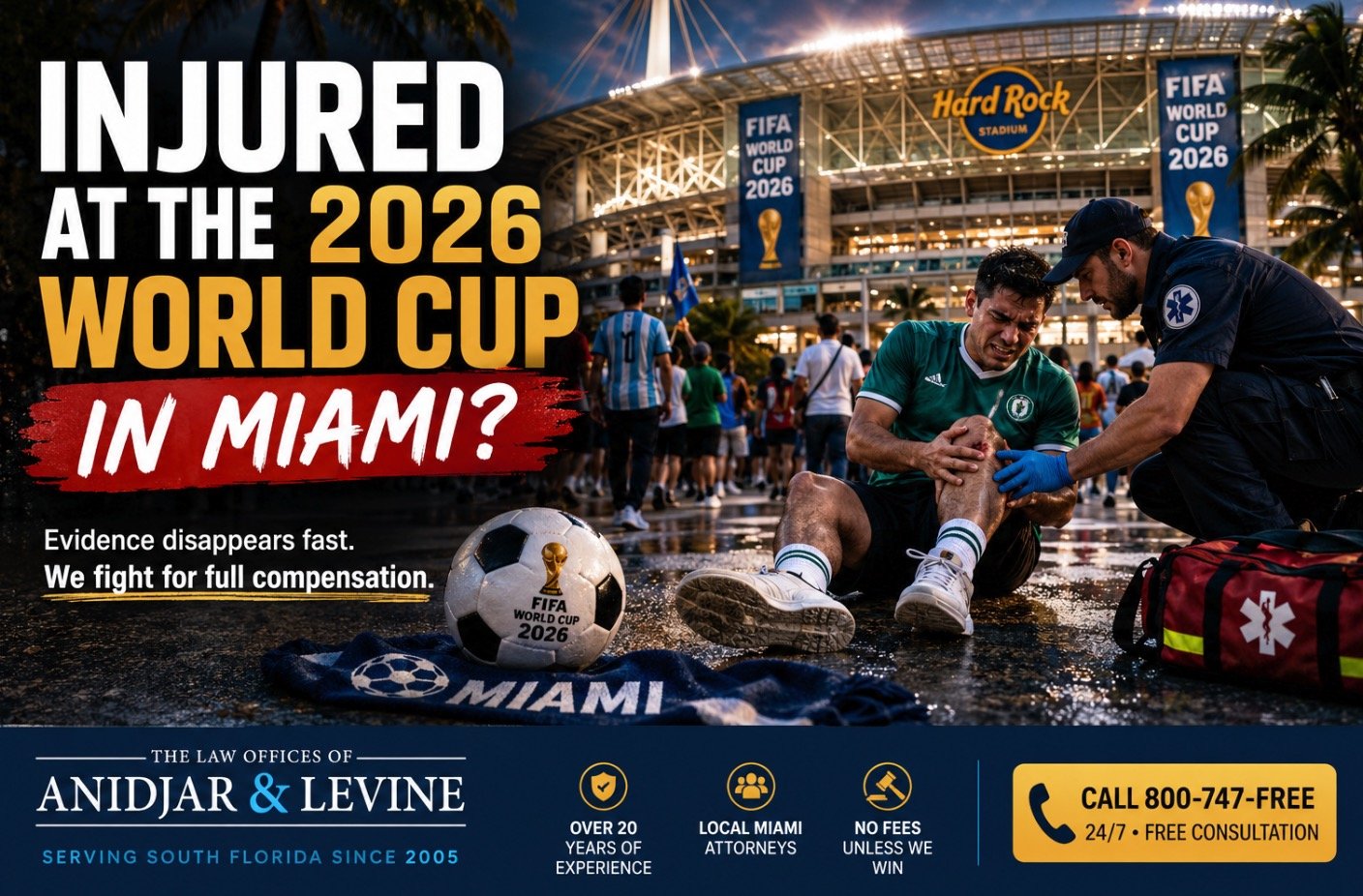
Injured at the 2026 World Cup in Miami? Evidence disappears fast. We fight for full compensation — and we know exactly who to hold accountable. The 2026 FIFA World Cup has brought unparalleled energy to South Florida, with tens of thousands of passionate fans packing into Hard Rock Stadium for an electric, historic atmosphere. But where massive international crowds, intense fan rivalries, and packed concourses intersect, the risk of severe, life-altering accidents rises dramatically. Since 2005,The Law Offices of Anidjar & Levinehas been fighting for injured people across South Florida. Withover 20 years of experienceand a dedicated office right here in Miami, our legal team knows exactly how to handle complex premises liability and personal injury claims against stadium operators, event organizers, and their insurers. If your once-in-a-lifetime World Cup experience was derailed by an unexpected injury, you may be facing mounting medical bills and significant physical pain — but you do not have to face massive stadium operators or international event organizers alone. You deserve informed legal guidance from the very start. Common Causes of Stadium Injuries During the World CupWhen a venue accommodates over 64,000 spectators under a massive global spotlight, minor logistical errors can quickly transform into dangerous hazards. Understanding the most common causes of World Cup stadium injuries also helps us identify what evidence to preserve and which parties may bear legal responsibility for your harm. Slips, Trips, and Falls:Spilled beverages, overflowing trash receptacles, recently mopped restroom floors, and poorly lit stairwells can lead to severe fall injuries, including broken bones and traumatic brain injuries. Slips and falls remain the single largest category of stadium personal injury claims. Crowd Surges and Trampling:Bottlenecks at stadium entrances, security checkpoints, or concession stands can lead to dangerous crowd crushes. If crowd control measures fail, fans can be pinned, knocked down, or trampled by the force of moving crowds. Inadequate Security:With rival fan bases converging, tensions can run high. If stadium security fails to intervene in physical altercations or fails to properly screen attendees, innocent bystanders can be seriously harmed. Defective Stadium Infrastructure:Broken seats, loose handrails, or crumbling steps can cause sudden, catastrophic falls that a reasonable inspection and maintenance program should have prevented. Heat Stroke and Severe Dehydration:South Florida’s summer heat, combined with limited access to hydration zones or poor planning by event organizers, can lead to life-threatening medical emergencies for fans in outdoor or poorly ventilated sections. Data from large-scale venue liability tracking show thatslips, trips, and fallsaccount for the clear majority — approximately 42% — of all stadium personal injury actions, typically caused by rapid crowd transitions and transient liquid spills in concourses. High-density international tournaments like the World Cup see a distinct spike in severecrowd surge and trampling incidents (23%)andsecurity failures (18%)compared to standard domestic league games. This makes early evidence collection especially vital: insurance teams frequently attempt to categorize preventable structural or security oversights as statistical anomalies or standard fan behavior. Miami World Cup Injury Context — Key StatisticsThe risk of injury at large-scale sporting events is well-documented and rising. According toFLHSMV’s 2022 Florida Traffic Crash Facts, Florida recorded over253,888 crash-related injuriesstatewide in a single year — a figure that underscores how quickly injury claims accumulate in a high-traffic state. TheNational Highway Traffic Safety Administration (NHTSA)reports that distracted individuals — whether pedestrians or drivers — are disproportionately represented in incident reports at crowded public venues. For premises liability at events like the World Cup, theMayo Clinic notes that traumatic brain injuriessustained in falls can involve delayed symptom onset of 24–72 hours — meaning you may not realize the full extent of your injury before you leave the stadium. Under Florida’s 2023 tort reform law (HB 837), the statute of limitations for most injury claims is now2 yearsfrom the date of the incident, and being found50% or more at faultcan bar all recovery. 2026 World Cup Miami — Stadium Injury ClaimsWhat You Need to Know Before the Evidence DisappearsCritical Timelines and Legal Facts42%Slips & FallsThe largest category of stadium injury claims — spilled beverages, wet floors, and dark stairwells are the most common hazards. Source: Venue liability tracking data23%Crowd Surge / TramplingInternational tournaments see a sharp spike in crowd crush incidents vs. domestic league games. Source: Venue liability tracking data24–72 hrsDelayed TBI SymptomsTraumatic brain injury symptoms can emerge 24–72 hours after impact. Seek evaluation even if you feel fine at the scene. Source: Mayo ClinicHoursCCTV Retention WindowStadium surveillance footage is often overwritten within hours to days. A preservation letter must be sent immediately. Source: Industry standard CCTV retention cycles2 YearsFL Filing Deadline (HB 837)Florida’s 2023 tort reform law set a 2-year statute of limitations for most injury claims. Missing it bars your case. Source: FL HB 837 (eff. March 24, 2023)50%Fault Bar (HB 837)Being found 50% or more at fault under Florida’s modified comparative fault rule eliminates all recovery. Source: FL HB 837 (eff. March 24, 2023)Stadium Injury Causes — Relative Frequency at International TournamentsSlips, Trips & FallsSpilled liquids, dark stairwells, wet floorsCrowd Surge / TramplingBottlenecks, entry gates, concession rushesSecurity FailuresInadequate screening, assault, failure to interveneDefective Infrastructure / HeatBroken seats, handrails, heat stroke* Relative frequency estimates based on venue liability tracking data. These figures do not constitute a guarantee of any specific recovery amount. How Florida HB 837 (2023) Changed Stadium Injury CasesFlorida’s 2023 tort reform law shifted the state tomodified comparative fault. Under the prior system, you could recover even if you were 99% at fault — your award was simply reduced. Under HB 837, if a court finds you50% or more responsiblefor the incident, you recovernothing. Stadium operators and their insurers know this — they will look for any way to argue you were inattentive, intoxicated, or in a restricted area. The same law also shortened the statute of limitations from 4 years to2 yearsfrom the date of the injury. Both changes make acting quickly and working with experienced counsel more critical than ever. Understanding Liability: Who Is Responsible for Your Miami Stadium Injury?You did not choose to be hurt. You came to celebrate one of the world’s greatest sporting events, and someone else’s failure to maintain a safe environment changed everything. Under Florida premises liability law, property owners and event operators have a legal duty to maintain a reasonably safe environment for their guests. If they fail to address known hazards — or hazards they should have known about through reasonable inspection — they can be held financially liable for the resulting harm. Depending on the nature of your accident, liability may fall on one or more of the following parties:The Stadium Owners and Operators:For failing to maintain the physical premises or clean up structural and environmental hazards in a timely manner. Event Organizers (FIFA and Local Organizing Committees):For poor logistical planning, inadequate crowd control strategies, or exceeding safe structural capacity limits. Third-Party Contractors:Outsourced security firms who failed to protect fans, cleaning crews who ignored spills, or food and beverage vendors operating unsafely. Each contractor may carry separate insurance coverage. What about the “Assumption of Risk” on my ticket?Your World Cup ticket likely contains fine print stating that you assume the inherent risks of attending a soccer match — such as being struck by a rogue ball near the field. However, this waiver doesnotgive the stadium a free pass for gross negligence. You do not assume the risk of a collapsed handrail, a slip hazard ignored by maintenance staff, or an unprovoked assault that better security would have prevented. Florida courts draw a clear line between inherent event risks and negligent premises conditions. What Compensation Can You Recover for a World Cup Injury in Miami?When pursuing a personal injury claim against a stadium or event organizer, the goal is to help make you whole again after someone else’s negligence disrupted your life. Depending on the severity of your injuries, Anidjar & Levine can help you pursue several types of damages. For a broader look at how Florida personal injury cases typically resolve, read:Average Personal Injury Settlements in Florida by Case Type. Economic DamagesThese represent your tangible, out-of-pocket financial losses resulting directly from the accident. Medical Expenses:Emergency room visits, surgeries, hospital stays, physical therapy, and prescriptions. This also includes projected future medical care costs if your injury results in a long-term disability or requires ongoing treatment. Lost Wages:Compensation for the income you lost during recovery, including time spent traveling for treatment or attending legal proceedings. Loss of Earning Capacity:If your injury permanently impacts your ability to return to your previous occupation, you can pursue compensation for future income you are no longer able to earn. Non-Economic DamagesThese damages address the personal harm that does not appear on a bill or pay stub — but is just as real. Pain and Suffering:Compensation for the physical pain and discomfort you endured during and after the accident, including chronic conditions that persist beyond initial treatment. Emotional Distress:Severe stadium accidents — especially crowd crushes or violent assaults — can lead to PTSD, anxiety, depression, and lasting psychological harm that deserves the same attention as physical injuries. Loss of Enjoyment of Life:If you can no longer participate in activities, sports, or travel you once valued, you can seek compensation for that diminished quality of life. Understanding which medical records will matter most in supporting these categories of damages is essential. Read:What Medical Records Matter Most in a Florida Injury Claim. Special Legal Rights for International and Out-of-State Visitors to the World Cup in MiamiAttending the World Cup often means navigating a city far from home. If you traveled to Miami from another state or another country and suffered an injury, you may be wondering whether you even have the right to pursue a claim here. You do — and you should not let distance stop you from seeking the accountability you deserve. The Right to File a Claim in Florida CourtsYou do not need to be a Florida citizen or a U. S. resident to seek justice through Florida courts. Under Florida law, if the injury occurred within the state’s borders, Florida courts retain jurisdiction over the incident. Your claim is governed strictly by Florida personal injury and premises liability laws, regardless of where you live. We regularly assist international and out-of-state injured people in navigating this process without requiring them to remain in Florida. Managing Remote Medical Care and Evidence ContinuityOne of the most common challenges for injured people from out of state or abroad is documenting ongoing medical treatment once they return home. Insurance adjusters frequently attempt to argue that out-of-state therapy or specialist visits are unrelated to the original stadium incident. We address this proactively — coordinating with your local providers to ensure treatment records are properly documented and translated into legally supportable evidence for your Florida claim. Navigating the Florida Legal Process for Miami World Cup Stadium InjuriesTaking legal action against a massive international venue or organization involves strict legal timelines and complex procedures. Understanding these basics before you speak with any insurer can help protect your claim. Understanding Florida’s Statute of LimitationsUnder Florida’s 2023 tort reform law (HB 837, effective March 24, 2023), most negligence-based injury claims — including premises liability and stadium injury cases — must be filed within2 yearsfrom the date of the accident. If you miss this window, your case will almost certainly be dismissed, and you will lose your right to seek compensation, regardless of how serious the injury is or how clear the negligence was. If a government-owned entity is involved in your claim, shorter notice deadlines may apply. The Investigation and Evidence Preservation PhaseBefore a lawsuit is ever filed, a substantial amount of investigative work must occur. Your attorney will review court records for similar prior incidents at the venue, gather building permits and maintenance records, and document the physical conditions that caused the accident. Crucially, our legal team immediately issues formalSpoliation and Evidence Preservation Lettersto stadium management. This places the defendants on legal notice that a claim is pending and binds them from destroying or overwriting vital CCTV surveillance footage, electronic access control logs, and internal communication records from the day of the match. Evidence in stadium cases can disappear within hours. A preservation letter is not optional — it is the first thing we do. For a broader look at how evidence quality affects case outcomes, read:What Medical Records Matter Most in a Florida Injury Claim. Litigation, Insurance Negotiations, and TrialIf the insurance company refuses to offer a settlement that fully covers your damages, our firm is fully prepared to file a formal lawsuit and take your case to trial. High-profile defendants often use their size and resources to pressure injured people into accepting inadequate settlements while they are still vulnerable and uncertain about their future. We respond with organized evidence, experienced courtroom advocacy, and a clear strategy that protects your interests at every stage. 5 Crucial Steps to Take If You Are Injured at a World Cup Match in MiamiWhat you do in the immediate aftermath of a stadium injury can significantly affect the outcome of your claim. If you are physically able to take any of these steps, do so as quickly as possible — and contact a lawyer before speaking with any representative of the stadium, event organizer, or insurance company. 1Minutes post-accidentSeek immediate medical attentionYour health is the priority. Locate the nearest stadium first aid station or request that paramedics be called to the scene. This creates an immediate, timestamped medical record linking your injury directly to the venue — a record that becomes critical evidence in your claim. Do not leave the stadium without some form of documented medical contact. 2Before leaving the venueReport the incident to guest servicesNotify stadium security or guest services about the accident immediately. Insist that an official incident report is filed and request a physical copy, the report number, and the full name of the reporting supervisor. This creates an official record that the venue cannot later deny awareness of the hazard. 3At the sceneDocument the scene visuallyIf you are physically able, use your phone to take clear photos and videos of the hazard that caused your injury before it is cleaned up or repaired by maintenance staff. Capture multiple angles, nearby signage or lack thereof, lighting conditions, and any visible crowd conditions that contributed to the incident. 4At the sceneGather witness contact informationIn a crowded stadium, someone saw what happened. Collect names, phone numbers, and email addresses of any bystanders sitting nearby who witnessed the accident. Independent witnesses significantly strengthen a premises liability claim when the stadium denies negligence or disputes the facts. 5Days post-accidentPreserve all event artifactsKeep your physical ticket stub, digital ticket receipts, parking passes, rideshare histories, and any clothing or shoes you were wearing at the time of the accident. Do not wash or alter these items. They can corroborate your account, confirm your attendance, and connect the injury to the specific event and location. Florida’s Modified Comparative Fault Rule and Miami Stadium Injury CasesUnder Florida’s modified comparative fault system (HB 837, effective March 24, 2023), your compensation is reduced by your percentage of fault in the incident. If you are found50% or more at fault, you may be barred from recovering any compensation at all. In stadium injury cases, insurance companies and defense attorneys for large venues routinely attempt to argue that the injured person was partially responsible — that they were not paying attention, that they entered a restricted area, that they were under the influence of alcohol, or that the hazard was “open and obvious. ” These arguments can dramatically reduce or eliminate your recovery if you are not represented by counsel who knows how to challenge them with evidence. We thoroughly investigate, document the scene conditions, gather witness statements, and challenge comparative-fault arguments with organized evidence. The modified comparative fault rule makes early legal representation more important than ever in high-profile stadium cases. Why You Need a Dedicated Miami Personal Injury Lawyer for Stadium InjuriesYou came to Miami for something extraordinary. You should not have to face a stadium’s corporate legal team, a FIFA-affiliated insurer, or multiple layers of contracted defendants alone. Insurance adjusters will often attempt to minimize your injuries, rush you into a low settlement while you are still in shock, or argue that your own actions caused the accident. That is what they are paid to do. An experienced Miami personal injury attorney will immediately launch an independent investigation, issue evidence preservation letters, secure witness accounts, and build a complete case for the compensation you deserve. The size of the defendant does not intimidate us — we have been fighting for injured people in South Florida since 2005, and we are ready to fight for you. Real Reviews From Our Clients!★★★★★“Anidjar & Levine made me feel like family and not just a client. From the very first call, I knew I was in good hands. They handled everything professionally and kept me informed every step of the way. ”— Stephen P. ⭐ Verified Google Review★★★★★“Evan coordinated the best medical care for me and settled my case in less than a year. I was amazed at how smoothly everything went. Highly recommend the entire team at Anidjar & Levine. ”— Beowulf Ben (Anna T. )⭐ Verified Google Review★★★★★“Ryan Kreda handled my case with exceptional skill, and Glen Levine personally showed up at my deposition. After a two-year case, the result was worth the fight. Truly a firm that goes above and beyond. ”— Richard Powers⭐ Verified Google ReviewReviews reflect genuine client experiences posted on Google. Individual experiences and results vary. Past results do not guarantee a similar outcome in future cases. About The Law Offices of Anidjar & LevineFounded in 2005 by Marc Anidjar and Glen Levine, the firm began as a two-person operation working out of a construction office conference room. Over the past 20 years, that modest start has grown into one of Florida’s most recognized personal injury practices — with more than$1 billion recovered in settlementsfor injury clients across the state. We bring that same determination and depth of experience to every case we handle. At Anidjar & Levine, we represent injured people in Miami and throughout South Florida — including fans and international visitors who came to celebrate and left needing medical care. We understand that a stadium injury can disrupt your life in ways that extend far beyond the initial pain: missed work, travel disruptions, medical bills from multiple providers, and the emotional weight of fighting a large institutional defendant from far away. Ready to seek justice?If your World Cup experience ended in an emergency room,The Law Offices of Anidjar & Levineis here to help. Contact us today to schedule a free, no-obligation consultation. With over 20 years of experience serving Miami and South Florida, we are ready to review your case and fight for the compensation you deserve. Past results do not guarantee a similar outcome in your case. Frequently Asked QuestionsWhat Are Common Causes of Stadium Injuries During the World Cup?The most common causes include slips and falls on wet or poorly maintained surfaces; crowd surges and trampling at entry and concession bottlenecks; inadequate security leading to fan-on-fan assaults; defective infrastructure, such as broken seats or loose handrails; and heat stroke in South Florida’s summer conditions. International tournaments see elevated rates of crowd surges and security failures compared to standard domestic league games, making early evidence preservation critical when such hazards cause harm. Who Can Be Held Liable for a World Cup Stadium Injury in Miami?Liability may fall on the stadium owners and operators for failures in premises maintenance, on event organizers such as FIFA and local organizing committees for logistical and crowd-management failures, and on third-party contractors, including security firms, cleaning crews, and vendors, whose independent negligence contributed to the hazard. Multiple parties can share liability, each carrying separate insurance policies. We identify every responsible party from the start, so no available compensation is left on the table. Does the Assumption of Risk Clause on My Ticket Prevent Me from Filing a Claim?No. The ticket assumption-of-risk language covers the inherent risks of watching a soccer match, such as a ball being struck near the field. It does not cover gross negligence by the operator or its contractors. A collapsed handrail, an ignored spill hazard, or a foreseeable assault due to absent security personnel are not risks you assumed when you purchased your ticket. Florida courts draw a clear distinction between inherent risks and negligent conditions. Can International Visitors or Out-of-State Fans File a Claim in Florida?Yes. Florida courts have jurisdiction over injuries that occur within the state’s geographic boundaries, regardless of where the injured person lives. Your claim is governed by Florida law, and you do not need to be physically present in Florida throughout the process. We coordinate with international and out-of-state clients remotely, manage ongoing medical documentation, and handle all legal proceedings on your behalf. What Should I Do Immediately After Being Injured at a World Cup Match?Seek medical attention at the stadium’s first-aid station or call for paramedics — this creates a timestamped injury record. Report the incident to guest services and request a copy of the official incident report. Document the hazard with photos before it is repaired or cleaned. Gather witness contact information. Keep all event artifacts, including your ticket and clothing. Contact a personal injury attorney before speaking with any insurance representative or signing any documents. What Is the Statute of Limitations for a Stadium Injury Claim in Florida?Under Florida’s 2023 tort reform law (HB 837, effective March 24, 2023), most negligence-based injury claims must be filed within2 yearsof the date of injury. Missing this deadline permanently bars you from seeking compensation in court. If a government-owned entity contributed to the accident, additional notice requirements may apply on an even shorter timeline. Do not wait to seek legal guidance. How Does Florida’s Modified Comparative Fault Rule Affect My Stadium Injury Case?Under Florida’s modified comparative fault system (HB 837, effective March 24, 2023), your recovery is reduced by your percentage of fault. If you are found50% or more at faultfor the incident, you may be barred from recovering any compensation. Stadium operators and their insurers regularly argue that injured fans were inattentive, intoxicated, or in unauthorized areas. Early evidence gathering, witness documentation, and experienced legal representation are essential to counter these arguments and protect your recovery.