Kubayi suspends IDAC chief investigator Dylan Perumal as sweeping overhaul begins - Inside Politics
By Johnathan Paoli Justice and Constitutional Development Minister Mmamoloko Kubayi has suspended Investigating Directorate Against Corruption (IDAC) chief investigator Dylan Perumal pending disciplinary proceedings, while confirming that disciplinary action is also under way against suspended senior investigators Brian Padayachee and Suneel Bellochun. The three officials have been implicated in allegations aired before the Madlanga Commission […]
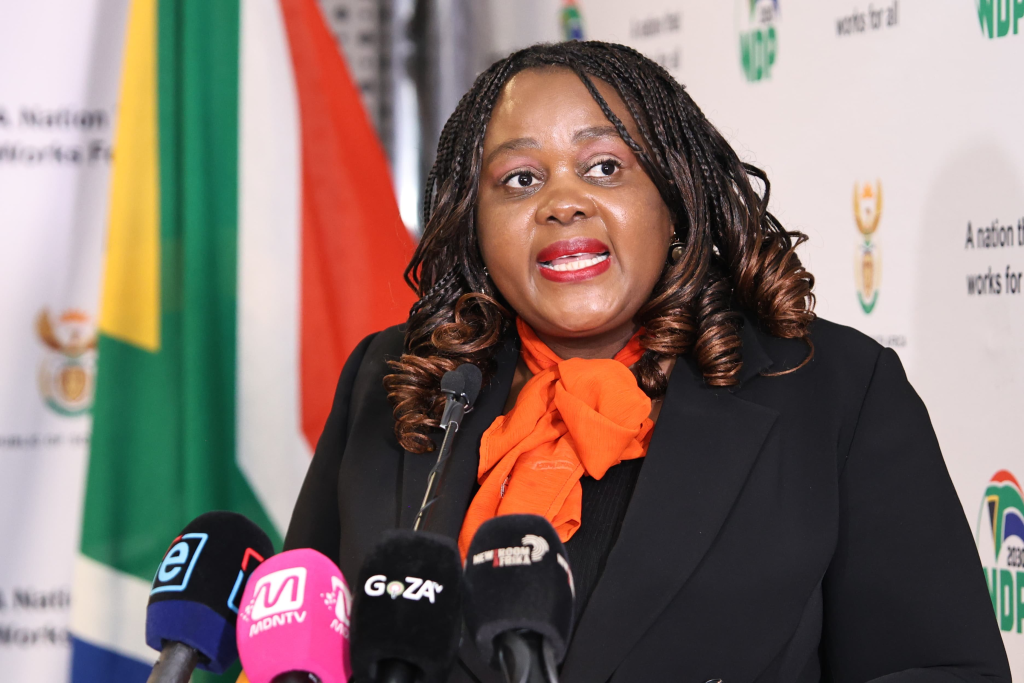
(IDAC) chief investigator Dylan Perumal pending disciplinary proceedings, while confirming that disciplinary action is also under way against suspended senior investigators Brian Padayachee and Suneel Bellochun. The three officials have been implicated in allegations aired before the Madlanga Commission of Inquiry, including extortion, fabrication of witness statements, manipulation of cases and evidence, and abuse of power. “I have placed Mr Dylan Perumal on suspension from his position as the chief investigator at South Africa’s Investigating Directorate Against Corruption (IDAC) pending disciplinary processes,” Kubayi said during a media briefing on Thursday. Speaking alongside the National Director of Public Prosecutions (NDPP) Advocate Andy Mothibi, Kubayi also announced a wide-ranging overhaul of IDAC, stressing that the anti-corruption unit would not be disbanded despite mounting calls following testimony before the commission. She said IDAC remained central to South Africa’s efforts to comply with the Financial Action Task Force (FATF) requirements, particularly its ability to investigate and prosecute serious financial crimes as the country works to exit the global watchdog’s grey list. The reforms follow the resignation of former IDAC head Advocate Andrea Johnson earlier this week. “The recent revelations about the former head of IDAC, Ms Andrea Johnson, and some of the investigators within IDAC, have led to calls from some sections of society and political parties for IDAC to be disbanded and we think these calls are without foundation and therefore cannot be supported,” Kubayi said. “Those who are making these calls must disabuse themselves of the tendency to reduce institutions to individuals. Individuals come and go but institutions remain and we must defend and protect institutions because they are formed to fulfil a societal need rather than the agendas of individuals. ”Instead, she said, the focus would be on strengthening accountability and eliminating misconduct within the directorate. Kubayi said the recently established IDAC Oversight Office, headed by retired Judge Takalani Raulinga, would investigate complaints of misconduct and strengthen oversight of the directorate. She also announced what she described as a “comprehensive reset” of IDAC to reposition and strengthen the institution. Immediate measures include verifying the qualifications of all staff, conducting lifestyle audits, auditing every IDAC case and reviewing operational procedures. Kubayi said the National Prosecuting Authority’s Human Resources Management and Development unit had been tasked with assessing the job profiles and qualifications of all 146 IDAC employees by 14 August. She added that all staff members would undergo lifestyle audits “as a matter of urgency”. A senior investigator from the Special Investigating Unit (SIU) will be seconded to conduct a full audit of IDAC’s caseload, while all Section 28 authorisations and matters currently before the courts will be reviewed to ensure investigations were lawfully initiated and charges appropriately authorised. The reforms will also include revised standard operating procedures and the establishment of permanent in-house digital forensic capacity. Looking beyond the immediate intervention, Kubayi said amendments to the National Prosecuting Authority Act were under consideration. The proposed changes include reviewing fixed terms of office for Directors of Public Prosecutions and the head of IDAC, strengthening internal accountability mechanisms, and addressing potential conflicts of interest where prosecutors are required to authorise matters involving colleagues. Kubayi also rejected claims that an “Indian cabal” dominated IDAC, saying demographic figures showed the directorate had an African majority. “As a Minister I believe that in the organisation there are still men and women of integrity who have kept to their oath of office as both investigators and prosecutors and they deserve our support,” she said. Meanwhile, Mothibi said the NPA had launched an intensive six-month “reset project” to reorganise the directorate and address governance failures exposed during the Madlanga Commission hearings. “We have developed a focused reorganisation or reset project. And that project is really going to be quite intense,” Mothibi said. He said the reforms would strengthen governance, improve operational management, clarify business processes and ensure compliance with the National Prosecuting Authority Act. Particular attention would be given to Section 27 referrals, through which members of the public submit cases to IDAC. “The standard operating procedures have to be reviewed to ensure that there’s checks and balances that the minister has referred to, but also ensure that there’s segregation of duties so that you don’t have an individual who receives the Section 27 referral and is the same individual that goes on to authorise what is it that needs to be investigated,” he said. Mothibi said every case would be audited, employee qualifications reviewed, vacancies filled and staff vetted. The turnaround plan will also focus on finance, communications, stakeholder management, security, witness protection and whistleblower protection. “We have taken account of what has been reported at the Madlanga Commission. There’s actions that have been taken with immediate effect. Accountability is going to be the order of the day. If there are any instances where we really have to take consequence management, we will do so, and we’ve already started,” he said. Mothibi said he had already briefed IDAC staff on the reforms and expressed confidence that the six-month turnaround plan would restore public confidence in the directorate. Both Kubayi and Mothibi said disciplinary action and broader institutional reforms would be implemented to restore the credibility and effectiveness of IDAC. INSIDE POLITICS