Look What's Affected By Climate Change, Global Warming
Ooty: Come Wednesday August 12, the world will observe World Elephant Day to garner support to conserve elephants, the gentle giants whose connection with the human race from ancient times is well. . .
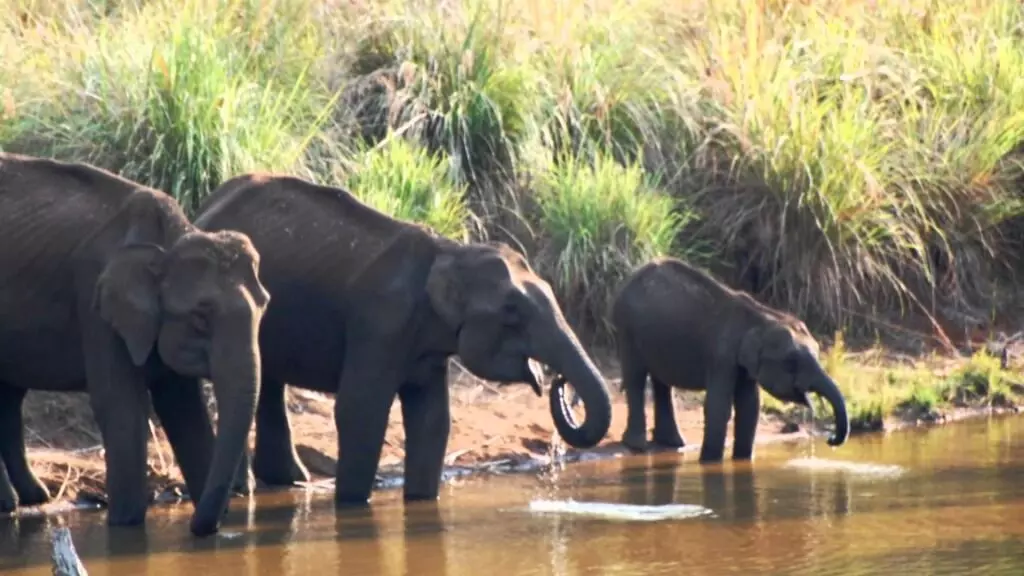
Ooty: Come Wednesday August 12, the world will observe World Elephant Day to garner support to conserve elephants, the gentle giants whose connection with the human race from ancient times is well known. Elephant is not only majestic but it symbolises power, intelligence, wisdom and social bonding. The presence of elephant brigades in the ancient kingdoms would reveal its close connectivity with the human race. Sadly, due to various reasons, ecological issues, habitat loss and anthropological pressures, elephants are now forced to live within the existing forest limits, though a comparatively smaller space, to thrive, to carry on their biodiversity duty and sustain the survival of its species. Though elephant conservation is being done in a laudable way nowadays as the present human race has realised the need to conserve elephants, in the present decade, the question being asked is whether global warming and climate change will impact the elephant population and its survival? Or will it distress the psychology of the jumbos that will force them to find ways and means to look for avenues for survival that may lead to human-elephant conflict in new areas?For this, Dr. B. Ramakrishnan, head of the Department of Wildlife Biology at the Government Arts College here, who is also the member of the International Union for Conservation of Nature Species Survival (IUCN/SSC) Commission Asian Elephant Specialist Group, said global warming and climate change factor already appear to have traumatised the wild jumbos to a certain extent as the recent incidents of untimely migration, movement of wild jumbos into newer areas along the jungle peripheries and emerging human-elephant conflict vindicate. “The major impact of global warming and climate change factors are the temperature extremities and heavy rainfall in a short time, disturbance to the uniformity in rainfall pattern in different seasons and prolonging drying weather. As the elephants feed mostly on well-grown, fresh grass, as it would supply essential nutrition to the jumbos, the disturbances in rainfall pattern and missing uniformity in rainfall in a given area ultimately affects the growth of the grass, besides the availability of water inside the woods. When the availability of palatable food is missing in the given patch of forest, the elephant herd will try to move to areas where palatable food and water are available,” he explained. “In a way, this will make the elephants stray into human habitations as elephant palatable crops in the farmlands will charm the jumbos to newer avenues. This will often result in the jumbos turning crop-raiders and ultimately leading to human-elephant conflict issues that make conservation task more challenging. In fact, the climate change factor is the reason why there is early migration of elephants as in recent times it was noticed that jumbos from Mudumalai jungles in the Nilgiris landed in the Thengumarahada limits, near Bhavanisagar, in early December, though usually jumbos migrate to Thengumarahada jungles in February,” he pointed out. It is a fact that the climate change factor has begun to impact the routine lifestyle of the wild elephants. A lot of studies need to be done to address the issue and draw new era conservation plans to conserve the elephants in the backdrop of global warming and climate change, he added.