Marine heatwaves, climate change and fisheries - Fishing News
As our seas warm, the impacts on marine ecosystems are accelerating – and fisheries management needs to adapt quickly to keep pace with the changesMarine heatwaves have been in the news. These are periods of. . .
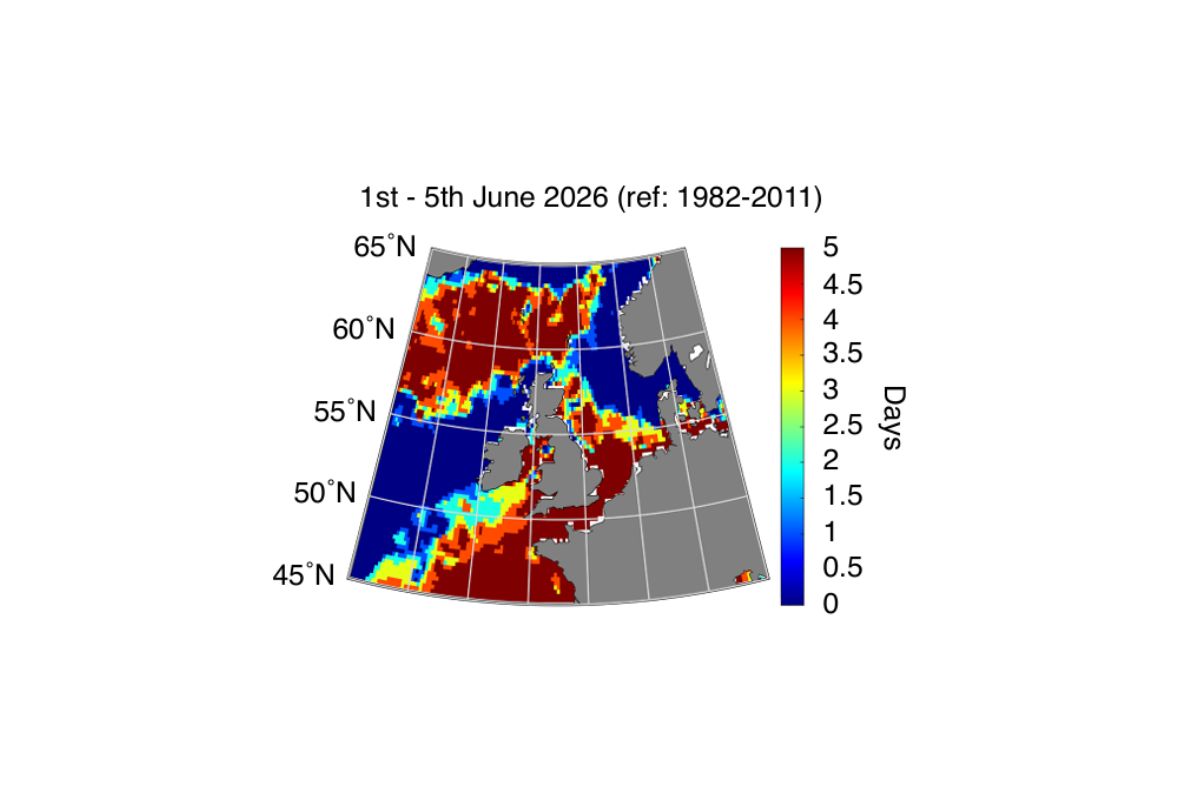
As our seas warm, the impacts on marine ecosystems are accelerating – and fisheries management needs to adapt quickly to keep pace with the changesMarine heatwaves have been in the news. These are periods of abnormally high temperatures above the seasonal average – but such headline-attracting events are simply manifestations of global warming as sea temperatures rise due to current climate change. While there have always been annual variations in seasonal temperature giving a hot or cool summer or a cold or warmer winter, the current underlying climate change, with its apparent trajectory of increasing temperatures, means a cold period will not be as cold and a warm period will be warmer. The latitude of the United Kingdom places it at a transition zone between northerly cool-temperate and southerly warm-temperate (mild temperature) ecosystems containing communities of species, from plankton to fish, that are adapted to different temperature regimes. The UK is situated where the warm and cool extreme margins of these ecosystems overlap. At the temperature limits of a species distribution, a small increase in temperature at the warm margin (or decrease in temperature at the cool margin) will have a much greater effect than the same temperature change at the centre of the species’ distribution; abundance will decline and a species may become locally extinct at the margins of its distribution. Even when species shift geographically with temperature, their abundance at the new location will be influenced by whether suitable habitat exists, such as water depth or substrate. Maps showing the occurrence of marine heatwaves (red) around the UK with respect to the average for 1982 to 2011, for the periods 1-5 June, 1-5 July and 23-27 July, 2026. A marine heatwave is a minimum of five days above annual average temperature. Heatwaves shown are above the 90% percentile during five consecutive days (red) and affect 34%, 23%, and 26% of the mapped areas respectively. (Maps: Gregory Beaugrand, National Centre for Scientific Research, Laboratory of Oceanography and Geosciences, Wimereux)Ecosystems are the product of many species and all their interactions. Consequently, small changes in temperature can have dramatic ecosystem effects that are often amplified by the interactions between the species themselves. In addition, temperature thresholds control lifecycle events of some species, such as their spawning, while lifecycle events of other species may be controlled by day length, which does not vary with climate change, and this can lead to the uncoupling of predator-prey interactions as the sea warms. The seas around the UK have been warming for the last 50 years and the plankton, living in the upper layers of the sea, which underpin the marine food web, are the most sensitive indicators of these changes. As warm-blooded animals who can engineer our thermal environment so that we can live over a wide range of temperatures (we can add or remove clothes, or turn on the heating or air conditioning), we often forget that most of life on Earth has to cope with the temperature where it lives. Some plankton species characteristic of the seas around the UK have shifted northwards by over 10° of latitude and declined in abundance over the last 60 years as the sea has warmed. Unsurprisingly, the fish communities – whether the larvae of North Sea cod or adult fish such as mackerel – that feed directly upon plankton have followed their food northwards, bringing about the decline of mackerel around the South West of the UK, and of cod in the Irish Sea, the English Channel and the North Sea. Other species, such as horse mackerel, have both declined in abundance and shifted their time of breeding. For some species life has become untenable, and this summer, it has been reported that in the southwest and southeast of the English Channel, whelks have stopped feeding. In my own inshore plankton sampling off Plymouth, I have seen the sporadic disappearance of copepod zooplankton in each of the last three summers. In Brittany, across the Channel from Plymouth, poor plankton due to climate change is held responsible for the decline in abundance and quality of sardines. Those are just a few examples of many. The above changes could be taken as bad news stories for fisheries. However, where cold-water species depart, other warm-water species will arrive. Bluefin tuna have reappeared around the UK as their population has followed the northward shift of the broader ecosystem (FN, 22 January, 2024,‘Why are bluefin back in UK seas?’). It was cooling due to Atlantic multidecadal variability at the beginning of the 20th century that saw the departure of bluefin tuna southwards and the North Sea plankton community becoming favourable for the recruitment of cod larvae, leading to the gadoid outburst. Although the complete transition from one ecosystem to another may be gradual on our timescale (over a few decades), the local abundance of individual species may increase or decrease more rapidly. This can be destabilising for the food web, and commercial fisheries that must adapt their methods to target new species. Local, inshore fleets are particularly susceptible to ecosystem change. A good example of this is the switch by French fishermen in Boulogne-sur-Mer from mackerel to sardines. As seen with whelks, climate changes are also not just limited to the sea surface when seas are shallow, such as seas around the UK. Spiny lobster, a warm-water species, is increasing in abundance in the southwest approaches to the English Channel. Mediterranean octopus have been advancing northwards rapidly in the last four years, first appearing in the Channel Islands, then Cornwall, and now abundant and breeding in the southwest English Channel. In each place, their predation has decimated previous shellfish fisheries for lobster, crab and scallop. Eighteen years ago, my colleague Gregory Beaugrand and his student Sylvain Lenoir produced aClimatic Atlas of Marine Fishes in the North Atlantic Oceanfor Seafish. The atlas predicted the climate-driven movements for 51 of the then commercially exploited species, from their prior distribution in the 1960s until the year 2099. Many of the climate-driven northwards movements that were predicted in the atlas have since occurred. It is not just fishermen who need to adapt to these climate-driven changes, however. Fisheries managers must include the effect of temperature on the marine food web and on commercially exploited species in management strategies. If we do not consider the effect of temperature, we will fail to respond appropriately to current climate change through both our fishing methods and quotas, and risk the quicker collapse of fisheries (FN, 27 February, 2024,‘Fisheries and climate: Climate impacts on stock shifts’). Indeed, the complete failure of countries to co-operate and manage fisheries in the face of climate change can already be witnessed starkly for both North Atlantic mackerel and North Sea cod. Thisstorywas taken from the latest issue of Fishing News. For further information on this story and for more reports on the UK and Irish commercial fishing sector, subscribe to Fishing Newshereor buy the latest single issue for just £3. 50here. Sign up for Fishing News’ FREE e-newsletterhere.