NATO Must Scatter Force to Survive Constant Surveillance: Commander - EUROPE SAYS
Persistent surveillance over the modern battlefield is forcing NATO leaders to rethink command and control and disperse unnecessarily large troop formations that could be easy targets for enemy. . .
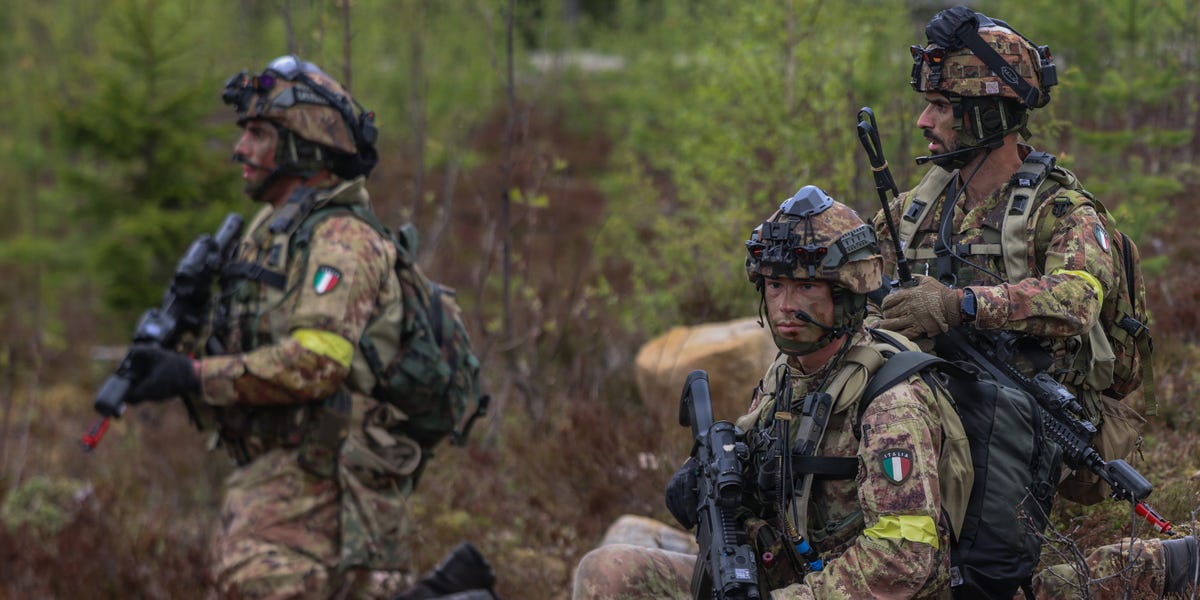
Persistent surveillance over the modern battlefield is forcing NATO leaders to rethink command and control and disperse unnecessarily large troop formations that could be easy targets for enemy airstrikes. French Adm. Pierre Vandier, NATO’s Supreme Allied Commander Transformation, told Business Insider in a recent interview that constant surveillance and the growing risk of strikes far behind the front are forcing militaries to “scatter the force” and avoid “useless concentration. ”Vandier, who overseesNATO modernization effortsas one of its two strategic commanders, said that the alliance is in the process of changing its approach to command and control. “We are only at the beginning of it,” Vandier said. His comments echo what other top Western officials have said about the need fordecentralized command and controlnodes. In Ukraine, drones are always watching the front lines and have created a“kill zone”that is dozens of miles wide. In this area, movement can be quickly detected and targeted. Soldiers aredriving less and walking more, keeping a distance between each other to increase their chances of survival. Ukraine, much like Russia, has largely abandoned large troop gatherings near the front lines. Mission planning, artillery fire, andair defense operationseither happen farther back or are concealed and done on the move. Drones have turned the front lines in Ukraine into a miles-wide kill zone. Roman PILIPEY/AFP via Getty ImagesFarther from the front, Ukraine still prioritizes dispersal to keep its forces safer from longer-range Russian missile and drone strikes. The threat of such attacks has also pushed the country’sdefense companiesto spread out and even move some operations underground. Western military leaders and Ukrainian defense officials have warned that NATO must considersimilar dispersal practices, specifically with its large command posts, amid concerns about a future confrontation with Russia and its long-range weapons. NATO militaries have long relied on large command posts where hundreds of officers prepare briefings and process battlefield information for commanders. Such practices, however, are coming to an end, Vandier said. Vandier saidcloud-based data programscan store information and create analyses without needing a lot of people concentrated in one place. NATO’s shift toward a much more disaggregated approach empowered by new technologies is well underway. In March 2025, for instance, the alliance acquired theMaven Smart System, made by the American software firmPalantir Technologies, to help integrate artificial intelligence into its operations and improve decision-making. NATO is increasingly integrating AI into operations and decision-making. US Army photo“There is a C2 renewal, which is ongoing,” Vandier said, using the military acronym for command and control. Large command centers have proven to be vulnerable during themonths-long Iran war. Tehran has used missiles and drones to strike the US Navy’s regional headquarters in Bahrain and a major air operations center in Qatar, among other American military bases and facilities. The US armed forces are working on new command-and-control initiatives to modernize and speed up decision-making. Thesoftware-focused approachcould also help to decentralize more traditional, large-scale gatherings. Western militaries are exploring not only dispersed command and control but alsoscattered air operations, as Ukraine has done with its fleet of aging Soviet-designed jets and more advanced Western fighters. The US Air Force calls these Agile Combat Operations. For years now, NATO fighter jets have been training totake off and land on highwaysand other non-traditional runways to reduce their reliance on fixed airbases that could easily be targeted. Such dispersal tactics echo certain Cold War practices.