NBJ Award: Waleria wins for women's health shatavari research
Waleria Healtech doesn't just focus on the betterment of women's health through science-backed herbs, it also uplifts women in farming communities. Waleria HealtechThis article originally appeared in. . .
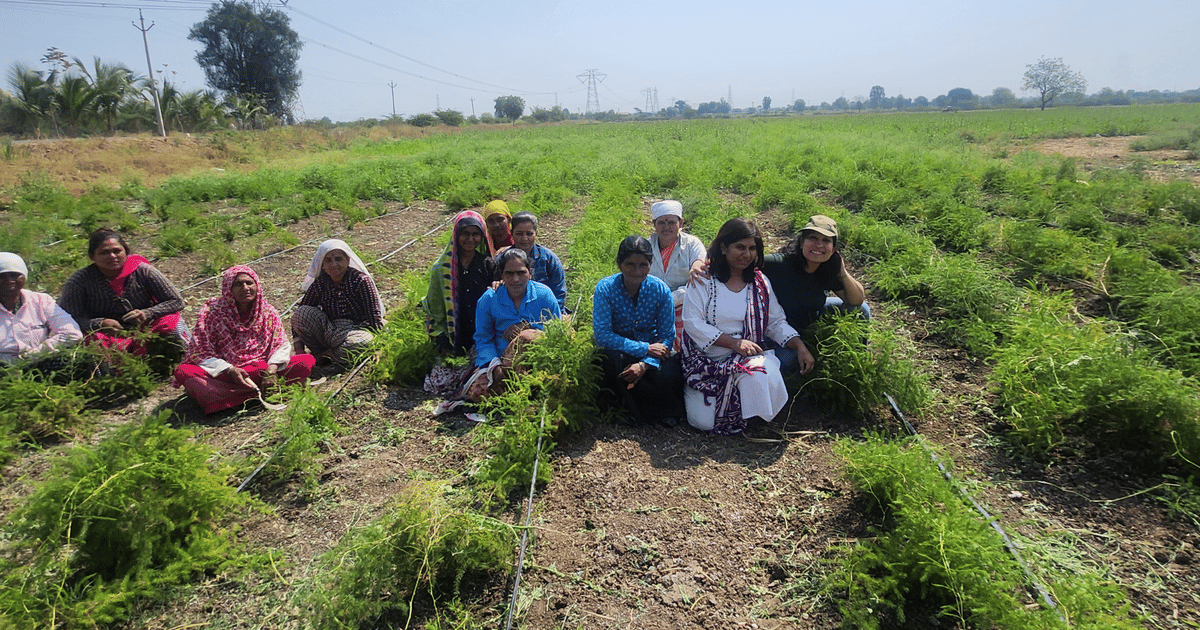
Waleria Healtech doesn't just focus on the betterment of women's health through science-backed herbs, it also uplifts women in farming communities. Waleria HealtechThis article originally appeared in theNutrition Business Journal Awards Issue. New Hope Network is publishing one story for each award, which will be presented at theNBJ Summitat the end of July. Click hereto see a roundup of all the winners. Komal Baldwais only half-joking when she says, “I think God wanted us to partner. ” The founder of Waleria Healthtech is recounting her 2023 meeting with two women agronomists who had been working for 15 years to improve the quality and bioactive properties of the Ayurvedic herb shatavari by using traditional and regenerative cultivation practices, testing soil nutrients and measuring phytoactive profiles. With a background in marketing and business strategy, Baldwa was one of the first women’s health advocates in Asia to start talking about sexual health. She had recently sold Blëu Cares, an Indian company that makes vegan condoms free of harmful chemicals that can cause vaginal irritation and discomfort. “The passion for women’s health was still raging in me,” Baldwa says, “because we as women need to bring on the change we need. ”Related:25th NBJ Award: Stewardship and Sustainability winner stewards botanicals and beyondIntent on bringing to market a full-spectrum shatavari ingredient that resembled “what my grandmother, my mother and I consumed,” the discovery of the mission-driven women scientist-farmers working toward the same goal seemed God-sent indeed. Mission and science, alignedWaleria was born, and Baldwa and her all-female team set to work. The company invested in the existing supply chain of women farmers, refined a patent-pending soft extraction process that enhances the plant’s bioactives (standardized to 5% shatavarins) while maintaining structural integrity and, building on prior clinical research, conducted clinical research exploring the ingredient’s impact on perimenopausal symptom relief as well as female libido and sexual wellness. Across three gold-standard studies, the branded ingredient, Aspurūs, was shown to support major symptoms of menopause: hot flashes, night sweats, insomnia, fatigue, stress, mood changes and sexual wellness parameters such as libido and vaginal dryness. The timing couldn’t have been better: With shatavari trending worldwide as a promising botanical ingredient in the fast-growing women’s health category, providing innovative clinical evidence along with a women-empowering mission and storytelling has been a home run for Waleria. Nutraceutical products on the shelves already feature Waleria’s Aspurūs, notably New Chapter’s newly launched, single-ingredient Shatavari Force. The company has not only won mainstream media attention but it’s also earned a fistful of industry awards, including American Herbal Products Association (AHPA)’s Herbal Diversity & Inclusion Award, SupplySide Ingredient Idol and Nutrition Industry Executive (NIE)’s New Ingredient Award. Related:25th NBJ Award: Science and Innovation recognizes three decades of research-driven ingredient leadership“Waleria has an incredibly thoughtful approach to women’s health, from farm to capsule,” says AHPA PresidentGraham Rigby. “Powered by women throughout the process, from the hands carefully harvesting shatavari through the leadership of founder Komal Baldwa, Waleria is focused on women in their product line and team of employees and partners. ”“The powerful integration of science, purpose and tradition” is what most impressed New Chapter CEOBlaine Streisandwhen he attended a presentation of Waleria’s research at a conference in 2024 and began developing a relationship. “Shatavari has long been recognized as a foundational women’s herb, yet it has historically lacked the robust clinical validation New Chapter seeks,” he says. “Waleria has helped bridge that gap by delivering meaningful scientific evidence to support a range of menopause-related benefits. ”Deep rootsIn Sanskrit,shatmeans 100 andvarimeans root, and the plant’s phallic root system is often translated as “she with a hundred husbands,” reflecting its role in supporting women’s health, fertility and hormonal balance, Baldwa explains. The conjoined tubers are the source of the herb’s bioactives, primarily steroidal saponins, or shatavarins, that exert estrogen-like effects and act as natural hormone regulators. Related:25th NBJ Award: Management Achievement honors professional-grade brand leaderThe secret sauce with Waleria’s raw material and supply chain—and an important reason the company has been able to scale up so quickly—is the regenerative cultivation and harvesting methods refined over decades by Baldwa’s agronomist colleagues. Shatavari prefers dry soil; minimal watering encourages thicker roots that penetrate deeper, she explains. Working literally from the soil up, the cultivators test and adjust nutrients to match the plant’s needs and follow traditional Ayurveda practices like pre-soaking seeds in cow urine to loosen their outer layer and allow nutrients to enter. “The herb batches mature over 18 to 24 months, two winter seasons,” says Baldwa, longer than other raw material suppliers. “The bands in the thin layer chromatography profile show the phytonutrients in our raw material are present in a higher percentage,” she says. “We did a lot of work on the back end to get the right supply chain into place. ”Founder of Waleria Healtech, Komal Baldwa has dedicated her life to empowering women in their health and their careers. (Photo credit: Michelle Job Photography)Women-built solutionsComing from a country where women represent an extremely low percentage of entrepreneurs, Baldwa explains that Waleria’s product and mission are “very close to my heart. ” Seeing the gaps both in the quality of ingredients on the market and the lack of women in the supply chain, “it makes you think we need to connect all of this in one company,” she says. “Ultimately, we’re delivering it to women consumers who will be supporting the women growing it for them. ”The first thing Baldwa did was address gaps she saw in shatavari extraction and standardization and filed for a patent for the company’s soft-extraction process. Next, the all-women team turned to research. Informed by their expertise, experiences and Baldwa’s track record as a women’s health-centric company founder, she says, “our studies are different in that they focus more on real consumers. We design our studies to understand the consumers and their complaints. ”For instance, she says, “the first thing women entering perimenopause notice is, ‘I just don’t feel like myself. ’ How would you quantify that?” Baldwa’s team decided to associate the feeling with the Born-Steiner Irritability Scale (BSIS), originally developed to measure female-specific clinical irritability related to reproductive life events. “If a woman is irritated, that’s why she doesn’t feel like herself,” she says. “She’s tired. She’s not able to get her sleep. She’s bloated. She’s having hot flashes. Irritation is a simple thing you can associate with how she feels. ”She adds that whenever she presents this research, men stop her to ask if the numbers on the BSIS scale can be increased. “Most are in their mid-40s or 50s,” she says. “They immediately relate to it as something they’ve experienced [at home]. ”In contrast to existing perimenopause studies that focus primarily on how often symptoms arise, Waleria’s three-month clinical trial of 150 perimenopausal women deliberately used another validated scale that measures both frequency and severity across 12 domains of menopausal symptoms. “This is necessary,” Baldwa says. “One woman can have four seconds of hot flashes; others may have about four minutes. ” Most study participants reported a noticeable decrease in both frequency and intensity of symptoms, particularly hot flashes. A second trial focused on women of reproductive age (21 to 43) and found participants who took low-dose Aspurūs reported increased instances of sexual activity and improvements in overall satisfaction. It was among the first large-scale clinical studies to show shatavari’s role in supporting sexual wellness, Baldwa says. “For far too long clinical research was limited to male subjects due to the many changes female subjects are naturally subjected to. Waleria is changing that by focusing its research solely on areas that benefit women and grow the female scientific research literature,” AHPA’s Rigby says. “Waleria has used primary clinical science to prove the many traditional benefits shatavari is known for as a revered women’s tonic. ”Forward focusedBeyond the innovative science Waleria is pursuing, Baldwa’s deep commitment to women’s health and to empowering women at every stage, from cultivation to commercialization, has already won her friends and fans worldwide. “On a personal level, my team and I were immediately inspired upon meeting Komal,” New Chapter’s Streisand says. “Beyond her strength as an entrepreneur, her story resonated deeply—as a woman and as someone who has witnessed firsthand the challenges that accompany the transition from peri- to postmenopause among family members. Her passion for addressing these needs in a meaningful way is undeniable. ” Since then, he adds, the legacy supplement brand invited her to speak to its entire team about her work and impact within the industry and her community. Baldwa is philosophical when she reflects on the progress being made in how women’s health is seen and understood, both by the industry and by society, thanks to the work being done by researchers and companies like Waleria. “It’s so interesting when we are not confining the woman’s body into a single stage, but rather putting her into all the hormonal stages. Women of reproductive age are different from perimenopausal women as well as from postmenopausal women; you can see that in our studies,” she says. And with more research with similar findings coming out near-daily, she says, “we have to learn to understand our hormones fluctuate and behave differently than men. ”So many women have joined the effort, and they are bringing in change, Baldwa says. She’s especially inspired by the younger generations. “They are taking things into their hands, and they have started talking about it. ” For instance, her younger sister knows so much about perimenopause, things she wasn’t aware of when she entered that life stage. “It’s so good,” she enthuses. “We do not need to be ashamed of our body. It’s our body and we need to learn about it. ” Men, too, would benefit from learning more about the women in their lives. Enthusiasm, and a passion to deliver integrous, effective solutions, is contagious. In the coming years, Baldwa says,“We absolutely want to expand because there are so many other things that support women’s health. ”“Ultimately, Waleria’s work embodies the balance we strive for,” says Streisand, “honoring the wisdom of traditional herbal medicine, validating it through modern science and advancing a mission that creates meaningful, positive impact. ”Subscribetoday to Nutrition Business Journal. About the AuthorEditorial Lead, New Hope NetworkSusan Enfield is the Editorial Lead for New Hope Network'sNutrition Business Journal. She brings decades of experience in insightful natural products industry coverage—as well as expertise in marketing and business and market development—to her editorial contributions toNBJ’s issues, reports and events.