'No Clear Demarcation': Why India Says 'Transgression', Not 'Intrusion', On China Border
Last Updated:July 01, 2026, 12:55 ISTRijiju said because India-China boundary has never been jointly demarcated, both countries often patrol up to what each considers to be LAC. Rapid ReadRapid ReadSummarized. . .
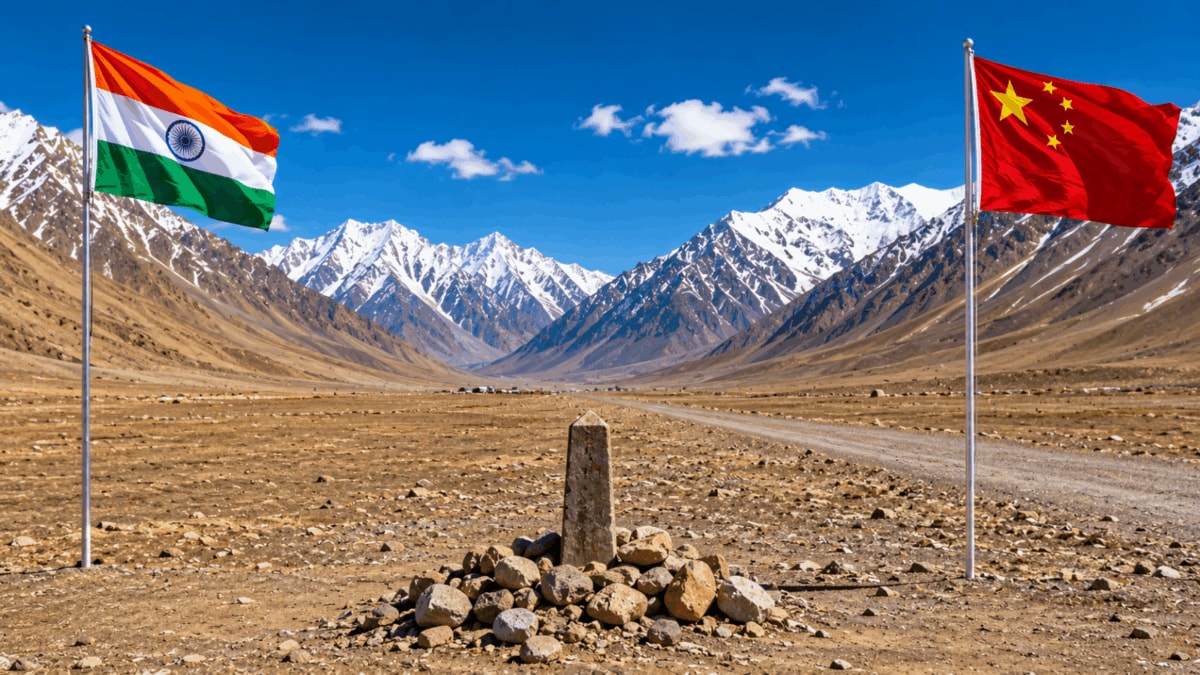
Last Updated:July 01, 2026, 12:55 ISTRijiju said because India-China boundary has never been jointly demarcated, both countries often patrol up to what each considers to be LAC. Rapid ReadRapid ReadSummarized by AI. +India uses 'transgression' as border is undemarcatedEach side patrols up to its own perceived LACIndian Army denies fresh Chinese incursion in ArunachalThe Army maintained that there had been no recent Chinese encroachment or establishment of PLA camps inside Indian territory in the area mentioned. (AI generated image)Union Minister Kiren Rijiju has rejected claims that the Chinese People’s Liberation Army (PLA) has intruded into Indian territory in Arunachal Pradesh, arguing that while transgressions do occur along the India-China frontier, they should not be mistaken for territorial intrusion because the boundary itself remains undemarcated. His remarks come amid fresh allegations by a tribal organisation in Arunachal Pradesh’s Upper Subansiri district, which claimed that Chinese troops had occupied portions of traditional grazing, hunting and farming land over the past six years. The allegations prompted demands for an official verification, but were subsequently dismissed by the Indian Army as “incorrect and without any basis. "Recommended Stories'No Intrusions': Kiren Rijiju Dismisses Claims Of Chinese Encroachment In Arunachal Pradesh'Incorrect, Without Basis': Indian Army Rebuts Reports Of Chinese Encroachment In ArunachalChina Encroachment Claims Surface In Arunachal; Local Body Seeks Centre's Intervention | News18India's Monsoon Split: Flood Fury In Northeast, Mumbai Drenched, Delhi Still Awaits ShowersRead More:‘No Intrusions’: Kiren Rijiju Dismisses Claims Of Chinese Encroachment In Arunachal PradeshThe episode has once again brought into focus one of the most misunderstood aspects of the India-China boundary dispute: why successive Indian governments describe many border incidents as “transgressions" rather than “intrusions. "No Intrusion Into Indian Territory: RijijuSpeaking on the controversy, Rijiju categorically rejected claims that China had entered Indian territory. “There is no intrusion. Transgressions from both sides happen due to the absence of demarcation," the Union Minister said. Explaining the government’s position further, Rijiju said that because the India-China boundary has never been jointly demarcated on the ground or mutually agreed upon on maps, both countries often patrol up to what each considers to be the Line of Actual Control (LAC). As a result, patrols from either side may enter areas claimed by the other, leading to what are officially termed “transgressions. "According to Rijiju, “There is no demarcation of the border. Therefore, each side has its own perception of where the LAC lies. Whenever patrols move according to their respective perceptions, there can be transgressions from either side. That should not be construed as an intrusion. "He also urged against drawing conclusions solely on the basis of unverified claims circulating in the public domain, emphasising that the Indian Army continuously monitors the border situation. What Triggered Intrusion Claims?The latest debate began after the Nah Welfare Society, representing members of the Nah tribal community in Arunachal Pradesh, alleged that the PLA had gradually expanded its presence in parts of Upper Subansiri district over several years. According to the memorandum submitted to district authorities, local residents were allegedly being prevented from accessing traditional grazing fields, agricultural land and hunting grounds. The claims attracted national attention because they suggested the establishment of Chinese positions inside territory traditionally used by Indian border communities. However, the Indian Army firmly rejected these reports. “We have seen some media reports alleging recent encroachment by Chinese PLA and setting up of camps in Arunachal Pradesh. These reports are incorrect and without any basis," the Army said in an official statement. The Army maintained that there had been no recent Chinese encroachment or establishment of PLA camps inside Indian territory in the area mentioned. Why Does India Use The Word ‘Transgression’?The distinction lies in the nature of the India-China boundary itself. Unlike India’s borders with Pakistan or Bangladesh, the India-China boundary has never been formally settled. Instead, the two countries are separated by the Line of Actual Control, a military control line whose alignment is interpreted differently by New Delhi and Beijing across several sectors. Since there is no jointly accepted map of the LAC, both armies patrol areas they individually believe fall within their territory. When patrols from one side cross into areas claimed by the other, the incident is generally termed a “transgression" rather than an “intrusion. "An intrusion implies crossing a clearly established international boundary. A transgression, in the India-China context, refers to differing perceptions of an undemarcated frontier. This terminology has been used by successive Indian governments across political parties and has long formed part of official military and diplomatic vocabulary. The use of the term “transgression" does not suggest that India considers the boundary issue settled or insignificant. The 2020 eastern Ladakh crisis fundamentally altered India’s military posture along the LAC. Since then, India has deployed additional troops, strengthened surveillance, accelerated border infrastructure projects, built strategic roads and bridges, and enhanced logistics to ensure rapid mobilisation along the frontier. Multiple rounds of Corps Commander-level talks and diplomatic negotiations have also taken place between India and China to reduce tensions and resolve friction points. At the same time, India has consistently maintained that peace and tranquillity along the border are essential for normal bilateral relations. Local communities may report changes in access to traditional grazing or hunting areas, while military assessments focus on whether there has been any alteration to the ground situation or permanent occupation of territory. Rijiju’s remarks reflect the government’s position that, despite occasional patrol face-offs arising from competing perceptions of the LAC, there has been no confirmed intrusion into Indian territory in the area referred to by the tribal organisation. Until India and China reach a mutually accepted boundary settlement or jointly delineate the Line of Actual Control, differing claims and periodic transgressions are likely to remain an enduring feature of one of the world’s longest unresolved borders. News18 NewsletterHandpicked stories, in your inboxA newsletter with the best of our journalismAbout the AuthorPragati RattiPragati is a News Editor at news18. com. Having headed the Business and Viral sections, Pragati now ideates, writes and edits long-form features and articles on national and global affairs. She ensures. . . Read MoreLocation :First Published:July 01, 2026, 12:55 ISTNewsexplainers'No Clear Demarcation': Why India Says 'Transgression', Not 'Intrusion', On China BorderDisclaimer: Comments reflect users’ views, not News18’s. Please keep discussions respectful and constructive. Abusive, defamatory, or illegal comments will be removed. News18 may disable any comment at its discretion. By posting, you agree to ourTerms of UseandPrivacy Policy. Loading comments. . . Read More