Omar Abdullah Raises Alarm Over Sonam Wangchuk’s Health, Urges Humanity Above Politics
Abdullah said the situation demanded empathy and timely intervention from the Central government, stressing that “there should be some room for humanity and compassion even in politics. ”
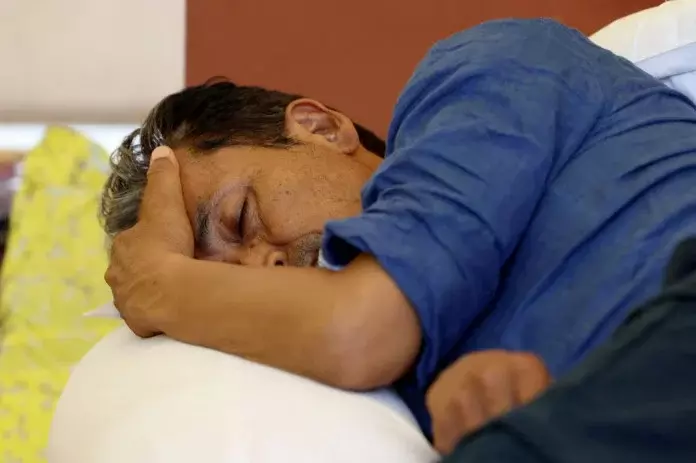
SRINAGAR:Jammu and Kashmir Chief Minister Omar Abdullah on Thursday expressed deep concern over the deteriorating health of climate activist Sonam Wangchuk, who has been on a prolonged hunger strike in New Delhi. Abdullah said the situation demanded empathy and timely intervention from the Central government, stressing that “there should be some room for humanity and compassion even in politics. ” He noted that Wangchuk has been fasting for nearly three weeks, reportedly losing close to 9 kilograms, yet no senior representative from the Centre has approached him for dialogue. The Chief Minister while speaking to reporters here explained that Wangchuk’s protest stems from alleged irregularities in the NEET examination and the subsequent cancellation that caused widespread distress among students. According to him, Wangchuk’s lone demand is the resignation or removal of the Union Education Minister. He said he found it troubling that despite the activist’s weakening condition, the government has not attempted to persuade him to end the fast or even initiate a conversation. Drawing a comparison, Abdullah recalled how during Anna Hazare’s hunger strike, the then UPA government led by Dr. Manmohan Singh sent ministers to negotiate and ensure Hazare’s well-being. In Wangchuk’s case, he said, “no one has even tried to speak to him,” adding that the silence from the Centre was both surprising and worrying. Responding to questions, Abdullah reiterated that politics must never overshadow basic human values. He said that regardless of differing viewpoints, the government should have shown concern for Wangchuk’s health and taken steps to prevent further harm. He emphasised that the administration may have its own stance on the issue, but the activist’s physical condition should have prompted at least a humanitarian outreach. In a separate interaction, the Chief Minister also urged political leaders to maintain decorum during condolence visits following the demise of his uncle Dr. Mustafa Kamal. Abdullah said that those visiting his family to offer sympathy should refrain from making political statements immediately afterward. He stressed that grief should not be used as a backdrop for political messaging, adding that anyone wishing to engage in politics should do so elsewhere. He made it clear that during the mourning period, he would not entertain political discussions, underscoring the need to keep personal loss and political agendas distinct. Soon after meeting the Abdullah family, several visiting politicians stopped to speak informally with waiting reporters, touching on a range of issues including the National Conference’s planned protest at Jantar Mantar on July 20. Among them was former Union minister and senior Congress leader Saifuddin Soz, who argued that the NC should broaden the scope of its protest. He said the party must not limit its demands to the restoration of J&K’s statehood but should also press for the reinstatement of the erstwhile state’s special status under Article 370. Soz, who famously defied the NC whip in 1999 by voting against the Atal Bihari Vajpayee government—an act that led to the government’s fall and his subsequent expulsion from the NC—said statehood was not the core issue. He insisted that no prime minister or home minister could permanently keep J&K as a Union Territory, calling the current arrangement “temporary. ” He said that the real concern for the people of J&K was internal autonomy and the restoration of Article 370. He added that young people should not lose hope, reminding them of the historical context in which J&K, a Muslim-majority region, acceded to India, then a Hindu-majority nation. He said Sheikh Muhammad Abdullah had considered it the right decision at a time when India had around eight crore Muslims, and argued that with the number now far higher, the logic of remaining within India still held—provided internal autonomy was restored “on our own terms. ”His remarks drew a sharp response from the BJP, which reiterated that Article 370 was now “history” and would not return. The party accused Soz and other Kashmiri leaders of misleading the public by reviving demands that, in its view, have no place in the current constitutional framework. Meanwhile, the Chief Minister who also serves as NC vice president reaffirmed that the party’s plan to travel to New Delhi on July 20 will proceed as scheduled, even if the venue or format of the protest undergoes adjustments. He said the party remains committed to taking its message to the national capital and will not shift the programme into a “quiet corner” or scale it down. According to him, the NC intends to raise its voice publicly and transparently, and any logistical changes will not alter that decision. Asked whether other political announcements ahead of the protest amounted to sabotage or an attempt to divert attention, Abdullah declined to engage in speculation. He said he would not comment on motives or interpretations but stressed that the NC’s Delhi programme stands firm. He added that if the intention were to hold a discrete event, the party could have done so within its own premises. Instead, the NC will go to Delhi, register its protest in one form or another, and then decide the next steps based on how events unfold.