Politics now veritable avenue to make money, obtain juicy appointments —Femi Majekodunmi
Chief Dr Femi Majekodunmi, the Bada of Egbaland, is the first president of medical students of the University of Ibadan Students Union. Over the years, he also doubled as a member of the Board of Governors of. . .
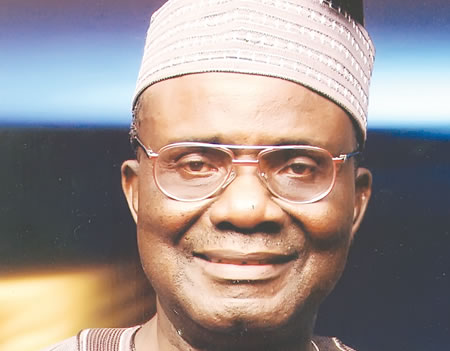
Chief Dr Femi Majekodunmi, the Bada of Egbaland, is the first president of medical students of the University of Ibadan Students Union. Over the years, he also doubled as a member of the Board of Governors of the National Institute for Policy and Strategic Studies, Chairman, Appointments, Promotions and Disciplinary Committee, as well as Chairman, Governing Board, Administrative Staff College of Nigeria (ASCON), and Chairman, Committee of Chairmen of all Federal Medical Centres in Nigeria, and Executive Chairman, Ogun State Universal Basic Education Board (SUBEB), and member of the Ogun State Governor’s Elders Council. He spoke to KUNLE ODEREMI on the 27 years after the restoration of civil rule in Nigeria, the state police bill, the menace of insecurity, economic challenges, among other national issues. The excerpts:THE country is gradually moving towards another round of elections. Are there issues you perceive as being of serious concern, and why?There are many issues in the country today. They are palpable and we can easily see them, and many are of serious concern. For example, concerning security, we have banditry, kidnapping, armed robbery, Boko Haram, ISWAP activities, and the North/South dichotomy. There are other core issues relating to economic instability, corruption, poor infrastructure, and so on. Many of these problems have been on for a long time before the present regime. Let us be frank with ourselves, the present regime was aware of the numerous problems and embarked on them, promising and making candid efforts to solve them. Today, we all know how far it has gone; only time can tell how well. Recently, the country marked 27 years of uninterrupted civil rule. From your experience, as a well-travelled personality, what do you consider as the gains and missed opportunities for Nigeria in the Fourth Republic so far? Is it not a huge disappointment by the Nigerian ruling class, who often promise to turn stone into bread?After 27 years of uninterrupted civil rule, Nigeria has gained a lot in terms of purposeful development despite our well-known problems; succeeding governments and rulers have tried to do one thing or the other to solve many of these problems but unfortunately, many problems remain unsolved. The ruling class has not given up, but the people seem disenchanted as most Nigerians have not really seen much solution or improvement, despite the efforts of succeeding governments. For instance, the present government of President Bola Tinubu started well, imbued with obvious commitment and strong determination, and embarked on solving most of the problems, namely, the troubled economy, insecurity, dilapidated infrastructure, issues concerning the general welfare and living conditions of low-income Nigerians. So far, the President has tried and a lot still must be done to make life more abundant for the common man. What we need to do is to be patient with the present government; give it time, considering the seriousness he is putting into it all. More than 65 years after weaning itself off British colonialism, Nigeria is still bogged down with teething problems like an infant when it is an adult. What do you consider as the major obstacles impeding Nigeria from attaining the status of a nation? What’s wrong with us as a country? How can the country get out of the quagmire or the woods?Before we became independent in 1960, there was considerable order in the system – economic, social, security, ruling class, political, etc. Our colonial masters and leaders tried their best to establish a country with so many dichotomies – North-South, tribal/ethnic groups – while our leaders tried to build and establish an egalitarian society where there would be freedom, justice and equal rights. Nigeria was then not seen to be a rich country but, with the advent of oil and gas, and the attendant exploration and production in commercial quantities, our values started changing with corruption in the government and in many aspects of our lives. Failure of the successive governments to eradicate or curb corruption has given birth to many of the problems we have today. It is so entrenched in many aspects of the government and among the people. Therefore, the symptoms and signs of our failure as a nation include a “get-rich-quickly mentality” and indiscipline in all forms and ramifications. All these have eaten deep into the fabric of our society, and these are the reasons why a solution is far-fetched by successive governments and leaders. Don’t you find it intriguing that a lot of issues and challenges that held sway under military rule still stare us in the face? Examples are corruption, culture of impunity, violent crimes, economic stupor, etc. Why has the trend subsisted over the years?Maybe to some extent. I believe the ugly issues and challenges started with the way and manner our colonial masters structured the country. We should not have been one country. Putting different tribes and ethnic groups in the same country would definitely give rise to many problems – tribal, ethnic, geopolitical – the North-South dichotomy, a large population, and many different languages that make things difficult for the people and the leadership; coping with all these, disunity among the different tribes, corruption and lack of patriotism gradually gives rise to disorderliness in the system. Lack of concerted efforts and indiscipline gradually led us to what we have today, be it under military or civil rule. We remember the efforts of Chief Obafemi Awolowo, the great visionary leader of our time, who wrote and talked fervently on the signs, symptoms and the vision for a greater Nigeria. He worked very hard before and after his tenure as Premier of the Western Region, underscoring his vision for a greater Nigeria. He ended up becoming “the best President Nigeria never had”. I see our present President, Bola Ahmed Tinubu, as one that has a great vision… and he started with a great determination to solve many of these challenges and problems in many aspects of governance, especially those that make the common man happy, thereby establishing an egalitarian society. With time and some amount of patience by the people, we should get there. Elections into public offices in Nigeria are perceived as a war situation, with every ‘weapon’ considered legitimate by key political actors and their foot soldiers. What do you think encourages and promotes such unwholesome tendencies, mentality and chaotic scenarios? For how long should such practice prevail in a land being ravaged by poverty, collapsed infrastructure and sleaze? Has it become a way of life?The chaotic and unwholesome scenarios can only subside or be eradicated if we have the right leadership and people are well-oriented to do the right things always. Yes, we all know that Nigeria has always been having leadership problems, but we should realise that the people that constitute the followership need well-structured orientation as we have always been having all forms of indiscipline in various sectors that impinge on a good working system in various parts and aspects of the country. You need money for certain purposes in the course of elections. Is what many regard as the overuse of money in politics in Nigeria in consonance with global standards and practices, especially as obtainable in advanced democracies and countries like the US and the UK, to mention just two?In advanced democracies like the United States of America (USA) and the United Kingdom, for example, there is legislation governing the use of money in elections, detailing the maximum amount that a party or a politician can spend. These are developed countries where there is a considerable extent of order in electioneering activities. In Nigeria, money politics started in the Third Republic, when electioneering activities were championed by the ‘money-bag politicians’ with the attendant illegalities, thuggery, vote-buying, stealing, snatching of ballot boxes and election papers, at times culminating in rigging and manipulation of election results, and other forms of inducement and malfeasance. We have been able to reduce some of those untoward tendencies in our polity. I agree with critics that we have to do more in the bid to raise the ante in terms of standard practices, behaviours and conduct in our body politic. The existing system remains a work in progress like other democracies. Our focus should be on building and firming up stronger institutions; I mean institutions that can always stand the test of time. All that’s required is the political will and sincerity of purpose, coupled with commitment to values that exalt a nation. We must show patriotism and strengthen the bond of unity because there is always strength in diversity. While leadership should demonstrate capacity and character, as well as live by example, the rest of the population must live above board and ingrain the culture of discipline and a Spartan lifestyle. READ ALSO:Money Politics: Nigeria’s delicate delicacySecurity of lives and property is the primary duty of any government. Nigeria has almost been lying prostrate as Boko Haram, ISIS, and other insurgent groups have run loose over the years. What does the climate of fear caused by these groups and violent gangs portend for the future of Nigeria? Why is it becoming almost impossible for the country to tame those behind the heinous crimes being perpetrated by the terrorist groups, kidnappers, bandits and others?For many Nigerians, one of the wonders of the modern world is why the police and the military have not been able to rid Sambisa Forest and other places in the North harbouring Boko Haram, ISIS, ISWAP, and others of all the terrible inhabitants. Sambisa Forest and the rest of the forests are seen as the permanent headquarters of all these evil people and their nefarious activities. We have heard many stories and speculations about some highly placed Nigerians backing and sponsoring these kidnappers, bandits and armed robbers. The federal, state and even the local governments should make a joint effort to find and expose these backers and sponsors if it is truly what is happening. These criminals and their backers are not ghosts. So, there must be synergy and collaboration among stakeholders on information and intelligence gathering on the few criminal elements that are bent on depriving the peace-loving, law-abiding and pious majority of the citizens that are committed to a stable, progressive and prosperous Nigeria. Like I said, we must guard our loins, keep deploying modern technology and strategising in the war against those that have chosen the path of perdition and savagery. All hands must remain on deck. In advanced democracies, political parties are not just platforms for politicians getting elected to offices to serve, but also strong institutions that sustain the alluring virtues of good governance, integrity and openness in government. Does such a system exist in Nigeria, the giant of Africa? How?In the past, before independence and some years after, Nigerian political parties were formed and operated on an ideological basis and patriotism. Not so nowadays, where many challenges and problems in the country have set in. Politics is now seen as a veritable avenue to make money and obtain juicy appointments from the government at the federal, state and even local government levels, where the lucky ones scheme and make sure they benefit maximally from the budgets approved for any purpose, thereby heralding corruption, lack of good governance, lack of integrity, the reign of impunity, and so on. Politicians have always talked of “serving the people” as the reason for going into politics, but sadly, most people now see it as self-serving or “stomach infrastructure”. Isn’t it time we discard power rotation or shift between the North and the South if we are really determined and willing to become a nation, entrench quality leadership, competence and integrity?Yes, it’s part of the country’s problems that need to be solved. Most developed countries don’t have this problem but Nigeria still has it. It will take time before the North reaches the level of development of the South, especially in areas of education, socio-economic development, commerce, industrialisation, infrastructure, health and so on. However, when you consider the direction and some achievements of the present Federal Government under President Bola Ahmed Tinubu, all being well, in another five to 10 years, Nigeria might be ready to entrench quality leadership, competence and integrity to obliterate any strong idea of North-South power rotation. As one of the leaders from Ogun State, how do you regard the conduct of party primaries, especially in the major political parties across the country?In Ogun State, the conduct of primaries was fairly all right, devoid of serious problems, especially in the APC, where we have Senator Olamilekan (YAYI) as the gubernatorial candidate. Senator Yayi, for over the past three years, has proved to be a man representing a new generation of leadership that blends legislative experience, fiscal discipline and a veritable understanding of the socio-economic dynamics and realities of Ogun State and Nigeria in general. From all indications, he is the next Executive Governor of Ogun State come May 29, 2027, by the grace of God. To what extent was the exercise fair and just concerning the stringent calls for power shifting to the Ogun West senatorial district?Prince Dapo Abiodun has really done well as a governor. He came in seven years ago and made many promises concerning development reaching every local government area, and possibly all the wards in Ogun State. Governor Abiodun has been able to achieve most of these promises. In fact, he has obviously taken Ogun State to a much higher level, especially in education, health, infrastructure, agriculture and security, etc. What are a few areas you think need to be further worked on, and those achievements you consider to be his legacy projects, and why?I would like the governor to improve on and raise the standard of the primary and secondary schools in Ogun State. The government’s free education policy is very much in place. The teachers are well taken care of. Many of the schools are very old. There is a need to build and renovate more schools as the funding from the state and UBEC (Universal Basic Education Fund) is presently inadequate. Yayi’s unparalleled veritable performance, along with his subtle election campaign, has made him the most popular politician today in Ogun State. His style is purposeful, focused, very hard-working and peaceful. In the past, the effort of Ogun West senatorial district in attaining the gubernatorial ticket of a major political party has not really been recognised by the Ogun Central and Ogun East senatorial districts as it was seen as a minority senatorial district devoid of a powerful and strong aspirant to be trusted to win if given the ticket. For the first time in over 40 years, the situation has changed, very much in favour of Senator Yayi, who is strong, powerful, loved, has performed well and can be trusted to win the governorship seat of Ogun State to take the state to greater heights. What do you make of the spirited move to restore state police in the country? Are you fully in support of the effort, given the insecurity in the land?Yes, I agree with many who believe in and support the creation of state police, as it is likely to reduce criminal and illegal activities that are prevalent in the country nowadays. However, the fear is in the implementation. It should be strongly noted that the Nigerian Police Force will be decentralised under the development, as the State Police will be primarily under the governor of a state constitutionally. Legislative safeguards should be put in place by the National Assembly. The role of the governors and the Inspector-General of Police should be clearly determined, as the fear of abuse is very much there, considering many other extraneous factors that will come from the traditional rulers (obas, emirs, and others), politicians and other stakeholders in the political and socio-economic activities in the various states and local governments. If well and faithfully implemented, the spate of criminality all over the country will reduce considerably. In our country today, despite our advancement in education, politics, business and administrative experience, we still lack cohesion, administrative maturity, patriotism, and a corruption-free society. Until we eschew all the negative indices and attitudes, we cannot succeed in implementing any programme, including state police. We need to do things right always. We must stop cutting corners and hiding behind one finger, playing the ostrich. WATCH TOP VIDEOS FROM NIGERIAN TRIBUNE TVBack to School, Back to Business A Fresh StartRelationship Hangout: Public vs Private Proposals – Which Truly Wins in Love?“No” Is a Complete Sentence: Why You Should Stop Feeling GuiltyRelationship Hangout: Friendship Talk 2025 – How to Be a Good Friend & Big Questions on FriendshipPolice Overpower Armed Robbers in Ibadan After Fierce StruggleGet real-time news updates from Tribune Online! Follow us on WhatsApp for breaking news, exclusive stories and interviews, and much more. Join our WhatsApp Channel now