Psychedelic Entities and Demonic Politics
1913 illustration by Austin Osmond SpareThe contemporary psychedelic movement has moved, within a few years, from rejecting “entity contact” as meaningless superstition or hallucination, to empirical. . .
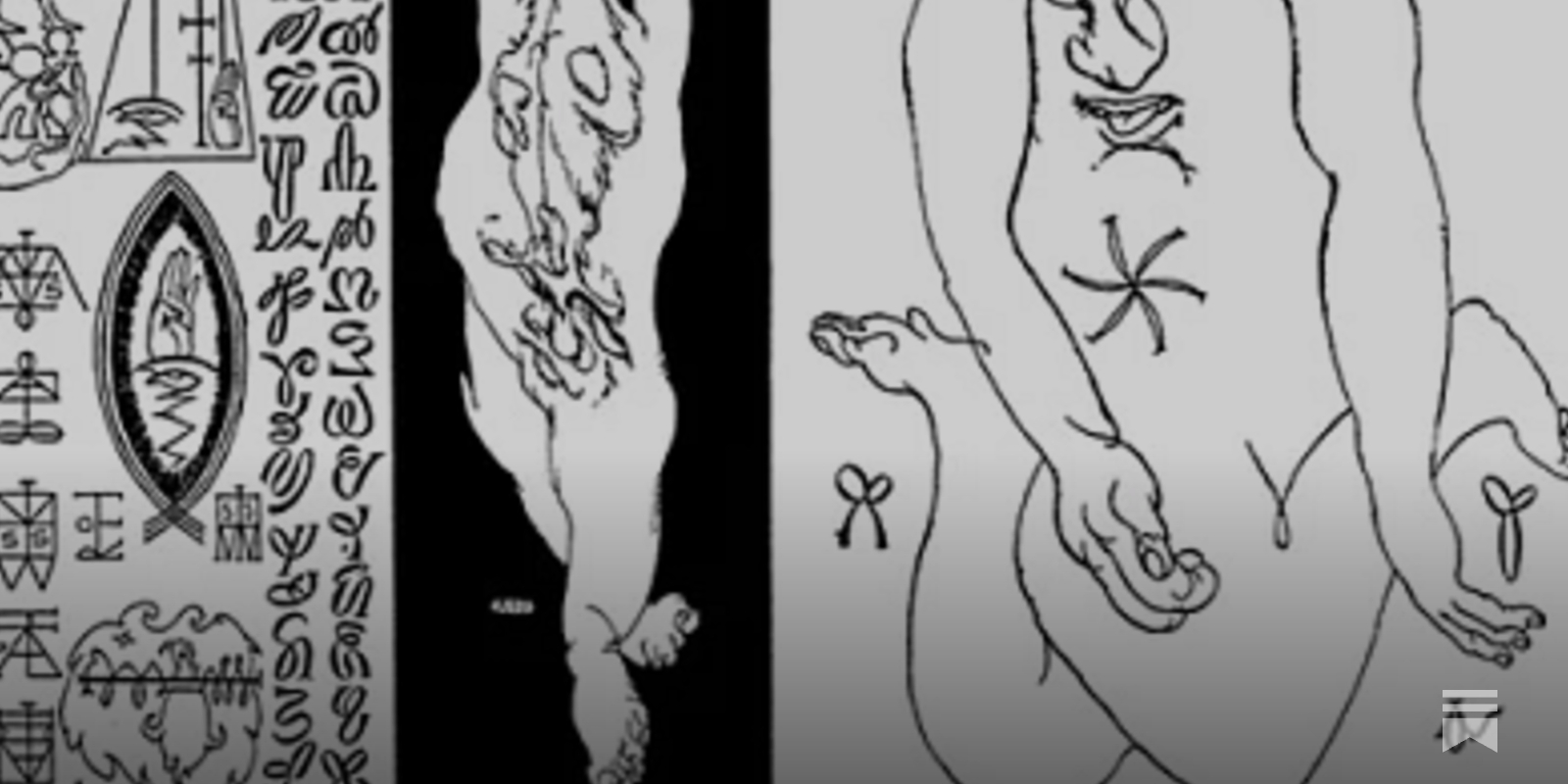
1913 illustration by Austin Osmond SpareThe contemporary psychedelic movement has moved, within a few years, from rejecting “entity contact” as meaningless superstition or hallucination, to empirical investigation of these commonly reported encounters, to something closer to anxiety and alarm about them. I feel I was a bit ahead of the curve here, as I explored these subtle-plane encounters inBreaking Open the Head, including their threatening aspects. While researching my first book, I experienced a wide variety of psychic and paranormal phenomena that ultimately convinced me, despite initial skepticism, that there was phenomenological validity to the shamanic, pantheistic, or animistic cosmology, which includes a multidimensional awareness of spirits, demons, elemental beings, angelic beings, and so on. I also discovered, first hand, the reasons for the taboos and ritualized sacrifices often associated with initiation and the individual quest for gnosis. The post-1990s psychedelic renaissance started from a largely scientific, empiricist, and materialist framework (or bias). Immersed in reductive physicalism, we lacked a context for dealing with these types of psychic or supernatural eruptions. In fact, we still lack for this context. These paranormal encounters are what Terence McKenna called “thrown-away knowledge” — knowledge that falls outside of any institutional or establishment framework, yet is, nevertheless, important, perhaps even essential for reasons we will explore. I was delighted and even relieved to read Joanna Steinhardt’s “What Are Psychedelic Entities?” InNoēma. Steinhardt, an anthropologist, explores the cross-cultural phenomenon of meeting seemingly autonomous, sentient beings during psychedelic experiences. She points to two conflicting frameworks for interpreting these visitations. The Western scientific paradigm dismisses “entity encounters” as hallucinatory misperceptions generated within the brain due to chemical disruption. Conversely, Indigenous and animist traditions view these entities not as internal projections, but as autonomous spirit-beings residing in alternative realms of reality, with visionary plants acting as agents opening channels of communication. Steinhardt — who met “guides” during an iboga ceremony — tracks how anthropological perspectives on these phenomena keep evolving. Early theorists reduced animism to a primitive confusion of categories, but the subsequent rise of cultural relativism in anthropology —and direct experiences on the part of anthropologists and many Westerners — have slowly led to new theoretical approaches. Some now see these experiences as not merely culturally specific neurological accidents, but as ontological ruptures that reveal the limits of Western dualism. “I’ve come to feel that these beings exist in a blind spot of modern science,” Steinhardt writes, “where the bioelectrochemical processes of the brain reach the limits of their explanatory powers. ”Recently, many reports of entity encounters have taken a dark turn. With the rise of extended-state DMT protocols — intravenous infusions that hold the subject in the visionary field for thirty minutes, an hour, longer — and with the normalization of repeated high-dose exposure in both research and informal settings, reports of encounters with beings who describe themselves as malevolent, who claim dominion over human beings, and who announce our collective ruin, have become increasingly frequent. Researchers who once described DMT entities as teachers, guides, or custodians of forgotten knowledge are now reporting encounters with beings who propound prophecies of doom. Meanwhile, the modern psychedelic renaissance coincides — and, I will propose, correlates — with a rising tide of global destruction and authoritarian systems based on technological control and psychological manipulation. I want to explore how this is happening as I see it. But I am afraid most researchers and many psychonauts aren’t going to like it. The implications are jarring. It suggests that various avenues of research, despite our best intentions, may unwittingly contribute to far-reaching negative reverberations with, perhaps, societal or even planetary consequences.