Sharad Pawar And The Politics Of Possibility: Why NCP(SP) Has Everyone Reading Between Lines Again
Last Updated:July 15, 2026, 14:56 ISTSupriya Sule's remarks on backing key NDA bills echoed Sharad Pawar's trademark politics—neither a yes nor a no, leaving every political camp guessing. Rapid ReadRapid. . .
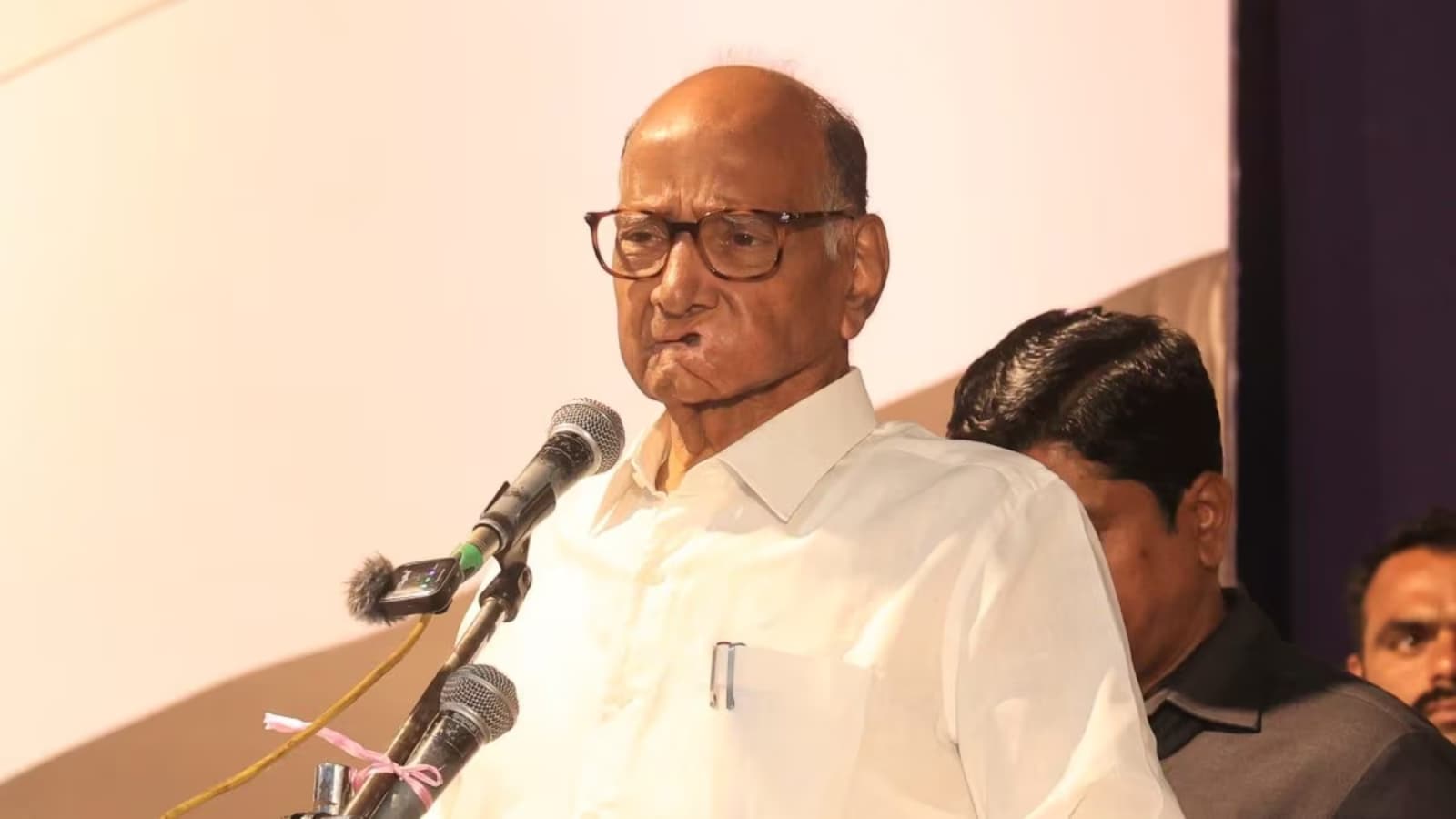
Last Updated:July 15, 2026, 14:56 ISTSupriya Sule's remarks on backing key NDA bills echoed Sharad Pawar's trademark politics—neither a yes nor a no, leaving every political camp guessing. Rapid ReadRapid ReadSummarized by AI. +Supriya Sule's remarks echo Sharad Pawar's politics. NCP(SP) keeps political camps guessing on NDA bills. Sharad Pawar's 8 MPs crucial for constitutional bills. NCP (SP) chief Sharad Pawar (File image)By Parimal PeeyushSupriya Sule’s clarification on her party’s possible support for some key NDA legislation presented a familiar Sharad Pawar moment. It was neither an endorsement nor a denial, with just enough ambiguity to keep every political camp invested. Recommended StoriesShe Broke Off The Engagement, He Came Back With A Sickle: One Dead, One CriticalYogi Govt To Introduce 'My Health World' In UP Schools, Focus On Nutrition, Screen Time And Healthy LivingSuccess Story: She Failed Class 5, Missed UPSC 3 Times, Then Became An IAS Officer At Just 242 Killed After Scooter Battery Charging Sparks Massive Fire In Noida Building, Over 100 RescuedSharad Pawar has rarely been a politician of definitive answers. For decades now, the Maharashtra veteran has built a career on something far more valuable in coalition politics—keeping every side guessing just enough to ensure they keep talking to him. On Wednesday, the Nationalist Congress Party (Sharadchandra Pawar) once again demonstrated that political instinct. Even as speculation swirled over meetings between leaders of both NCP factions and Maharashtra Chief Minister Devendra Fadnavis late Tuesday evening, the Sharad Pawar camp neither shut the door on the NDA nor walked through it. Dismissing reports suggesting that the Sharad Pawar-led party had already decided to support the Delimitation Bill that the Centre is likely to bring back in Parliament, NCP(SP) working president Supriya Sule termed it a “storm in a teacup. "“I got a message from a media person. In response, I said, ‘We will consider if the 50 per cent cap is up for discussion. ’ This was a private conversation with the media person, as this person is a friend. How can WhatsApp conversations, privately, be made into news?" she wondered, clarifying that her party was yet to take an official stand in the matter. She did, however, add that the party would examine the proposal if the Centre was prepared to discuss the 50 per cent cap on the increase in the number of seats for each state post delimitation. “NCP (SP) will think about delimitation if the government is open to discussing the 50 per cent cap. "It was a familiar Sharad Pawar moment. Neither an endorsement nor a denial with just enough ambiguity to keep every political camp invested. The Delhi ArithmeticThe speculation is not really about Maharashtra. It is about Delhi. According to sources, the discussions are not centred on the NCP(SP) joining the NDA but instead revolve around whether Sharad Pawar’s party could extend issue-based or outside support to the Narendra Modi-led government at the Centre on select constitutional legislation, particularly the proposed Delimitation Bill and the implementation framework for the Women’s Reservation law. That distinction is politically significant. Joining the NDA would fundamentally alter Pawar’s position within the INDIA bloc. Supporting specific Bills while remaining outside the alliance would probably not. In fact, it would fit neatly into a political philosophy Pawar has practised for decades — cooperate where it suits, oppose where it must, and never surrender strategic autonomy. Why Eight MPs Suddenly MatterAt first glance, the NCP (SP) hardly appears indispensable. The party lost most of its MLAs after Ajit Pawar’s rebellion, lost the original party name and symbol, and is no longer the dominant force it once was in Maharashtra. But the Parliament tells a different story. Sharad Pawar’s faction has eight Lok Sabha MPs, making it one of the largest contingents among regional Opposition parties. Ordinarily, eight MPs would not determine the fate of a government. But constitutional amendments are different. Under Article 368, a Constitutional Amendment Bill requires not only a majority of the total strength of the Lok Sabha (currently at least 272 members) but also the support of at least two-thirds of members present and voting. Unlike ordinary legislation, where a simple majority often suffices, constitutional amendments demand political consensus. And consensus is built one regional party at a time. That is why every bloc matters. Eight MPs cannot guarantee the passage of a constitutional amendment. But they can become the difference between a comfortable victory and a politically embarrassing shortfall. Would BJP Value Outside Support?The Modi government is widely expected to revive politically consequential legislation linked to delimitation and women’s reservation during the Monsoon Session. These are not routine Bills but ones that could redefine India’s political architecture. The Women’s Reservation Act has already been enacted, but its implementation remains linked to the completion of the Census and the delimitation exercise. Any fresh constitutional architecture around delimitation is likely to trigger intense political contestation, particularly from southern states concerned about parliamentary representation. For the government, therefore, the challenge is not merely legislative. It is political. Winning the numbers while demonstrating that support extends beyond the NDA would strengthen the legitimacy of such reforms. An issue-based endorsement from Sharad Pawar’s party would help achieve precisely that. Why It Also Suits PawarThere is another calculation. The Shiv Sena split fundamentally altered how regional parties view internal cohesion. The rebellion led by Eknath Shinde showed how prolonged uncertainty can eventually produce organisational fractures. Sharad Pawar experienced something similar when Ajit Pawar walked away with most of the NCP legislators. Despite that setback, the NCP (SP) has retained its parliamentary strength. Sources indicate there is little appetite within the leadership to allow ideological ambiguity over national legislation to become a source of discomfort among its MPs. And supporting select constitutional measures while remaining outside the NDA offers a political middle path. It allows the party to claim it is acting in the national interest rather than changing ideological camps. Vintage Sharad PawarIf this sounds familiar, it is because Sharad Pawar has spent nearly six decades perfecting precisely this style of politics. In 1978, he broke away from the Congress to become Maharashtra’s youngest Chief Minister only to return to the grand old party in 1987. In 1999, he left again over Sonia Gandhi’s foreign origin, only to form governments with the Congress months later. In 2019, after the BJP and Shiv Sena parted ways, Pawar stitched together the ideologically improbable Maha Vikas Aghadi by bringing together the Shiv Sena, Congress and NCP. Days earlier, the BJP had believed Ajit Pawar’s rebellion had secured it power. Within 80 hours, Sharad Pawar had reclaimed the narrative. Every episode reinforced the same principle of never closing a political door before you absolutely have to. Perhaps the biggest misconception about Sharad Pawar is that his influence today should be measured by the number of MLAs he commands. It is not. His real currency is relevance. Every few years, Maharashtra witnesses the same cycle. A meeting, a rumour and a denial followed by fresh calculations around what Sharad Pawar might do next. That is not accidental. It is the essence of what may be called the Pawar doctrine of keeping communication open and his options alive just to ensure that even when your numbers shrink, your political value does not. Which is why the story is no longer about who met Devendra Fadnavis late Tuesday evening. The bigger story is that eight MPs from a party many believed had been politically diminished are once again central to the arithmetic of some of the Modi government’s most consequential legislative ambitions. That, more than any meeting, is a reminder that in Indian politics, Sharad Pawar’s greatest strength has never been certainty. It has been possibility. News18 NewsletterHandpicked stories, in your inboxA newsletter with the best of our journalismKey Questions AnsweredSharad Pawar's NCP(SP) is keeping political camps guessing about its stance on key legislation, potentially impacting the INDIA bloc. About the AuthorNews DeskThe News Desk is a team of passionate editors and writers who break and analyse the most important events unfolding in India and abroad. From live updates to exclusive reports to in-depth explainers, . . . Read MoreLocation :First Published:July 15, 2026, 14:56 ISTNewsindiaSharad Pawar And The Politics Of Possibility: Why NCP(SP) Has Everyone Reading Between Lines AgainDisclaimer: Comments reflect users’ views, not News18’s. Please keep discussions respectful and constructive. Abusive, defamatory, or illegal comments will be removed. News18 may disable any comment at its discretion. By posting, you agree to ourTerms of UseandPrivacy Policy. Loading comments. . . Read More