The Structural Limits of the EU’s China Policy
When EU leadersgatheredin Brussels on June 18-19, their agenda was packed with the bloc’s long-term budget, regional conflicts in Ukraine and the Middle East, and global trade frictions. Although China was. . .
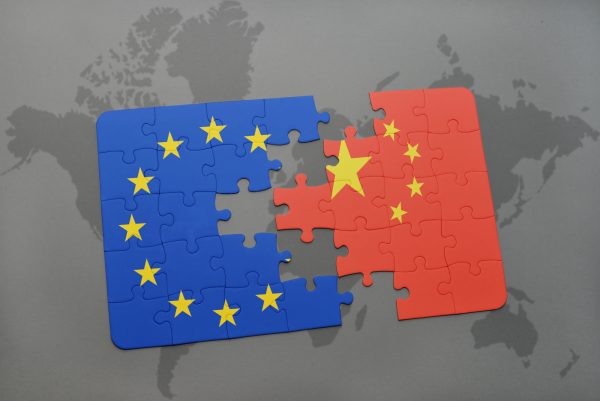
When EU leadersgatheredin Brussels on June 18-19, their agenda was packed with the bloc’s long-term budget, regional conflicts in Ukraine and the Middle East, and global trade frictions. Although China was not explicitly named in the final European Councilconclusions, the leaders’ discussions on “global macroeconomic imbalances” probably referred to the bloc’s fraught economic ties with Beijing. The summit yielded an ambivalent mandate. EU leaders called on European Commission President Ursula von der Leyen tomaintaindialogue with key economic counterparts, while simultaneouslyurgingan evaluation of the EU’s trade defense toolbox to design new regulatory instruments. This leaves China-EU relations suspended in a familiar state of friction. Brussels’ bifurcated policy toward Beijing, which simultaneously pursues diplomatic engagement while clamping down on specific aspects of the economic relationship, is set to continue. Crucially, the summit offered no indication of a broader, unifying strategic framework to make this dual-track policy predictable. This lack of a coherent EU approach, compounded by member state policy oscillations, structurally caps what Brussels can achieve with Beijing, as it erodes the strategic confidence needed to reach meaningful compromises. China-EU relations have been strained for years, weighed down by a matrix of evolving regulatory measures that restrict business activities on both sides. These frictions are complex and extend into multiple regulatory and business areas. For instance, both sides conducted trade probes and imposed tariffs on each other’s products. In October 2024, the EUimposeddefinitive countervailing duties ranging from 17 percent to 35. 3 percent on battery electric vehicles (BEVs) manufactured in China to counter what Brussels sees as “unfair subsidization. ” While BEVs dominate headlines, they represent just one facet of a wider regulatory campaign; the EU maintains a 79 percenttariffon Chinese ceramics and isinvestigatingtire imports. On the other side of the equation, Beijing has launched targeted anti-dumping investigations and duties on European products. Europeanpork,dairy, andbrandyare all subject to import tariffs in China, ranging from 4. 9 percent to 34. 9 percent, depending on the specific goods. Furthermore, the two sides also have or plan to have regulatory restrictions in place that go beyond targeting a specific product group and apply to whole industries and supply chains. The EU’s proposedIndustrial Accelerator Actaims to shield strategic European sectors, while the upcomingrevisionof the Cybersecurity Act seeks to restrict “high-risk” vendors from EU telecommunications networks. While this move is country-agnostic on paper, itthreatensChinese tech giants like Huawei. Beijing has its own defensivelegislation. TheProvisions on Industrial and Supply Chain Securityallow China to penalize foreign firms that discriminate against Chinese supply chains, while theProvisions on Countering Foreign Unlawful Extraterritorial Jurisdictionempower the Ministry of Justice to block domestic entities from complying with foreign probes. This latter tool was recentlyusedto halt cooperation with the EU’s Foreign Subsidies Regulation (FSR) investigation into the security technology firm Nuctech. Moreover, the two sides also have export control regulations in place in addition to trade probes and industry-wide acts. The EU continues totightenexport controls on dual-use goods to prevent European technology from potentially reaching Russia’s military economy via Chinese intermediaries. Conversely, China’s export restrictions on rare earth elements and permanent magnets putpressureon Europe’s industrial competitiveness and green transition. This list of frictions is not exhaustive, as the two sides also havedisagreementsin other areas, like publicprocurementof medical devices. Nevertheless, even amid these compounding pressures in China-EU ties, diplomatic channels have not shut down. A European Parliamentdelegationled by Engin ErogluvisitedChina in late May, and Chinese Vice Minister of Commerce Ling Jimetwith the European Commission’s Ditte Juul Jorgensen on June 9 to discuss a new trade and investment consultation mechanism. The June European Council took place amid media headlines that Europe’sdebateon China was at a “boiling point,” and that leaders were moving in the direction of a “harder line toward” Beijing. The actual outcome, however, was far more muted. Rather than choosing a definitive path, the Council chose to institutionalize its ambivalence. It handed the Commission amandateto design new trade defense tools, reportedly focusing ondiversification, while explicitly instructing it to continuedialoguewith the EU’s key trade partners. Consequently, the commercial uncertainty defining the China-EU relationship is set to persist. The structural weakness of the EU’s approach is not just the Commission’s dual-track policy, but also the geopolitical inconsistency of its member states. Germany, whose economic weight naturally shapes the direction of EU policy, remains caught between preserving its close businesstieswith Beijing and maintaining unity with its European partners. As a result, Berlin continues to oscillate between amoderateapproach andendorsinga stronger defensiveposture. Similarly, Spain has demonstrated shifting priorities, recently pivoting from its initial support of a French-led policypaperdemanding a tougher line on China todistancingitself from the initiative. These shifting national positions constrain the EU’s capacity for collective action. Long-term stability in the China-EU relationship cannot be built on defensive toolboxes, policy buzzwords, or reactive tariffs. It requires a policy that is coherent, consistent, and united. Brussels’ fragmented approach to China, shaped by itsde-riskingstrategy, proclaimed commitment to dialogue and divergent member state action, makes it difficult for Beijing to distinguish signal from noise. As long as China receives contradictory messages from a fractured bloc, it has very little incentive to make concessions on critical issues like rare earth export clearances or market access barriers. A predictable, unified European policy is a viable foundation for the strategic confidence needed to move relations beyond this volatile inflection point. Only when Brussels establishes clear, consistent boundaries will Beijing be able to gauge Europe’s long-term strategic trajectory, creating the stable environment necessary for both powers to negotiate a much-coveted economic compromise. AuthorsGuest AuthorDaniel BalazsDr. Daniel Balazs is a senior research analyst at the Institute for China-Europe Studies (ICES) and an adjunct fellow with the China Programme at the S. Rajaratnam School of International Studies (RSIS), Nanyang Technological University, Singapore. He specializes in Chinese foreign policy and China–EU relations, with a focus on the strategic dynamics shaping Asia and Europe. His work has been published in Asian Security and Political Science Quarterly, and his commentary has appeared in outlets including The Diplomat, Foreign Policy, and The Interpreter. The views expressed are his own and do not represent the views of his affiliated institutions. TagsChina PowerDiplomacyEast AsiaChinaChina-EU relationsChina-EU trade warEU China policyEuropean CommissionEuropean Council