Top Prostitution Laws in Europe for 2025 and 2026
Prostitution Laws in Europe 2025-20261. France’s Push for Legal Regulation and Red Light DistrictsFrance continues to reevaluate its stance on prostitution, with widespread debates about legalization and. . .
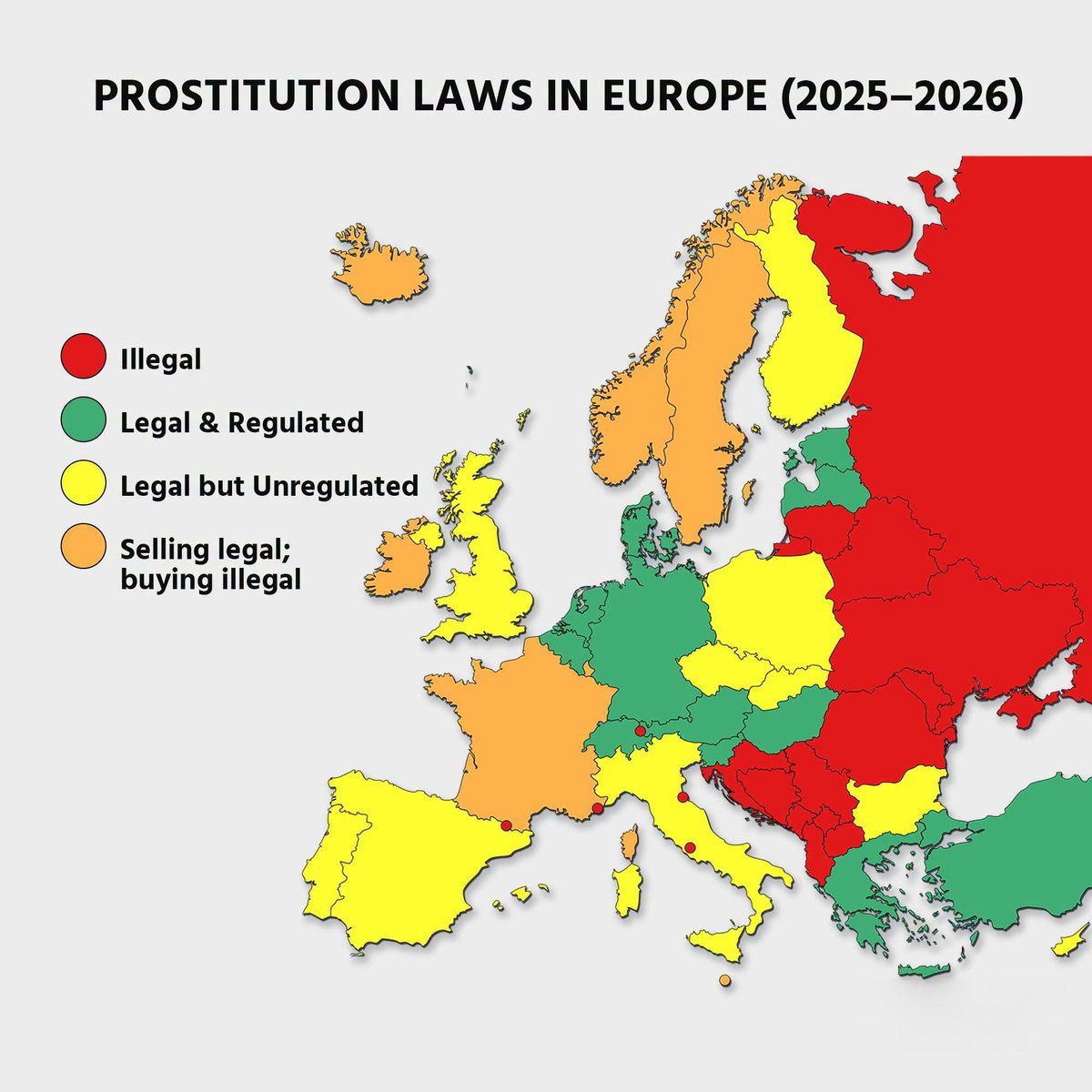
Prostitution Laws in Europe 2025-20261. France’s Push for Legal Regulation and Red Light DistrictsFrance continues to reevaluate its stance on prostitution, with widespread debates about legalization and regulation. As of 2025, lawmakers are considering establishing designated red-light districts where sex work would be officially permitted and regulated by health and safety standards. This approach aims to reduce illegal trafficking and improve working conditions for sex workers. The government is also exploring options for decriminalizing consenting adults involved in private consensual sex work, drawing parallels to neighboring countries with more liberal laws. 2. Germany Expanding Legal FrameworksGermany has long been known for its relatively progressive approach to prostitution, with the 2002 Prostitution Act decriminalizing sex work and ensuring workers’ rights. In 2025, legislative changes focus on expanding protections, including mandatory health insurance, occupational safety standards, and social benefits for sex workers. The government is also cracking down on illegal trafficking networks by increasing law enforcement efforts, leading to the closure of many unlicensed brothels. Notably, the country continues to debate whether to move toward full decriminalization versus regulation, with many advocating for a balanced approach that respects individual freedoms while preventing exploitation. 3. Netherlands’ Continual Regulation and Social AcceptanceThe Netherlands maintains its reputation as one of the most liberal countries regarding sex work. Since legalizing prostitution nationwide, the country has developed a robust regulatory framework, including licensing, health checks, and worker rights. In 2025, there’s an ongoing conversation about further integrating sex work into mainstream society, removing stigmas, and providing additional support services. Amsterdam’s well-known red-light district remains a model for transparent legal operations. The country’s focus remains on minimizing exploitation, promoting safety, and respecting personal choice. 4. Sweden’s Nordic Model: Criminalizing Buyers, Not WorkersSweden’s approach to prostitution, often called the “Nordic Model,” continues to be influential in Europe as of 2025. The law criminalizes the purchase of sex but decriminalizes the selling of sex by consenting adults. This model aims to reduce demand and criminal activity associated with prostitution. Several other European countries, including Norway and Ireland, have adopted similar legislation. Critics argue that the approach can drive sex work underground, making it harder for workers to access health and safety resources, though supporters believe it effectively reduces human trafficking and exploitation. 5. Spain’s Blended Approach and Regional VariationsSpain’s legal stance on prostitution remains complex, with a patchwork of regional policies. While prostitution isn’t outright illegal, it’s often regulated or prohibited in certain urban zones. Several autonomous communities have passed laws to manage or restrict prostitution, focusing on combating trafficking and safeguarding minors. In 2025, debates continue about whether Spain should adopt a unified national policy, possibly moving toward full legalization or adopting stricter bans. Overall, the country sees increased efforts to balance individual rights with public morality and safety concerns. 6. Italy’s Ambiguous Legal Status and Growing ActivismItaly’s laws on prostitution are ambiguous, with the practice being neither fully legal nor strictly illegal, but certain activities like brothel-keeping face legal restrictions. In 2025, activism around creating clearer legal pathways for sex workers gains momentum, advocating for decriminalization and better labor protections. Authorities focus on cracking down on trafficking rings, especially in major cities like Rome and Milan, while some regions consider pilot programs for regulated zones. Public opinion remains divided, but the push for clearer legislation continues to grow stronger. 7. Eastern Europe’s Struggling Legal FrameworksMany Eastern European countries remain in flux regarding prostitution laws. Countries such as Poland, Hungary, and Romania tend to have strict laws criminalizing most aspects of sex work, though enforcement varies. In 2025, there are calls from civil rights groups for reform, emphasizing the importance of safeguarding workers’ health and safety. Some nations are exploring models from Western Europe, contemplating regulated zones or partial decriminalization, but political and societal hurdles persist. 8. The Future Outlook and Trends Across EuropeAs Europe moves further into 2025, the prevailing trend involves balancing regulation, human rights, and anti-trafficking efforts. Several countries are considering desisting from criminal penalties for consensual sex work to improve safety and health outcomes. Meanwhile, there’s increased cooperation across borders, sharing intelligence to dismantle trafficking networks. The focus continues to be on protecting vulnerable populations while respecting personal autonomy, with ongoing legislative reform discussions shaping the continent’s legal landscape for the foreseeable future. Note:The images and legislative details are current as of 2025, reflecting the evolving nature of prostitution laws across Europe.