Types of Corporate Videos Every Business Should Consider 😀
Types of Corporate Videos Every Business Should ConsiderMost businesses know they need video, but many are unsure which formats deserve budget first. A corporate video is not one item; it is a toolkit for. . .
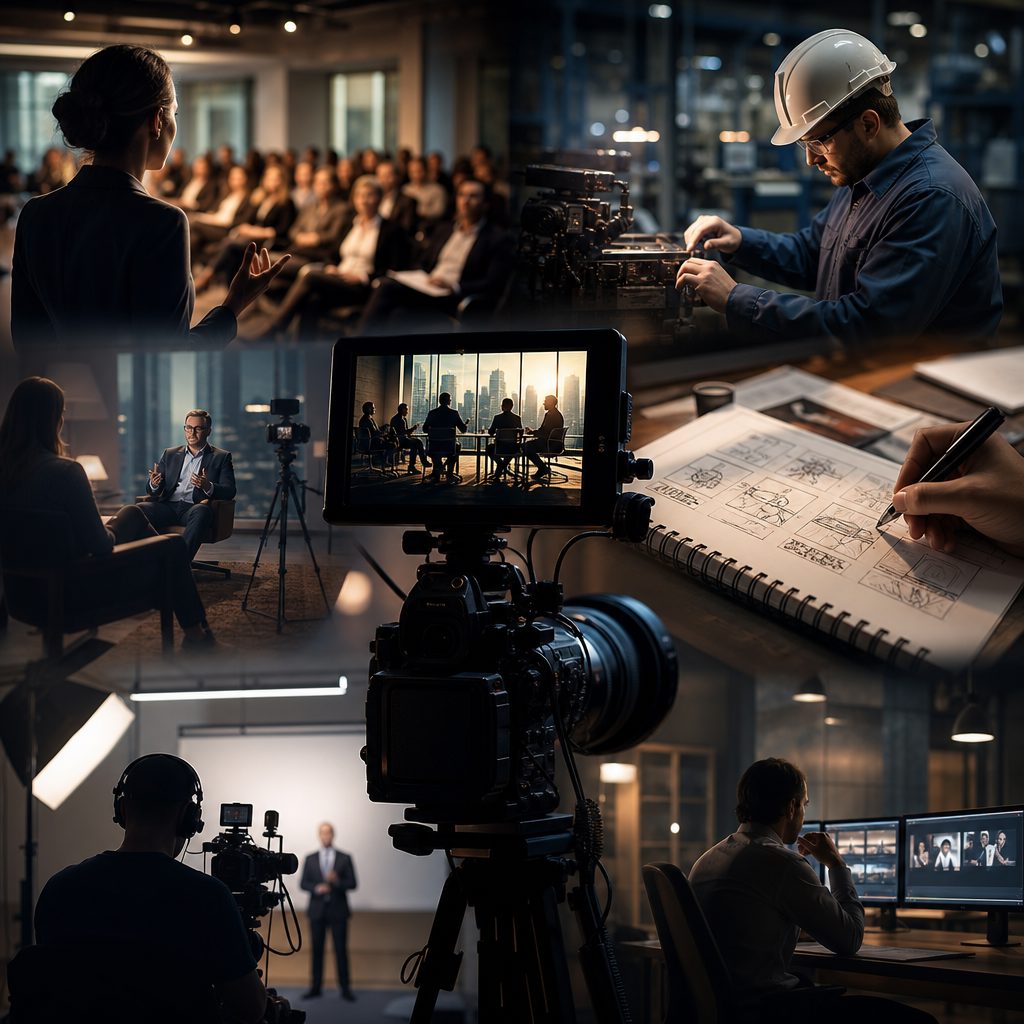
Types of Corporate Videos Every Business Should ConsiderMost businesses know they need video, but many are unsure which formats deserve budget first. A corporate video is not one item; it is a toolkit for explaining, training, selling, recruiting, and building trust. Choose the wrong type and you may create an attractive asset that solves no business problem. Choose deliberately and video becomes a practical communication system. This guide explains the main corporate video types, when each is useful, and how to plan a balanced content mix for your next production brief. Why corporate video choices matterA strong corporate video starts with intent. Before discussing cameras, locations, or animation, define the audience, the decision you want them to make, and the obstacle preventing that decision. For example, a prospect may not understand your service, a new employee may need a repeatable onboarding message, or a board may require a concise project update. Each situation calls for a different structure, length, tone, and distribution channel. “The best corporate video is not the most cinematic one. It is the one that removes friction from a specific business conversation. ”Planning the right video format begins with a clear business purpose. Core types of corporate videosBrand story videosA brand story video explains who you are, what you stand for, and why your organisation exists. It is often useful on a homepage, in investor conversations, at events, or as a sales introduction. Keep it focused on the customer’s problem rather than a timeline of company milestones. The recommended action is to develop one clear narrative: the challenge in the market, your perspective, your proof, and the outcome clients can expect. Product or service explainer videosExplainers translate complex offers into simple decisions. They work well for software, technical services, professional advice, industrial processes, and any offer that needs context before a buyer can compare options. Use a clear problem, solution, benefit, and next step structure. Avoid cramming every feature into one piece. If the offer is complex, create a short overview plus separate modules for specific questions. Customer testimonial and case study videosTestimonials reduce perceived risk because they show real people describing a real experience. Case studies go deeper by showing the problem, the process, and the measurable or observable result. Do not script customers heavily; prepare prompts and let them speak naturally. If exact results cannot be verified or shared, use qualitative outcomes, such as improved clarity, faster onboarding, or stronger stakeholder confidence. Recruitment and culture videosRecruitment videos help candidates understand the workplace before applying. Culture videos can also support internal pride and induction. The strongest versions show the actual environment, team expectations, leadership style, and the type of person who will thrive. Avoid vague claims about being passionate or innovative. Show routines, collaboration, challenges, and values in practice. Authentic workplace footage helps viewers judge fit and credibility. Training and onboarding videosTraining videos create consistency. They are valuable for safety procedures, product use, compliance explanations, role induction, and customer education. Start with tasks that are repeated often or explained inconsistently. Break content into short lessons, each with one learning objective. Pair videos with written checklists where accuracy matters, because viewers may need a quick reference after watching. Event and presentation videosEvent videos extend the life of a conference, launch, panel, or internal presentation. They may include a highlights edit, full session recordings, speaker snippets, or social cutdowns. Plan coverage before the event, not afterwards. Confirm sound, permissions, slide visibility, and interview opportunities. A good event edit should serve people who attended and people who did not. Internal communications and leadership updatesExecutive messages, project updates, and change announcements can benefit from video when tone matters. Viewers can hear confidence, caution, or empathy more clearly than in an email. Keep these videos concise and specific. Explain what is changing, why it matters, what happens next, and where staff can ask questions. Practical execution: build a useful video mixUse this process before commissioning production:Set the primary business goal: awareness, education, sales support, recruitment, training, or internal alignment. Define the audience segment and the question they need answered. Choose the video type that best matches that question. Write a brief covering message, proof points, locations, contributors, approvals, and required versions. Plan distribution early, including website placement, email use, social crops, sales enablement, and staff access. Measure performance with practical indicators, such as enquiries, completion rates, reduced repeated questions, or recruiter feedback. For many businesses, the first priority is not a large campaign. It is a small library: one brand overview, one explainer, one customer proof piece, and two or three reusable training or recruitment assets. Assumption: this mix suits organisations with multiple audiences and a need for ongoing communication, not a single announcement. A planned library gives each video a job in the buyer journey. Risks, mistakes, and recovery optionsCommon mistakes include starting with a preferred style instead of a business need, approving a script by committee until it says very little, filming without distribution plans, and making one long video do every job. Another risk is polishing authentic content. A testimonial should feel credible, not like an advertisement. If a project goes off track, recover by returning to the decision the viewer must make. Cut anything that does not support that decision. If the footage lacks clarity, add voiceover, simple graphics, or chaptered edits rather than reshooting everything. If stakeholders disagree, test two short versions with sales staff, recruiters, or internal users and collect practical feedback. “When in doubt, shorten the message, sharpen the audience, and make the next action unmistakable. ”Summary: a short decision frameworkChoose a brand story when people need to understand your identity. Choose an explainer when they need to understand an offer. Choose a testimonial or case study when they need reassurance. Choose recruitment and culture videos when people need to judge fit. Choose training videos when consistency matters. Choose event or leadership videos when important moments or messages need reach. Next stepBefore briefing a team, list your three communication problems and rank them by impact. That shortlist will reveal which corporate video types should come first. If you want help turning that list into a production plan, start a conversation withVisionairand bring your audience and message. About The AuthorJim MoustakasJim Moustakas is a seasoned professional in the realm of video production and commercial photography, born in the vibrant city of Frankfurt, Germany, in 1973 and then migrated to Australia in 1981. Jim’s passion for content creation ignited at the tender age of 15, a flame that has only grown brighter with time. In 1988, while still at Randwick Boys High School in Year 9, Jim embraced the role of the resident school photographer together with other school mates, cultivating his skills in the magic of the dark room which he ran at his school. This early exposure to the art form laid the foundation for his future endeavors. Between 1992 and 2000, Jim honed his craft in the wedding photography business, capturing countless moments of joy and celebration. The turn of the millennium marked a new chapter in Jim’s career as he embarked on a decade-long adventure from 2000 to 2011, traversing the diverse landscapes of Australia. As a national school photographer, Jim not only chronicled the academic journeys of countless students but also extended his services to Indigenous children in remote communities. His commitment to ensuring these students were not deprived of cherished school memories due to their geographical isolation speaks volumes of his character. During this period, Jim also collaborated with Australian Geographic as a freelance shooter, skillfully documenting various assignments that aligned with his travels across Australia. After a brief interlude from the industry, Jim’s entrepreneurial spirit led to the inception of Visionair Media in 2012. Under his leadership, Visionair Media has flourished into a reputable commercial photography and video production agency. The company prides itself on delivering top-tier photography and video production services to both the commercial and government sectors, showcasing Jim’s unwavering dedication to his craft and his ability to adapt and evolve within the ever-changing landscape of visual media.