UK should lead Europe as US looks east, think tank says
The United Kingdom should assume primary strategic leadership over Euro-Atlantic security as the United States rebalances its resources toward the Indo-Pacific, according to a new report by the Council on Geostrategy.
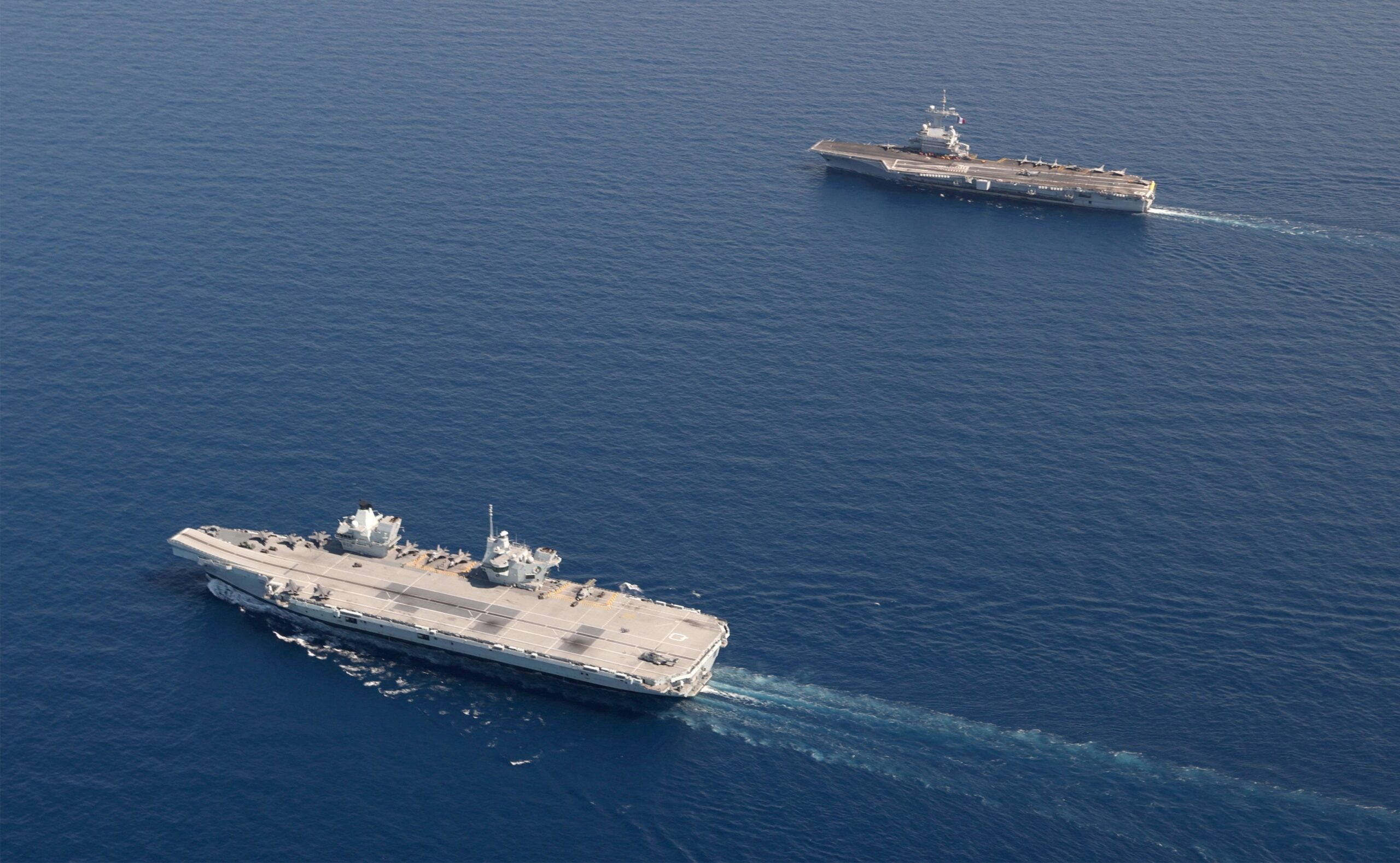
The United Kingdom should assume primary strategic leadership over Euro-Atlantic security as the United States rebalances its resources toward the Indo-Pacific, with the historical sentiment underpinning the so-called special relationship no longer sufficient to deter the coordinated activity of China, Russia, Iran and North Korea, according to a new report by the Council on Geostrategy. The report, titledBurden sharing: Preparing Britain and America for a multifront crisis, was published by the London-based think tank and argues that decades of globalisation have systematically hollowed out the productive forces of both nations, the organisation stated. The analysis introduces the term machinepolitik to describe the systematised industrial power the authors say allowed Britain and America to prevail in the major conflicts of the 20th century, contending that the combined industrial strength of the two allies may now be weaker than that of their most powerful systemic rivals. The report frames the threat as emanating from what it terms the CRINK axis, comprising the People’s Republic of China, Russia, Iran and North Korea, and argues that the active collusion between those states demands a level-headed shift away from real-time diplomacy in favour of integrated industrial capacity and structured theatre division. According to the Council on Geostrategy, the United States under the second Trump administration is rapidly rebalancing toward the Indo-Pacific and the Western Hemisphere, with the 2025 US National Security Strategy expecting European allies, and the United Kingdom in particular, to assume primary conventional responsibility for deterring Russian opportunism in the Euro-Atlantic. The report concludes that Britain can no longer rely on nostalgia and must drop what it describes as rigid legalism in favour of assertive realism. The analysis points to recent friction at the political level as a warning of what can happen when strategic alignment is absent between London and Washington, citing the opening stages of Operation Epic Fury as a case in which structural damage was inflicted on the special relationship. To prevent what the authors describe as dangerous command paralysis, the report argues that critical global staging nodes including the Sovereign Base Areas on Cyprus and the military facility on Diego Garcia should be operationally insulated and pre-cleared for allied force projection before any conflict ignites. The report sets out seven recommendations. The first calls on the British government to“identify areas of overlap within the Venn diagram of the Trump administration’s strategic objectives and British national interests to present clear opportunities for mutual cooperation to the White House,”as the authors put it. The second is the establishment of a shared understanding of multifront crises through what the report describes as“a sprint of joint wargames and significantly closer synchronisation between Euro-Atlantic and Indo-Pacific military exercises, drawing on the 1980s’ US-led ‘new maritime strategy’ as a historical baseline. ”The third recommendation calls for formal theatre coordination across three tracks:“integration in the North Atlantic and Wider North; cross-pollination in the Middle East, Africa, the Indian Ocean, and the Mediterranean; and a progressive delineation of responsibility where the US leads in the Western Hemisphere and Western Pacific, and the UK assumes greater leadership in Eastern Europe and the South Atlantic,”according to the report. A fourth recommendation centres on what the report calls a Five Eyes Critical Minerals Alliance, with the authors urging both governments to“address critical mineral vulnerabilities by launching a joint multilateral fund, modelled on the US$250 million Pax Silica initiative, to subsidise cross-border prospecting, extraction, and refining while harmonising national security exemptions and export controls against economic coercion. ”A fifth recommendation proposes a Strategic Friendshoring Task Force, described in the report as“a temporary joint mechanism inviting NATO and Indo-Pacific partners to map multitier supply chain bottlenecks and determine where participating nations can rely on shared, friendshored networks rather than fragmented national onshoring. ”The sixth recommendation calls for elevation of AUKUS Pillar Two within national defence planning,“aligning increased funding against concrete, joint technology development projects to serve as a baseline for future co-development,”according to the report. AUKUS Pillar Two covers the advanced technology and capability work that sits alongside the Pillar One submarine programme, including artificial intelligence, autonomy, undersea capability, hypersonics and quantum technology. The seventh and final recommendation calls for deeper defence industrial integration through what the report describes as“a permanent joint working group to identify and action opportunities for the co-development and co-production of military capabilities. ”The authors add that the arrangement“will support more seamless cross-theatre cooperation and allow for greater scalability, but will require Washington to ease its remaining regulatory and export restrictions and for London to accept compromises on domestic industrial sovereignty. ”The report sets out a strategic outlook in which the United Kingdom and the United States need one another, with the authors noting that the United States“looks set to remain the world’s foremost power, with a growing lead over the European Union (EU) and Japan in next-generation technologies. ”The analysis projects that“by the late 2030s, the British economy is projected to leap over Japan and reach parity with Germany to sit alongside the US, the PRC, and India, meaning its utility to Washington may even grow, especially given Britain’s position as an island citadel on America’s eastern flank. ”The authors are clear, however, that a deep change in the United Kingdom’s national mindset will be required to make the case. “Attempting purely national, autarkic onshoring is economically unsustainable in a globalised world,”the authors write, as quoted in the report. “If the UK is unprepared to invest in the British Armed Forces at a level commensurate with a cold war, it cannot expect to be taken seriously in Washington. True multifront preparation requires turning vital global staging nodes into undisputed, pre-cleared launchpads of allied power. ”The report adds that London“needs more realism in a geopolitical age,”and must“invest further in credible, scaled combat power to ensure that the CRINK fear British decisions in theatres where the UK will lead, and that Britain remains indispensable to America and the small handful of countries that are prepared to uphold defences sufficient to deter aggression across key theatres. ”