Unseen Business Awards 2026: How to Make Your Nomination Stand Out - Unseen
Unseen Business Awards 2026: How to Make Your Nomination Stand OutExplore the inspiring story behind the Unseen Business Awards and key tips for crafting a winning nomination. 23 July 2026Modern slavery. . .
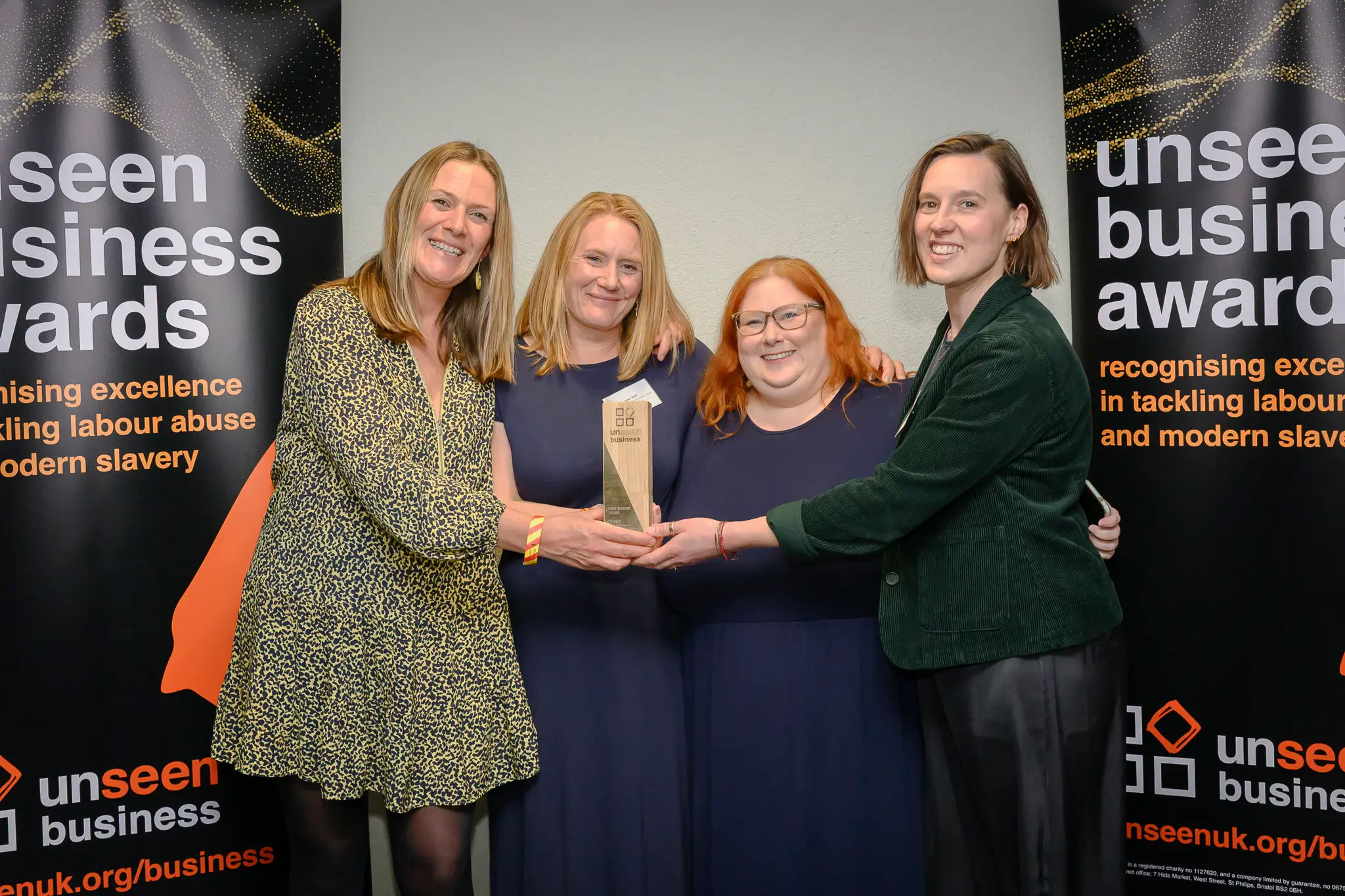
Unseen Business Awards 2026: How to Make Your Nomination Stand OutExplore the inspiring story behind the Unseen Business Awards and key tips for crafting a winning nomination. 23 July 2026Modern slavery remains a complex global issue. While businesses hold a critical role in its eradication, how do we acknowledge those actively fighting it? Now in its fourth year, theUnseen Business Awardscelebrate companies, of all sectors and sizes, that are tackling this issue head-on within their operations and supply chains, recognising them as true anti slavery leaders. But how did these awards come about? We sat down with Lucy Mann, Head ofBusiness Services(Development), to delve into the awards’ origins, explore inspiring stories of successful anti slavery initiatives, and uncover valuable tips for crafting a winning nomination. Can you tell us a bit about the story behind the Unseen Business Awards? What motivated your team to launch this initiative?Since 2018, Unseen’s business team has worked with hundreds of organisations across all sectors to tackle modern slavery in their operations and supply chains. However, by 2023, the limitations of a closed network became evident. Collaboration is key, and a broader approach was needed. That’s what led to the Unseen Business Awards, open to all organisations, not just those already in our network. The awards exist to showcase the incredible work businesses of all sizes are doing to combat this human rights issue, whether they’re part of Unseen’s network or not. It became clear that recognising leadership, innovation, and the positive impact businesses can have on people’s lives could be a powerful tool in our fight to inspire others to take action. There are many business awards. What sets the Unseen Business Awards apart?Many awards acknowledge corporate social responsibility, which is fantastic. However, the Unseen Business Awards have a laser focus: modern slavery. We delve deep, examining the nitty-gritty of a company’s efforts. Do they have robust policies that prevent exploitation within their operations and supply chains? How do they promote transparency across their networks? Do they offer tangible support to survivors seeking a fresh start?These are some vital aspects considered, making the awards a unique platform dedicated to anti-slavery leadership. You mentioned witnessing incredible work from businesses the team works with. Can you share any examples?We see a range of impressive initiatives from our partners. One area where we’ve witnessed significant progress is in proactive identification of modern slavery risks. Several clients recently engaged us for worker wellbeing visits at factory or construction sites. These go beyond traditional audits, allowing for open conversations with workers to identify potential vulnerabilities that might indicate exploitation. This empowers our clients to delve deeper into high-risk areas and prevent exploitative practices. Another example is Blue Bear Coffee, a dedicated partner of ours. Their entire business model revolves around tackling this issue. They donate 100% of their net profits to anti-slavery organisations and ensure their coffee is sourced from slavery-free supply chains through innovative solutions like direct trade relationships with farms. This focus on ethical sourcing and fair prices for farmers directly combats economic factors that contribute to exploitation. You also mentioned businesses outside your network. Can you elaborate?Modern slavery is a global issue, and we need a united front. That’swhy we celebratethegreat workofbusinesses beyond our network. What motivated the decision to acknowledge businesses beyond Unseen’s own network?Firstly, we don’t exist in a vacuum. Around 28 million people are stuck in forced labour worldwide, a figure that has grown over the past decade. It’s a global issue that requires a global effort, and there are many businesses not affiliated with Unseen that are doing incredible work. By acknowledging and celebrating them, we hope to encourage a domino effect – businesses inspiring and learning from each other, ultimately creating a more united front. Secondly, knowledge sharing is essential in this fight. While Unseen supports businesses with expertise, there’s no single solution. Modern slavery can occur at any point within a business’s operations and supply chains, from sourcing raw materials to using temporary labour, managing logistics like warehousing, and even during the final delivery of goods. Each stage presents unique challenges and requires tailored solutions. By recognising businesses outside of Unseen’s network, we can learn from their innovative tactics and share best practices across industries. This collaborative approach fosters a more comprehensive understanding of the issue and empowers businesses to develop more effective anti-slavery strategies. Do you have any advice for businesses that are interested in applying for the Unseen Business Awards?Absolutely! While we encourage all nominees toread the guidelines and judging criteria, here’s a few other key things to keep in mind:Number 1 – measurable impact: Numbers tell a powerful story. Don’t just tell us about your anti-slavery initiatives; quantify their impact! How many employees did you empower to identify exploitation? Did you successfully identify and address potential cases of modern slavery in your supply chain? Showcase the positive change your programmes have created with concrete data. The next is all aboutcollaboration, which is vital to the fight against modern slavery. Do you work with a local organisation in regions where materials are sourced? Do you partner with other organisations to develop anti-slavery training programmes? These collaborations demonstrate a powerful commitment to systemic change. Finally, long-term commitment: We’re looking for businesses with a sustainable approach. How are you embedding anti slavery practices into your core business strategy? Do you have a plan for continuous improvement? The fight against modern slavery is a marathon, not a sprint. Demonstrate your long-term commitment to creating a lasting impact. What’s the most rewarding part of being involved with the Unseen Business Awards?Honestly, it’s a two-fold reward. Firstly, it’s inspiring to witness the sheer passion and dedication businesses have towards ending modern slavery. Reading through award nominations is a constant source of motivation. We see companies of all sizes, from established multinationals to dynamic startups, going above and beyond to make a difference. They’re implementing innovative programs, forging impactful partnerships, and finding creative solutions to address this complex issue. Their commitment fills you with hope for a better future. Secondly, the awards ceremony provides a powerful humanising aspect. Here, we have the privilege of meeting the incredible individuals behind these impactful initiatives. The fight against modern slavery can often feel impersonal, a faceless battle against a global issue. But at the awards, you connect with the passionate individuals within these businesses – people as committed to human rights as those working in charities themselves. Sharing their stories firsthand, their challenges, and their commitment to ending modern slavery is a powerful reminder that positive change can come from all corners of society. Submit a nomination to the Unseen Business AwardsAre you or your company championing ethical practices andtacklingmodern slavery within your operations and supply chains?Perhaps it’ssomeone you work with? Nominate them for the Unseen Business Awards. Visit ourdedicated webpageon the awardsfor criteria and submission details. Deadline is Friday10August 23. 59pm. About our contributorsWith overfouryears of experience in Unseen’sbusinessteam, Lucy Mann plays a pivotal role as one of ourHead ofBusinessServices (Development), fostering collaboration between Unseen and the business community. While passionate about strengthening business’s anti-slavery approach, her dedication extends beyond her work at Unseen. She is currently training to become a qualified counsellor,in order toprovide direct trauma-informed support to thoseimpactedby modern slavery. sign up for exclusive updates on the awardsJoin our mailing list to receive exclusive updates about the Unseen Business Awards, including event updates, important launch details, and more. LatestRelated storiesMeet the CEO: Getting to Know Renae MannAs Unseen enters a new chapter, we sat down with our new CEO, Renae Mann, to learn more about the person behind the role. From her passion for social justice and ending modern slavery to her love of cooking, hiking and music, discover what inspires her, what gives her hope, and her vision for a future free from slavery. Read More »Together against modern slavery: our 2025 impactOur 2025 annual report highlights the difference that evidence-led action, survivor insight and strong partnerships can make. From supporting survivors and responding to reports of exploitation, to influencing policy and working with businesses, discover how we’re driving change in the fight against modern slavery. Read More »We use cookies on our website to give you the most relevant experience by remembering your preferences and repeat visits. By clicking “Accept All”, you consent to the use of ALL the cookies. However, you may visit "Cookie Settings" to provide a controlled consent. Justine CurrellAs I came to understand more about the issue, including through a visit to an Unseen safehouse, I knew I needed to do more to stop this abuse and exploitation. For the last five years of my Civil Service career, I was the Modern Slavery Senior Policy Advisor in the Home Office and led on development of the Modern Slavery Act, including the transparency in supply chains provision and business guidance. I joined Unseen to lead the development of the Modern Slavery & Exploitation Helpline, and Unseen’s work with businesses. I am regularly called upon to present at national and international conferences and use my experience of working with Ministers to influence other governments internationally to take action to address modern slavery and, in particular, business supply chain issues. In my spare time I enjoy keeping fit, music, reading and travelling. Andrew WallisWhat ultimately compelled me to act was a report on how people from Eastern Europe were being trafficked through Bristol airport to the USA. Kate Garbers, who went on to be an Unseen Director, and I wrote to all the city councillors, MPs and the Police Chief Constable challenging them on the issue. The challenge came back to us: this city needs safe housing for trafficked women. And so Unseen began. But we never wanted Unseen to be just about safe housing. We wanted to end slavery once and for all, and that remains our driving focus. I chaired the working group for the Centre for Social Justice’s landmark report “It Happens Here: Equipping the United Kingdom to Fight Modern Slavery”. This is now acknowledged as the catalyst behind the UK’s Modern Slavery Act of 2015. It was a great honour to be awarded an OBE in the Queen’s Birthday Honours that year. On the other hand, I’ve also been described as “the loveliest disrupter you could ever hope to meet”. This job has taken me from building flat-pack furniture for safehouses, to working with businesses to address slavery in supply chains, to delivering training, raising awareness and advising governments around the world. When not at work, I enjoy travelling, spending time with my dog Harley, cooking, supporting Liverpool and Yorkshire CC, music (I’m a former DJ) and endurance events such as the Three Peaks Challenge and Tribe Freedom Runs – which I vow never to do again. Until the next time.