Vail Symposium expert: Study of ‘paleoclimates’ informs future as human-caused climate change warms our world
“What’s past is prologue,” William Shakespeare once wrote, although not at all referencing climate change in those pre-industrial times. Still, the Bard’s words ring true today, even in the context of climate science. At 6. . .
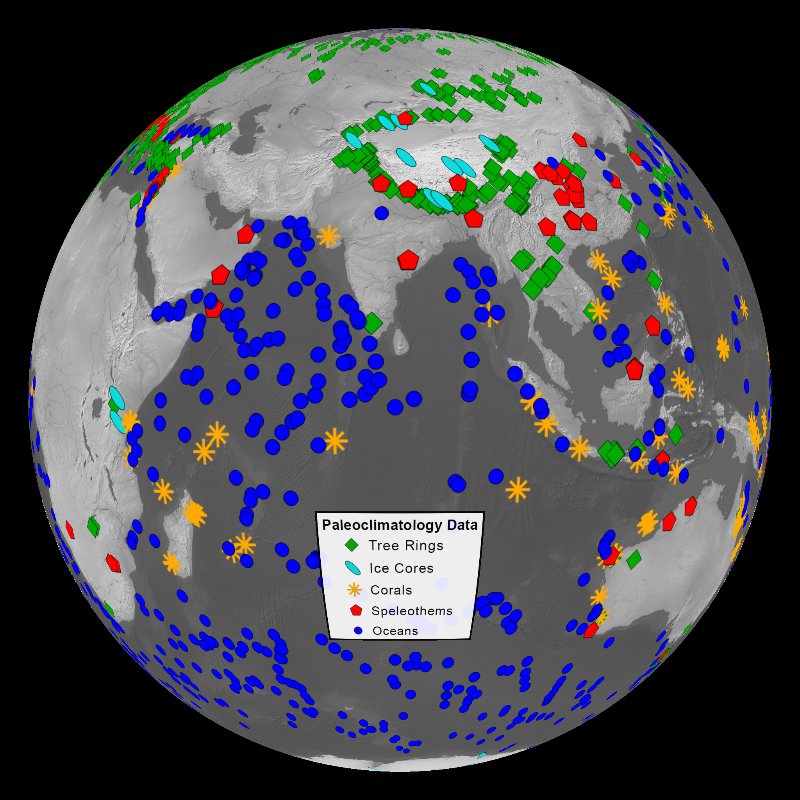
“What’s past is prologue,” William Shakespeare once wrote, although not at all referencing climate change in those pre-industrial times. Still, the Bard’s words ring true today, even in the context of climate science. At 6 p. m. on Tuesday, as part of the Vail Symposium’s ongoing exploration of climate and environmental issues, Dr. Jessica E. Tierney of the University of Arizona’s Department of Geosciences will delve into what the world’s past climate states can tell us about the path ahead as global temperatures rise at an unprecedented rate. “I’ll be discussing how climate change in the ancient geological past — so-called ‘paleoclimates’ — can help us better understand present and future human-caused climate change,” professor Tierney, the Thomas R. Brown Distinguished Chair in Integrative Science, wrote in an email to the Vail Daily on Monday. Tierney’sVail Symposiumpresentation, from 6 to 7:30 p. m. , Tuesday, at the Eagle River Presbyterian Church in Avon, is entitled “Past Climates Inform Our Future” and is intended as an environmental awareness program featuring one of the nation’s leading paleoclimatologists. Tierney will explore how studying ancient climates sharpens our understanding of modern warming and future risks, according to a Vail Symposium press release. “Climate is an ever-present feature of our lives in this beautiful place; we are well-versed in the contemporary conversation about impacts and policy,” Vail Symposium Executive Director James Kenly said in the release. “By starting with the Earth’s story over eons, this program gives people a clearer, more grounded way to understand what’s happening now and why our local choices matter in a global system. ”The study of past climates, paleoclimatology uses natural archives such as ocean sediments, ice cores, stalagmites and fossils to reconstruct temperature, rainfall and atmospheric composition over millions of years, according to the release. Tierney explains how past paleoclimates are windows into the future, helping scientists test and refine climate models and narrow uncertainties about changes in temperature, ice sheets, sea level and global water cycles. Recommended as a Vail Symposium speaker by Peter de Menocal, executive director of Woods Hole Oceanographic Institution, Tierney is a Packard Foundation Fellow, an American Geophysical Union Fellow and a recipient of the National Science Foundation’s Alan T. Waterman Award — its highest honor for an early‑career scientist. Tierney also served as a lead author on the Intergovernmental Panel on Climate Change (IPCC) Sixth Assessment Report, and her work focuses on reconstructing past climates to better understand what’s in store as greenhouse gas concentrations continue to climb. Asked by the Vail Daily to describe how humans are causing global temperatures to rise, Tierney replied:“Humans have been emitting carbon dioxide by burning fossil fuels. CO2 levels are now higher than the Earth has experienced in at least three million years and far outside the range ever experienced by Homo sapiens,” Tierney wrote. ”CO2 is a greenhouse gas, meaning it traps heat and re-radiates it down to the Earth’s surface, warming the planet. We’ve known this quality of CO2 for well over 100 years — it is simple physics. More CO2 = warmer. “Human emissions are responsible for the long-term rise in global temperature that has occurred since 1960,” Tierney added. She went on to describe how the ongoing megadrought and more intense wildfire are foreseeable results of human-caused climate change. This installment of the Vail Symposium’s ongoing exploration of climate issues, from extreme weather to energy issues to human adaptation, looks to connect global change to deep time. The Symposium “invites the community to look beyond daily forecasts and headlines and consider the longer arc of Earth’s climate story and what it implies for choices made today. ”For more information and to purchase tickets, visitvailsymposium. org.