What’s behind antimalarial drug resistance? Researchers find a new clue. | Harvard T. H. Chan School of Public Health
Plasmodium falciparum parasites under a microscope. Didin Muhammad Hasyir / iStockMalaria researchers at Harvard T. H. Chan School of Public Health have identified a new way malaria parasites may becomeless. . .
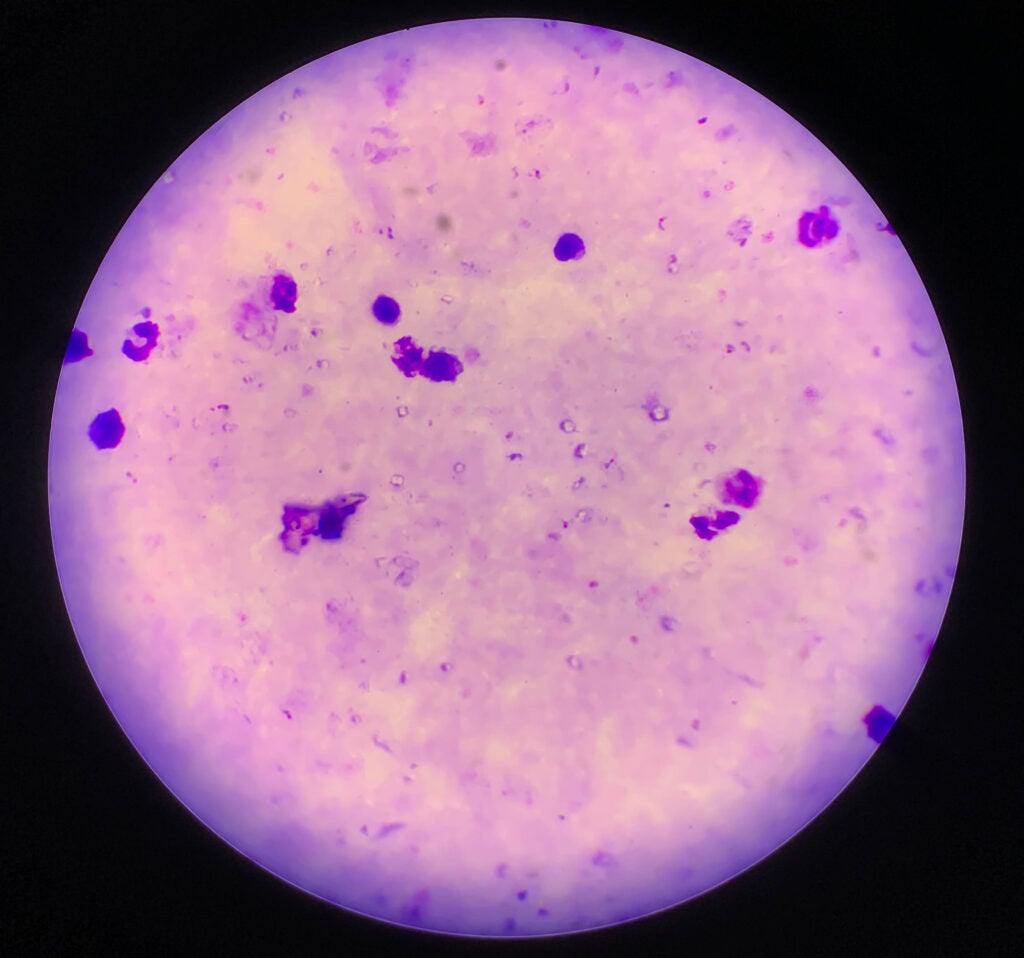
Plasmodium falciparum parasites under a microscope. Didin Muhammad Hasyir / iStockMalaria researchers at Harvard T. H. Chan School of Public Health have identified a new way malaria parasites may becomeless responsiveto treatment—a major threat to globaleradicationefforts. In astudypublished May 7 in Nature Communications, the researchers describe the cellular mechanisms driving howPlasmodium falciparum—the deadliest malaria parasite—can adapt in ways that help it survive artemisinin. Artemisinin is a key component of artemisinin-based combination therapies (ACTs), which the World Health Organization recommends as first-line treatment forP. falciparummalaria. The study was led byImran Ullah, research associate in theWirth Lab, which focuses on the biological underpinnings of drug-resistance among malaria-causing parasites. The lab is headed by the study’s co-corresponding author,Dyann Wirth, Richard Pearson Strong Professor of Infectious Diseases. Working withP. falciparumparasites in the lab, the researchers identified mutations in a protein calledPfCoronin. Normally, as the parasite grows, it takes in hemoglobin from its host red blood cell. The study found thatPfCoronin mutations reduce how much hemoglobin very young parasites take in—a method of evading artemisinin, which gets triggered to kill parasites by heme, a molecule released when hemoglobin is processed. With less hemoglobin coming in, less heme is available, which can blunt artemisinin’s killing effect and allow more parasites to survive. According to the researchers, the findings mirror what other studies have suggested about how genetic mutations in another protein,PfKelch13, lead to reduced hemoglobin uptake inP. falciparumparasites and increased resistance to artemisinin. The two proteins don’t appear to physically interact, but both can affect hemoglobin uptake early in infection—helping explain how parasites may become less susceptible to artemisinin. As the drug remains “central to global malaria treatment,” the researchers wrote, “ongoing mechanistic studies and field genetic surveillance ofPfCoronin—and other adaptive regulators—will be essential for effective malaria control and strategies to anticipate evolving drug resistance. ”Read the study:Cellular and molecular basis ofPfCoronin function in artemisinin resistance inPlasmodium falciparumLearn more:Battling antimalarial drug resistance(Harvard Chan School news)Malaria is gaining ground—but researchers are developing promising new solutions(Harvard Chan School news)Last UpdatedFeatured in this articleDyann F. WirthRichard Pearson Strong Professor of Infectious Diseases