Wildfire fears burn hot, even as belief in human-caused climate change continues to decline - Angus Reid Institute
July 20, 2026 –Smoke from hundreds of wildfires burning across northern Ontario has blanketed large parts of Canada and drifted deep into the United States this week, triggering air-quality warnings from the. . .
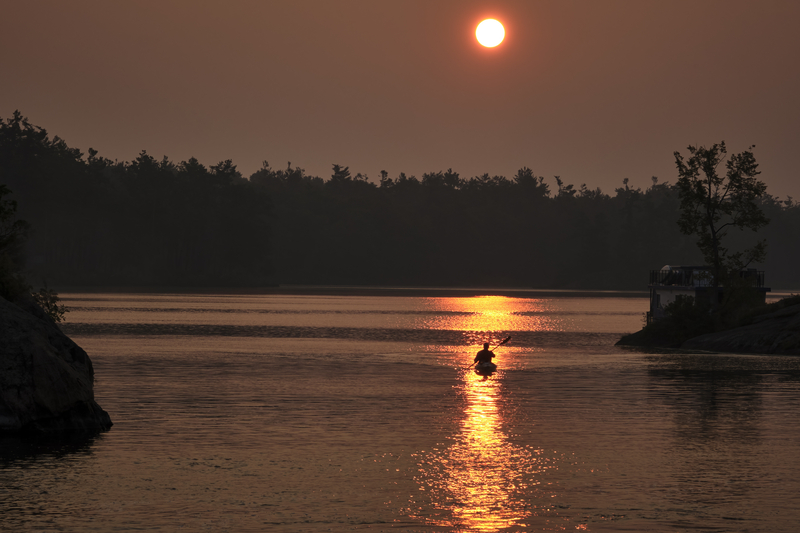
July 20, 2026 –Smoke from hundreds of wildfires burning across northern Ontario has blanketed large parts of Canada and drifted deep into the United States this week, triggering air-quality warnings from the Midwest to the East Coast and threats of tariffs from the U. S. President, who argues Canada is not doing enough to control and prevent the fires. New data from the non-profit Angus Reid Institute finds Canadians bracing for difficult fire seasons to become the norm. More than half (56%) say the number and impact of fires will worsen over the next 10 to 20 years, while 30 per cent say this type of challenging year is what can be expected. Just four per cent say there's hope for better going forward. Most also connect the growing wildfire threat to climate change, even while the proportion of Canadians saying humans are causing it continues to drop. Three-quarters say climate change is either a major (55%) or minor factor (20%) in making fires worse, despite the number saying it is mostly caused by human activity dropping 12 points since 2021 — a shift the Institute notes is happening across every age group, gender, and political affiliation, even as concern over fires themselves remains high. Wildfire ConcernsGovernment ConfidenceFire OutlookClimate's RoleHuman-Caused BeliefThreat & CrisisMethodology›Wildfires in CanadaConcern high for impacts of wildfires on nature, property, air qualityAfter three years of record-setting wildfires, the pace of burn this year has been slower than the recent past, but above the pre-2023 average. The effect has nevertheless been devastating for Canadian communities, with more than one thousand Canadians evacuated, four deaths among firefighting crews, and thousands more affected by smoke carried by winds across the country. More than four-in-five (85%) say they are concerned about the impact fires are having on natural areas, three-quarters (76%) worry over potential damage to homes and property, and three-quarters (76%) are anxious over the effects of wildfire smoke on their local air quality. Three-in-five (62%) worry about impacts on businesses and tourism, and half (48%) are concerned they personally might have to evacuate. Note this survey was fielded July 10-15, prior to a serious uptick in fire intensity last week. Angus Reid Institute, online survey, July 10-14, 2026, n=2,649 Canadian adults. Wildfires in CanadaOntarians least confident in government response; B. C. most preparedHalf (52%) of Canadians say they are confident in their local government's ability to respond to wildfires as they emerge. Quebec residents are most confident (66%), while Ontario residents are the least confident — as many say they are not confident (44%) as confident (42%), following criticism of the province's response after a First Nations community was overtaken by flames before evacuation assistance arrived. British Columbians are more likely than residents elsewhere to have taken concrete steps to prepare for wildfire season, likely reflecting the province's long history with fire. Nearly three-in-10 B. C. residents have prepared an emergency kit or "go bag" (29%, vs. 17% nationally), cleared combustible material from around their home (28%, vs. 16%), or reviewed their insurance coverage (27%, vs. 14%) — each roughly double the national rate. Angus Reid Institute, online survey, July 10-14, 2026, n=2,649 Canadian adults. Wildfires in CanadaMajority expect wildfires to continue getting worse in the coming yearsNatural Resources Canada reports that warmer and drier conditions are lengthening the country's fire season and allowing more intense fires to spread, even if the raw number of fires isn't necessarily rising. That trend is reflected in Canadians' outlook: they are now half as likely to say wildfire impacts will improve over the next 10 to 20 years as they were in 2023, while the majority — 56 per cent, up slightly from 55 per cent — say this is something that will get even worse. Angus Reid Institute, online survey, July 10-14, 2026, n=2,649 Canadian adults. Climate Change Views55% say climate change is a "major factor" in worsening wildfiresA majority of Canadians link the worsening wildfire threat to climate change, though views are sharply divided along political lines. Overall, 55 per cent say climate change is a major factor in worsening wildfires and another 20 per cent call it a minor one. That rises to approximately four-in-five among past Liberal (79%), NDP (82%), and Bloc Québécois voters (83%), compared with just 22 per cent among Conservatives, for whom "not really a factor" and related responses dominate instead. Angus Reid Institute, online survey, July 10-14, 2026, n=2,649 Canadian adults. Climate Change ViewsDeclining number believe climate change is "mostly caused by human activities"Despite a majority saying climate change is playing a major role in the wildfire spread, the number of Canadians who feel climate change is human-caused has dropped over the past five years — from 71 per cent in 2021 to 59 per cent now, a 12-point decline. That reduction has been compensated for by a five-point jump in the number who say climate change is an unproven theory and a four-point increase in the number who say it's caused by natural changes and cycles. The shift spans every age group, gender, and political affiliation, with Conservatives and older Canadians seeing the largest movement. Several factors may be contributing: since 2021, climate change has had to compete with inflation, housing costs, health-care pressures, and economic uncertainty for Canadians' attention, and the issue has become more politically entangled with carbon pricing and energy development. Climate Change Views12-point drop in number who see climate change as a "very serious threat"A similar drop is noted in the share of Canadians who view climate change as a "very serious" threat to the planet: 50 per cent said this in 2021, compared to 38 per cent now. Still, the total who see it as a serious or very serious threat overall remains at two-thirds (68%), even as it's down from a peak of 75 per cent. YearVery serious threatSerious threatMinor threatNot really a threat201438%37%12%7%201535%34%18%9%201843%32%13%9%201947%27%13%10%202150%25%13%9%202542%27%13%13%202638%30%15%13%Angus Reid Institute trend data, 2014-2026, n=2,649 Canadian adults (2026 wave). "Not sure" responses excluded; rows may not sum to 100% due to rounding. While a growing number of Canadians say nothing needs to be done about climate change, the majority still say it's a crisis requiring quick action — though that share has slipped from 63 per cent in August 2023 to 57 per cent now. Notably, half of those who call it a crisis requiring urgent action also say they support the recently announced Alberta-to-B. C. pipeline, underscoring that climate urgency and energy development aren't necessarily seen as mutually exclusive among Canadians. Angus Reid Institute, online survey, July 10-14, 2026, n=2,649 Canadian adults. The pipeline debate also splits along these same lines. Support for the new Alberta-to-B. C. pipeline is highest among those who say plenty of time remains to address climate change (86% net support) and lowest among those who call it a crisis requiring urgent action (49% net support — matching the "half" cited in the full report). TotalPlenty of time to fix itIt's a crisisIt's hopelessStrongly support25%39%12%23%Support38%46%37%35%Oppose15%5%21%14%Strongly oppose8%1%14%5%Not sure / can't say14%9%16%22%Net: Support63%86%49%58%Net: Oppose23%6%35%19%Angus Reid Institute, online survey, July 10-14, 2026, n=2,649 Canadian adults; base sizes: Total n=2,649, "Plenty of time" n=510, "It's a crisis" n=1,505, "It's hopeless" n=260. The "It's fine, nothing needs to be done" segment (n=374) is not shown here as its detailed breakdown was not included in the supplied data tables; total column reflects all five response groups, including that one. About this surveyMethodology and downloadsThe Angus Reid Institute conducted an online survey from July 10-14, 2026, among a randomized sample of 2,649 Canadian adults. Respondents are drawn from the Angus Reid Forum, a large-scale online panel developed to include Canadian residents in each of the 343 federal ridings in Canada and representative of the Canadian population by age, gender, family income, ethnic status and education. The sample was weighted to be representative of adults nationwide according to region, gender, age, household income, and education, based on the Canadian census. For comparison purposes only, a probability sample of this size would carry a margin of error of +/– 2 percentage points, 19 times out of 20. Discrepancies in or between totals are due to rounding. The survey was self-commissioned and paid for by ARI.