Aircraft Carrying Swift Boost Satellite Takes off From NASA Wallops - NASA Science
An airplane carrying a rocket loaded with a robotic spacecraft designed to raise NASA’s Neil Gehrels Swift Observatory departed the agency’sWallops Flight Facilityin Virginia on Thursday, June 18. Stargazer, a. . .
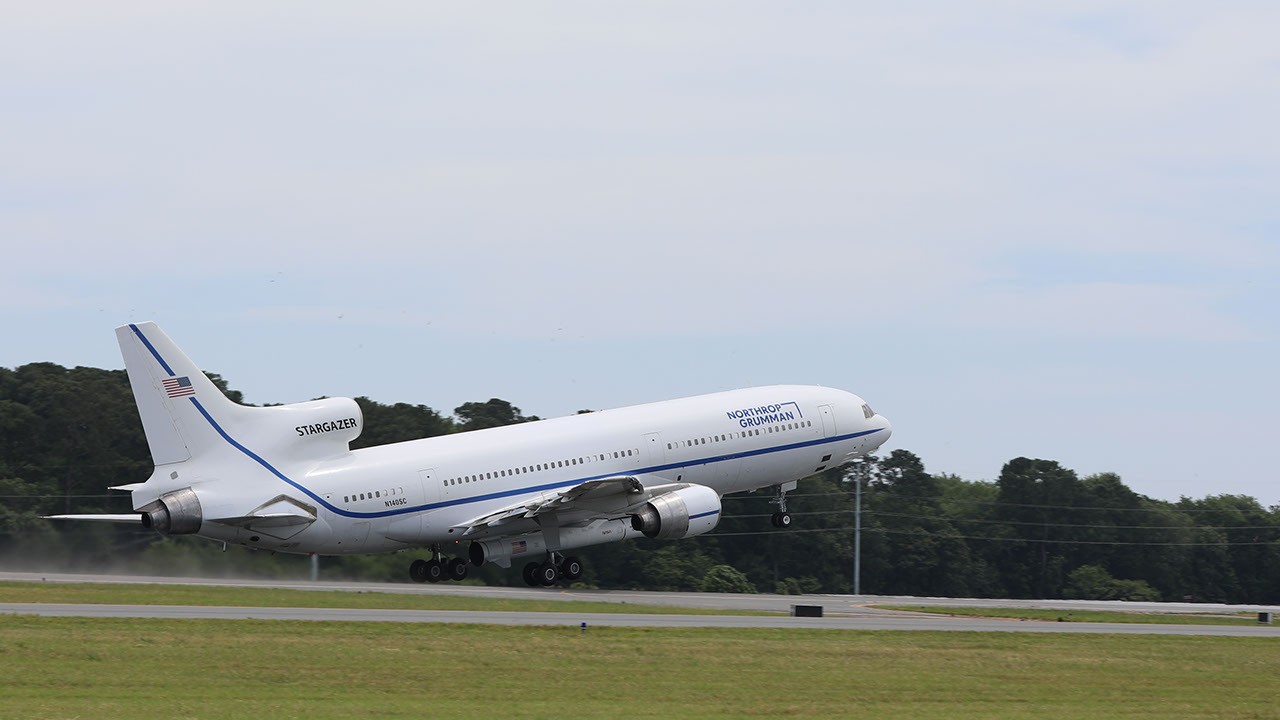
An airplane carrying a rocket loaded with a robotic spacecraft designed to raise NASA’s Neil Gehrels Swift Observatory departed the agency’sWallops Flight Facilityin Virginia on Thursday, June 18. Stargazer, a modified L-1011 operated by Northrop Grumman, took off for Kwajalein Atoll, part of the Republic of the Marshall Islands in the South Pacific Ocean. Attached to the belly of the aircraft was one of the company’s Pegasus XL rockets with LINK inside. NASAcontractedKatalyst Space to design and build LINK to rendezvous and dock withSwiftand lift it back to a higher altitude. Spacecraft in low Earth orbit experience drag caused by our planet’s atmosphere, which gradually reduces their altitude if they do not have propulsion systems to counteract the effect. Recentsolar activitymagnified this effect on Swift, which began to sink faster than anticipated. Katalyst selected Northrop Grumman’s Pegasus XL launch vehicle as the best means of reaching Swift on a short timeline based on orbital and programmatic needs. Later this month, Stargazer will carry the rocket to an altitude of around 40,000 feet before releasing it. After several seconds in free-fall, Pegasus XL will fire the first of its three-stage rocket motors, delivering LINK into orbit in about 10 minutes. Learn more about the Swift mission at:https://science. nasa. gov/mission/swift/swift-boost-mission/ByJeanette KazmierczakGoddard Space Flight Center, Greenbelt, Md.