Conch Salad Biochemistry: The Science of Bahamian Acid-Cooking
Across the sun-bleached docks of Arawak Cay in Nassau, throughout the bustling stalls of Potter’s Cay, and stretching down to the remote settlement shacks of the Bahamian Out Islands, a distinct acoustic. . .
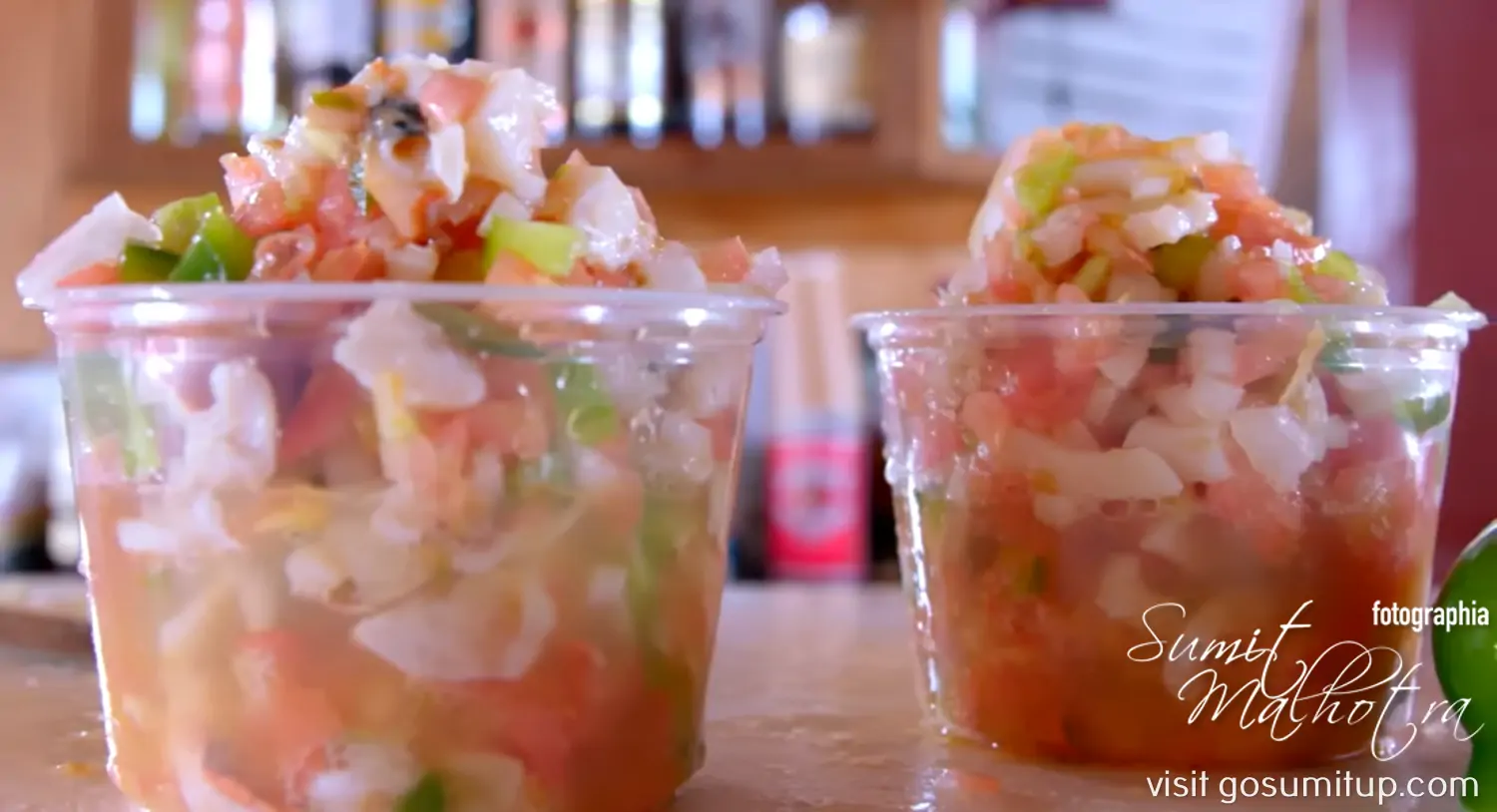
Across the sun-bleached docks of Arawak Cay in Nassau, throughout the bustling stalls of Potter’s Cay, and stretching down to the remote settlement shacks of the Bahamian Out Islands, a distinct acoustic signature defines the culinary landscape. It is the rhythmic, heavy, metallic clack-clack-clack of high-carbon stainless steel cleavers violently striking thick, dense rounds of native horseflesh mahogany or sea grape wood. This is the mechanical genesis of the ultimate island staple: Bahamian Conch Salad. Prepared entirely fresh to order in full view of the patron, this legendary dish features the dense, porcelain-white and translucent pink meat of the Queen Conch (Alstrombus gigas). The raw mollusc tissue is meticulously extracted from its heavy, fluted terracotta-pink shell, skinned of its tough dark epidermis, and rapidly diced into uniform, small cubes. This marine foundation is tossed with crisp, freshly cut white onions, vibrant red tomatoes, sweet green bell peppers, and fine fragments of scorching bird’s eye goat peppers. However, the defining moment—the act that elevates the assembly from a mere collection of raw ingredients into a culinary masterpiece—occurs when the bowl is flooded with an intensely sour, hand-squeezed matrix of fresh key lime juice(Citrus aurantiifolia)and native sour orange juice(Citrus aurantium). Within Bahamian culinary folklore, the intersection of the citrus juice and the raw conch meat is governed by a strict, generational law of temporal urgency. Island salad masters enforce an ironclad, non-negotiable protocol: the acid must never touch the conch until the precise moment the salad is handed over to the diner. Old-school stall vendors warn with absolute gravity that if the chopped conch is allowed to sit or marinate in the citrus juice pool for more than a few minutes, the citrus will “burn” the meat. According to the myth, this acidic “fire” destroys the pristine, sweet ocean crunch of the fresh mollusc, fundamentally scorching its cellular matrix and transforming a delicate, tender island treat into a tough, unchewable, rubbery disaster. Yet, a lime or a sour orange contains no thermal properties, no actual heat, and no combustion capabilities. Its ability to radically alter the physical structure, colour, opacity, and tensile elasticity of raw seafood within a span of minutes is not a manifestation of “burning” or cold cooking in a literal sense. Instead, it is a stunning, beautifully coordinated display of macromolecular biochemistry, acid-induced protein denaturation, and cellular fluid dynamics. The transition of tough, raw mollusc muscle tissue into a perfectly tenderised, succulent coastal delicacy represents a highly calculated chemical balancing act that turns ancient street food tradition into a flawless, unpowered laboratory experiment.