Earth and Environmental Science Majors, Minor | Calvin University
What You'll LearnReady to turn your passion for the planet into an exciting career? This program gives you hands-on training to solve real-world environmental challenges through two distinct tracks. If you. . .
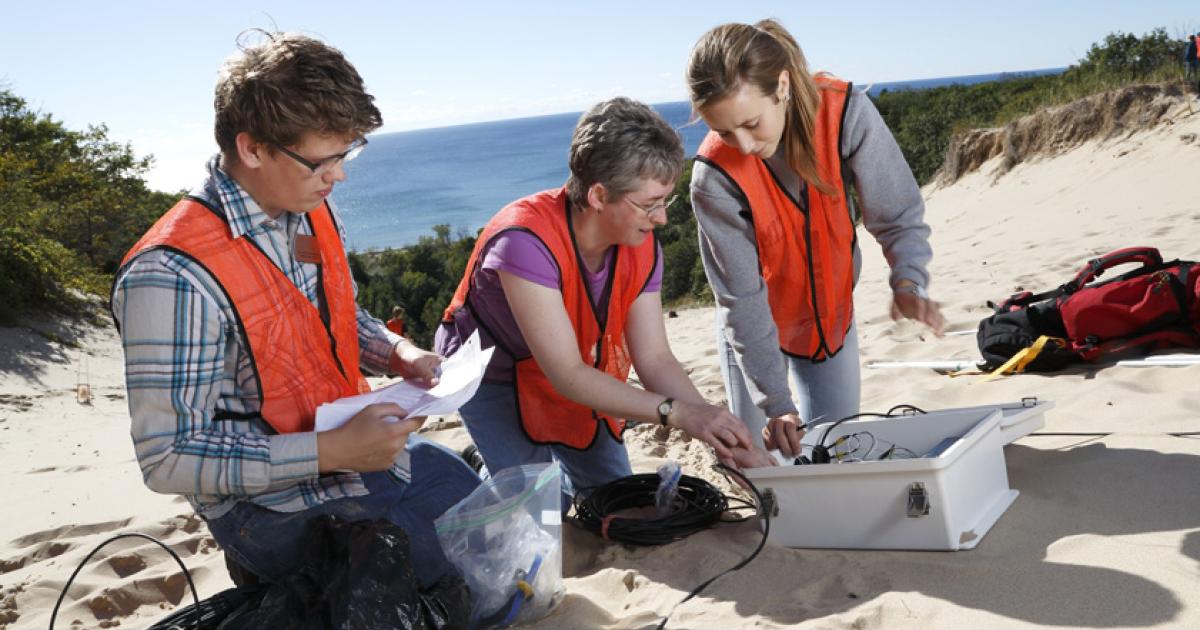
What You'll LearnReady to turn your passion for the planet into an exciting career? This program gives you hands-on training to solve real-world environmental challenges through two distinct tracks. If you choose the environmental science concentration, you'll dive into wildlife, earth systems, and environmental law, preparing you for a role like park naturalist, conservation officer, or environmental educator. If you prefer to uncover how the planet works from the inside out, the geoscience concentration explores Earth's structure, history, and natural resources. This route leads to careers in water resource management, mineral, oil, and gas exploration, or advanced graduate research. Whichever path you pick, this degree equips you to protect our natural world and build a rewarding future. What Makes This Program GreatProfessional-grade facilities:You'll have access to a huge collection of minerals, rocks, and fossils, as well as a vast collection of maps, a dedicated geo-spatial analysis lab, drones, an on-campus research sand dune, a seismograph, a weather station, and more. Real-world research opportunities:As a GEO student, you'll have the chance to do research with your professors during the academic year and summer. Calvin GEO students have done research into Lake Michigan coastal dunes, a Pleistocene mastadon, the Plaster Creek watershed, and more. Practical job experience:The GEO department hires more students than any other department. Students are hired yearly for a wide variety of positions, from managing a map library to maintaining the university weather station. Study off-campus:Calvin GEO students study off-campus in places as diverse as Montana, Hawaii, Kenya, Scotland, the Netherlands, Ethiopia, and Yosemite National Park. Why choose Earth and environmental studies?Active, fulfilling lifestyleEnvironmental Science gives the opportunity to do much more than sit behind a desk or work in a lab, hands-on fieldwork and sampling are included in many positionsHigh demand, and well paying jobsThe job market for environmental scientists is growing quickly, and offers very good pay. PurposeYou can be a part of the solution for many of the critical problems that our world is facing. Contribute to the global effort to restore, and preserve our planet. Educate the public about important environmental topics and ways of responding to issues, and help communicate the scientific discussions to a wider audience. Teaching in informal settingsWritten, oral, and electronic communicationsGovernment agencies, nature centers, parks, nongovernmental organizations, and similar institutions. Provide legal council to clients on a broad range of environmental issues. Advocating contested matters before regulatory agenciesEnvironmental civil actionsEnergy related issuesPermits, agreements, reports and other documents to ensure environmental complianceCities, colleges, corporations, development groups, farms, gas stations, and private land ownersFacilitating decision making to carry out land development with consideration given to the natural environment, social, political, economic and governance factors to achieve sustainable outcomes. Social and economic developmentUrban, and regional developmentNatural resource managementInfrastructure systemsInstitute effective solutions to complex systems at local and national levels. High demand field, with good payFish and ecosystemsTeaching, research, managementAs our human population continues to increase, forests and other natural resources are valued more for the serenity they provide, the organisms they support, and the products they produce. Creating, managing, conserving, and repairing forest resourcesApplying ecology, GIS, and environmental sciencesManaging demand for timber, fuel, water quality, habitat, recreation, employment, and environmental wholenessConserve irreplaceable lands and waterways, and improve outdoor recreation opportunities across the nation. State and local effortsPreserve natural areas, historical sites, and wildlife habitatQuality outdoor recreation for allPromoting a healthy lifestyle and environment, contributing to the livability of communities, and informing policy, economic development, and stewardship at local, national, and international levels. Implement community recreation and sport programsManage natural and cultural resourcesFacultyJames SkillenProfessor, Director, Calvin Ecosystem Preserve & Native Gardens616-526-7546Jason E. VanHornProfessor, Director of Master of Science in GIS Program616-526-7623