Ensuring US Maritime Supremacy in the Hidden Ocean United States Naval War College Newport, RI - 2020 NSL Archive
LT Michael James Hughes, USNWC College of Distance Education ABSTRACT: This article identifies likely stumbling blocks in operationalizing the Navy’s Arctic Strategy and suggests ways…
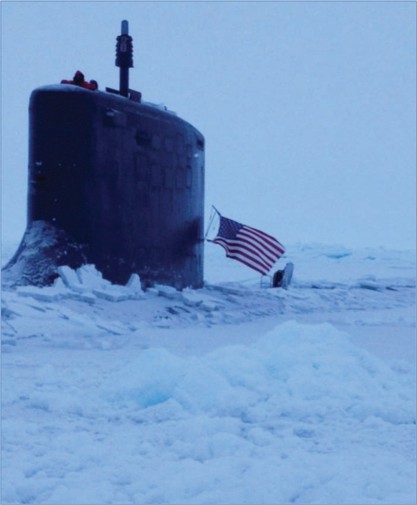
LT Michael James Hughes, USNWC College of Distance EducationABSTRACT:This article identifies likely stumbling blocks in operationalizing the Navy’s Arctic Strategy and suggests ways to overcome them. It draws on official Navy policy papers, CNO statements, historical case stud-ies, and the author’s operational experience as a Navy submarine officer who participated in the Navy’s biennial ICEX operations. The biennial ICEX naval exercise “allows the Navy to assess its operational readiness in the Arctic, increase experience in the region, ad-vance understanding of the Arctic environment and continue to develop relationships with the other services, allies and partner organizations. ” In February 2014 as an officer serving aboard the Virginia-class fast attack submarine USSNew Mexico(SSN779), I participated in ICEX, surfacing both at a Naval Ice Camp off the Alaskan coast and at the North Pole. When I gingerly stepped onto a wobbly ladder going from the deck onto the Arctic ice and looked out onto an otherworldly land-scape of jagged ice floes, I had little appreciation that I was standing on what could be the Navy’s next battlespace. US Navy focus on the Arctic region has intensified since 2009 when the Navy published its first “Arctic Roadmap. ” In a 2014 update of that Roadmap, Chief of Naval Operations (CNO) Admiral Jonathan Green-ert—who visited USSNew Mexicoduring ICEX 2014—stated, “TheU. S. Navy recognizes the opening of the Arctic Ocean has important national security implications as well as significant impacts on the US Navy’s required future capabilities. ” According to the Roadmap, the core US strategic objectives for the Arctic are to:Ensure United States Arctic sovereignty and provide homeland defense;Provide ready naval forces to respond to crises and contingen-cies;Preserve freedom of the seas; andPromote partnerships within the United States Government and with international allies and partners. The 2014 Roadmap concludes with an implementation plan listing actions, responsible officers, and task completion dates to achieve Arc-tic supremacy. The plan is generally well-conceived, but historical case studies and the practical experiences of warfighters who have served in Arctic waters point to likely obstacles in the areas of turf, teamwork, preparedness, and vigilance that will need to be addressed to make the Navy’s new Arctic strategy a success. To surmount these obstacles, the Navy could:Establish a clear chain of command for the Arctic re-gion;Cement Allied commitment to Arctic defense;Ensure a joint warfighting Arctic strategy;Set and enforce suitable training standards and force readiness levels for Arctic operations; andFoster vigilance regarding other great powers’ designs for the Arctic region. In April 2018, Navy Secretary Richard Spencer and CNO Admiral John Richardson announced that a new Navy Arctic Strategy would be released that summer—except it never happened. The navy. mil web-site has a “Strategic Documents” section that includes the original US Navy Arctic Roadmap 2014-2030 as well as documents such as the 2018 National Defense Strategy and National Strategy for the Arctic Region (last updated in 2013 during the Obama Administration). However, the hyperlinks are broken for the National Strategy for the Arctic Region, the US Navy Arctic Roadmap, and the US Coast Guard Arctic Strategy. This is indicative of the Navy’s lack of initiative and progress in this vital area of the world that has gone without a strategic update in 5 years.