Hidden ocean currents powerful enough to reshape offshore wind energy were invisible to science until a satellite proved everyone wrong
From space, the ocean looks totally quiet. Its surface stretches flat across satellite images. It seems vast, blue, and completely still. Just beneath that surface,tiny swirling currents have been churning. . .
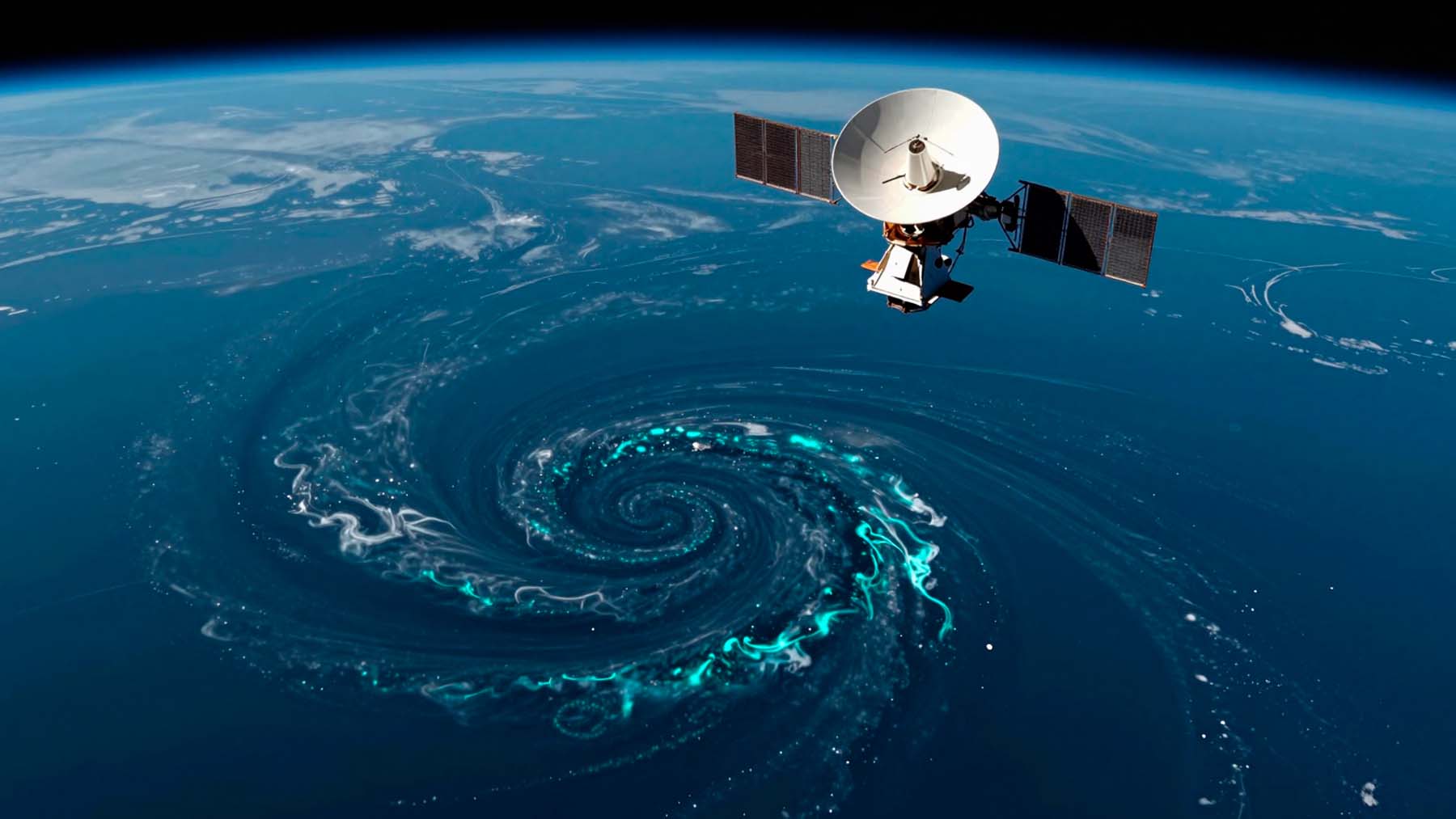
From space, the ocean looks totally quiet. Its surface stretches flat across satellite images. It seems vast, blue, and completely still. Just beneath that surface,tiny swirling currents have been churning undetectedfor thousands of years. They are called submesoscale eddies. Scientists always knew they existed. They just lacked an instrument precise enough to see them on a global scale. Then, a new satellite changed everything oceanographers thought they could see. The ocean’s missing piecesOcean eddies are essentially giant whirlpools. Picture the swirling water behind a river rock. Now scale that up to dozens of miles across. These rotating currents move heat and nutrients around the planet. They shape weather patterns and feed marine life. Millions of people depend on the climate systems they influence. She has a talent for turning complex ideas into sharp, memorable insights that stay with readers long after they’ve finished reading. Scientists have studied the largest eddies for decades. They call these mesoscale eddies. The tools were good, data flowed, and models improved. But a smaller class of currents remained invisible. These submesoscale eddies range from just 1 to 60 miles wide. They were too small for older satellites to spot. Yet, they were too spread out for ships to track. That size gap made them the ocean’s missing puzzle pieces. Computer models guessed how they behaved. But without real data, their true strength was a total mystery. Most guesses were way too low. A billion-dollar satellite with millimeter precisionEnter the Surface Water and Ocean Topography satellite, or SWOT. It took over two decades of planning and engineering. NASA built it alongside France’s space agency, CNES. The UK and Canadian space agencies helped, too. It represents a $1 billion investmentby a massive global team. The satellite uses a special radar to measure sea level. It spots height changes down to a fraction of an inch. Older satellites caught broad ocean shifts. But they missed the sharp signatures of small, fast currents. SWOT was built to fix that. Still, many researchers were doubtful. Jinbo Wang was one of the skeptics. He is an associate professor of oceanography at Texas A&M University. The target signals were incredibly tiny ripples. They could easily disappear into background noise. Four times better than expectedThe skepticism did not last long. The satellite blew past expectations. “I was pessimistic about the expected outcome before the satellite launch,” Wang said. “Butthe satellite performed four times better than expected. That surprise is what made this breakthrough possible. ”With this sharp precision, the team captured stunning global images. They saw spiral-shaped eddies and massive underwater waves moving across entire ocean basins. These were not quick glimpses from a boat. This was a complete, worldwide snapshot from space. Thesmall currents are far stronger and more commonthan anyone thought. The findings made the cover ofNaturein April 2025. Old ocean models weremissing a massive physical force. Why small currents have outsized consequencesThese findings matter far beyond marine science. Submesoscale eddies mix warm surface water with cold deep water. This heat transfer is a huge driver of global energy. Wang noted that these currents influence major weather events. They help shape hurricane tracks. They alsoaffect El Niño and La Niña cycles. When ocean models ignore these eddies, weather forecasts lose accuracy. Fixing climate models requires accounting for these invisible forces. Marine life depends on them, too. Eddies pull nutrients up from the deep ocean. This fuels the food webs supporting coastal fisheries. A current that seems tiny from space actually feeds the ocean. What comes next for ocean scienceThis discovery is just the start. Wang now leads a NASA Ocean AI group. His teamuses machine learning to process SWOT data. They want to pull even more details from space images. SWOT proved thatspace radar can map tiny ocean shifts. This opens up big possibilities for future missions. Better climate models and sharper weather forecasts are finally within reach. Science is finallywatching the ocean’s hidden mechanics. But the biggest revelation from this new map was not about weather or fish. It turns out these intense, hidden swirls generate violent shear forces right where engineers build offshore wind turbines. Unseen by developers, these powerful submesoscale currents drag against deep turbine moorings, bending underwater cables and shifting floating platforms miles off course. By revealing these invisible marine tornados,SWOT solved a mysterious source of structural wear—finally giving the clean energy industry the map it needs to buildsafer, stronger offshore wind farms. The complete study “Small currents, big impact: Satellite breakthrough reveals hidden ocean forces,” was published by Texas A&M University viaScience Daily. Author ProfileKelly LippkeStaff WriterKelly is an experienced writer with 15 years of experience exploring the big stories that shape our world, from tech breakthroughs and space exploration to climate, energy, and the fascinating quirks of science. She has a talent for turning complex ideas into sharp, memorable insights that stay with readers long after they’ve finished reading. Kelly LippkeKelly is an experienced writer with 15 years of experience exploring the big stories that shape our world, from tech breakthroughs and space exploration to climate, energy, and the fascinating quirks of science. She has a talent for turning complex ideas into sharp, memorable insights that stay with readers long after they’ve finished reading.