How Saudi Arabia getting a nuclear bomb would spark a Middle East arms race
A new deal through which the United States will purportedly invest inSaudi Arabiato obtain peaceful nuclear capabilities has sparked concerns of potential militarization and a regional scramble to obtain. . .
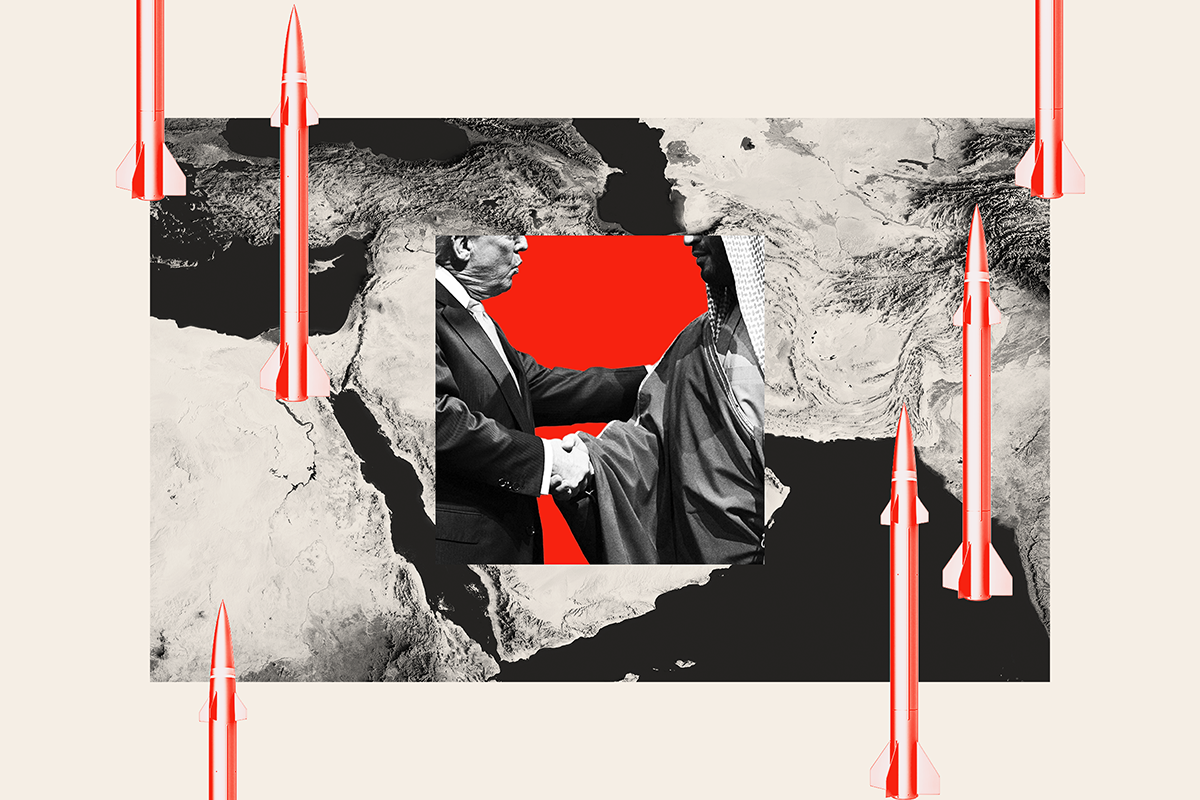
A new deal through which the United States will purportedly invest inSaudi Arabiato obtain peaceful nuclear capabilities has sparked concerns of potential militarization and a regional scramble to obtain weapons of mass destruction. While Saudi Arabia has publicly disavowednuclear weaponscapabilities, the kingdom is under unprecedented attack fromIran, which faces a joint U. S. -Israeli war launched in response to fears regarding its own nuclear program. Saudi Crown Prince Mohammed bin Salman has publicly stated he would rush to obtain a nuclear weapon if Iran did. He's not alone. Turkish President Recep Tayyip Erdogan, a U. S. NATO ally andclose confidantof President Donald Trump, has long warned Ankara should not be restricted from obtaining its own nuclear warheads, beyond the U. S. stockpile already sitting on Turkish soil. Egypt, which has a history of nuclear hedging during the Cold War, could also conceivably shift its non-proliferation stance under the right conditions given its existing peaceful program. Meanwhile, new questions surround a longstanding "123" U. S. nuclear deal with the United Arab Emirates, a close partner of Israel that has accelerated a regional competition with Saudi Arabia, that includes a "Gold Standard" Additional Protocol mandating international inspections—a clause reportedly absent in the Riyadh-Washington pact. The first news of the U. S. -Saudi agreement on Wednesdayprompted backlashwithin Israel, currently thesole nuclear weapons powerin theMiddle East, though it neither confirms nor denies the existence of its otherwise widely known arsenal. This was before Trump suddenly declared Thursday that the agreement would not allow the kingdom to enrich and would be contingent on Saudi Arabia normalizing ties with Israel—a clause not present in the initial announcement and traditionally viewed by Riyadh as a non-starter without a comprehensive Israel-approved road map for Palestinian statehood. If the U. S. -Saudi agreement does advance, however, concerns persist regarding its regional ramifications. "I think we should be worried about the future uses of a future nuclear enrichment facility that the U. S. will build in Saudi Arabia, but I think that the most important thing is the precedent that it set," Yoel Guzansky, a senior researcher at the Institute for National Security Studies who has served on Israel’s National Security Council and advised several prime ministers, toldNewsweek. "For the first time the U. S. is granting a country in the Middle East, if not in the world, the right to enrich uranium in a 123 agreement," Guzansky said. "Other countries will say. 'Hey, the Saudis can enrich. We want the same. We deserve the same conditions. ' This is what worries me. "Getty ImagesHow Close Is Saudi Arabia to Nuclear Weapons?Much still stands in the way of a nuclear-armed Saudi Arabia. For one, the Kingdom remains publicly committed to exclusively peaceful purposes for its nascent nuclear program and, unlike Israel, is a signatory to the Non-Proliferation Treaty (NPT) that requires at least some oversight by the United Nations' International Atomic Energy Agency. Even in the absence of a more rigorous inspections regime included in other 123 agreements, the U. S. is set to have a direct role in the program, likely limiting the space for illicit activity not authorized by Washington. In the announcement of the deal, U. S. Energy Secretary Chris Wright said that the agreements "uphold the highest standards of nuclear safety and nonproliferation, while relying on the world's best nuclear technology and scientists, designed right here in the United States. "In his latest addendum, Trump referred to a "Civil Nuclear Deal" that "pertains only to non-military use such as the ones that Iran andUAE(and others) already have. "Enriching uranium to higher weapons-grade levels and then undergoing the metallurgical process to produce a warhead also demands substantial expertise. While Saudi Arabia has a decades-long, if not opaque, relationship with Pakistan that was consolidated into a mutual defense pact last September, little evidence exists of knowledge-sharing on the nuclear front. Any moves toward nuclear weapons proliferation also risk significant international backlash, as suffered by Iran since the revelation of previously undisclosed nuclear facilities in the mid-2000s, and North Korea, which quit the NPT to openlycross the nuclear thresholdaround the same period. Riyadh, on the other hand, has pursued a more globalized economic path that would be devastated by the kind of international sanctions levied against Tehran and Pyongyang. As such, John Erath, a former U. S. diplomat and National Security Council official now serving as senior policy director for the Center for Arms Control and Non-Proliferation, said much now "depends" on the fine print of the U. S. -Saudi deal "because this is going to be a model for future agreements across the region and across the world. "And in any case, he pointed out, others will be paying attention, particularly across "the Sunni Islamic world, where Saudi Arabia,Turkeyand Egypt all have pretensions of leadership. ""So, what one does, the others will watch very closely," Erath toldNewsweek. Erath recognized that the U. S. -Israeli war against Iran "has changed perceptions and changed assumptions" regarding regional deterrence, but whether this actually translates to greater approval for nuclear weapons remains less certain. One lesson drawn, he argued, is that "nuclear weapons deter nuclear weapons. ""They don't mean a whole lot when you're dealing with conventional strikes in relatively low-tech environments, such as the Iranian drone attacks," Erath said. "So, the question is then: What good are they?"'The Most Dangerous Scenario'Saad Abdullah Al Hammad, a former Saudi diplomat, also argued that "the possible repercussions, based on the current situation in Iran, which represents an imbalance of power, do not necessarily lead to an open and direct race to produce nuclear bombs. "Rather, Al Hammad pointed to "a more complex scenario" based on three potential phases. And while he doubted that the Saudi Arabia deal alone would be enough to suggest Riyadh was moving toward nuclear armament, he did argue that "Riyadh is using its right to peaceful enrichment to build a 'strategic hedging and security option'" in the event these phases reached their most dire conclusion. The first phase would see "soft technological armament" through which nations "would rush to acquire comprehensive peaceful nuclear programs that include uranium enrichment technologies and scientific output, creating a state of 'virtual deterrence. '"The second involved a "diversification of strategic partnerships" necessitating the establishment of defense pacts with China, Russia and other countries as well as the acquisition of advanced hypersonic missile technologies and air defense systems as "an interim alternative to nuclear deterrence. "The third and "final option," Al Hammad outlined toNewsweek, would be "if one state breaks the silence and announces a successful nuclear test, the domino effect will occur, and a 'multipolar nuclear Middle East' will emerge—the most dangerous scenario for instability in the Middle East. "Already, he warned, the profoundshifts in mentalities on deterrenceas a result of the U. S. -Israeli war against Iran had prompted regional powers to recognize the track record of nuclear-armed states avoiding the kind of foreign hostilities imposed on countries that eschewed the path of weapons of mass destruction. "Regional powers now realize that security agreements with superpowers (like Washington) are subject to the balance of American domestic politics and changes in successive administrations," Al Hammad said. "In the face of threats, such as the current situation with large-scale attacks or wars like the Iran-U. S. conflict, the belief in the necessity of possessing 'unconditional sovereign deterrence' that is not dependent on a state's political decision is reinforced. ""Examining contemporary examples such as Ukraine, Libya, and North Korea, observers note that any abandonment of nuclear deterrence or strategic weapons has left these countries vulnerable to invasion or regime change," he added, "while states that already possess nuclear deterrence (like North Korea) enjoy near-complete immunity against direct external aggression. "An Advantage to IranFarzan Sabet, a managing researcher and Iran expert at the Geneva Graduate Institute, toldNewsweekthat the "major concern" in the U. S. -Saudi agreement would be that "will give Riyadh access to sensitive nuclear technology which, at a future date, eases the pathway for the kingdom to acquire nuclear weapons, should it be compelled to change its doctrine. "He recalled Crown Prince Mohammed's 2018 comments vowing to obtain a nuclear weapon should Iran do so first, comparing them to a 1974 statement attributed to Iran's former shah, Mohammad Reza Pahlavi, who, in an interview with a French outlet cited by U. S. State Department cables, said his nation would "certainly" obtain nuclear weapons in the event other countries did "and sooner than is believed. "Five years later, Pahlavi was overthrown in the revolution that established Iran's current Islamic Republic. Iran would go on to utilize the once U. S. -backed nuclear program to enrich uranium at levels nearing weapons-grade until a 2015 deal with the U. S. and other major powers that was scrapped under Trump's first term in 2018, resulting in a renewed acceleration of enrichment. Iran has nonetheless maintained an official stance against the possession of nuclear weapons. But it has demanded the right to enrich on its territory, a sticking point in stalled U. S. -Iran negotiations to put a lasting end to the ongoing conflict that may hand Tehran greater leverage if Washington's deal with Riyadh ultimately permits domestic enrichment. "The possibility of a nuclear proliferation cascade in the Middle East and North Africa has been a key driver of U. S. non-proliferation policy toward the Iranian nuclear program," Sabet said. "A permissive U. S. -Saudi nuclear agreement now raises the prospect that Washington may also take a softer line with Tehran on its nuclear program. ""In the absence of a resolution of the Iranian nuclear question, and a permissive U. S. -Saudi agreement when it comes to the nuclear fuel cycle (which would enable uranium or plutonium pathways to the bomb, arguably the most challenging aspect of building a nuclear weapon), regional states would have to revisit their nuclear options, and the international community would have to regard this issue with much greater concern," he added. Contact Newsweek editors on this story:Frances MaoandSam Wilson.