Humpback chub rebound: USGS science uncovers population increase and range expansion for threatened fish
A new USGS study estimates that adult humpback chub in western Grand Canyon increased roughly 160-fold between 2010 and 2024, a large population increase within this river segment, even as the long-term resilience of the population overall remains unknown.
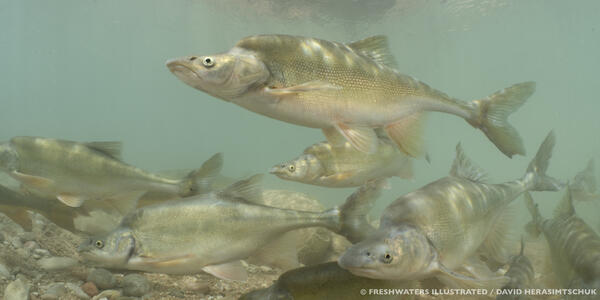
Scientists attribute the population increase primarily to warmer water temperatures, a consequence of low reservoir levels in Lake Powell, paired with a current scarcity of warmwater invasive predators in this stretch of river. Pearce Ferry Rapid, an evolving Class VI rapid that formed in 2007, acts as a partial barrier to non-native fishes moving upstream from Lake Mead, likely reducing predation pressure. A companiongenetic analysisfound negligible differences between humpback chub populations found in western Grand Canyon and Little Colorado River, and recaptures show very little movement between the two areas. These patterns are consistent with a once-continuous distribution that fragmented during the cold-water decades. While these results document an increase within this one river segment, invasive fishes remain the central concern for the future of humpback chub and other native fishes. Smallmouth bass are associated with steep declines in humpback chub abundances elsewhere in the basin. Due to high elevations of Lake Powell and cool water temperatures, smallmouth bass were extremely rare in Grand Canyon until 2022. In 2022, evidence of smallmouth bass juvenile production in Glen Canyon raised concerns that warm water conditions may allow the species to colonize and disperse farther downstream into Grand Canyon. Were this to happen, experience elsewhere suggests humpback chub would become prey to smallmouth bass, which would likely lead to population decline. To date, “cool mix” flow releases in 2024 and 2025 conducted by the Bureau of Reclamation, which are timed to discourage smallmouth bass spawning, combined with mechanical removal efforts led by National Park Service, have appeared to lead to a decline in bass in the areas where they had briefly taken hold.