NASA’s Psyche Mission Delivers Mars Flyby Data, Time-lapse Video - NASA Science
NASA’s Psyche Mission Delivers Mars Flyby Data, Time-lapse VideoThis timelapse video shows the approach, close approach, and departure of NASA’s Psyche spacecraft at Mars as it used the planet’s gravity for a. . .
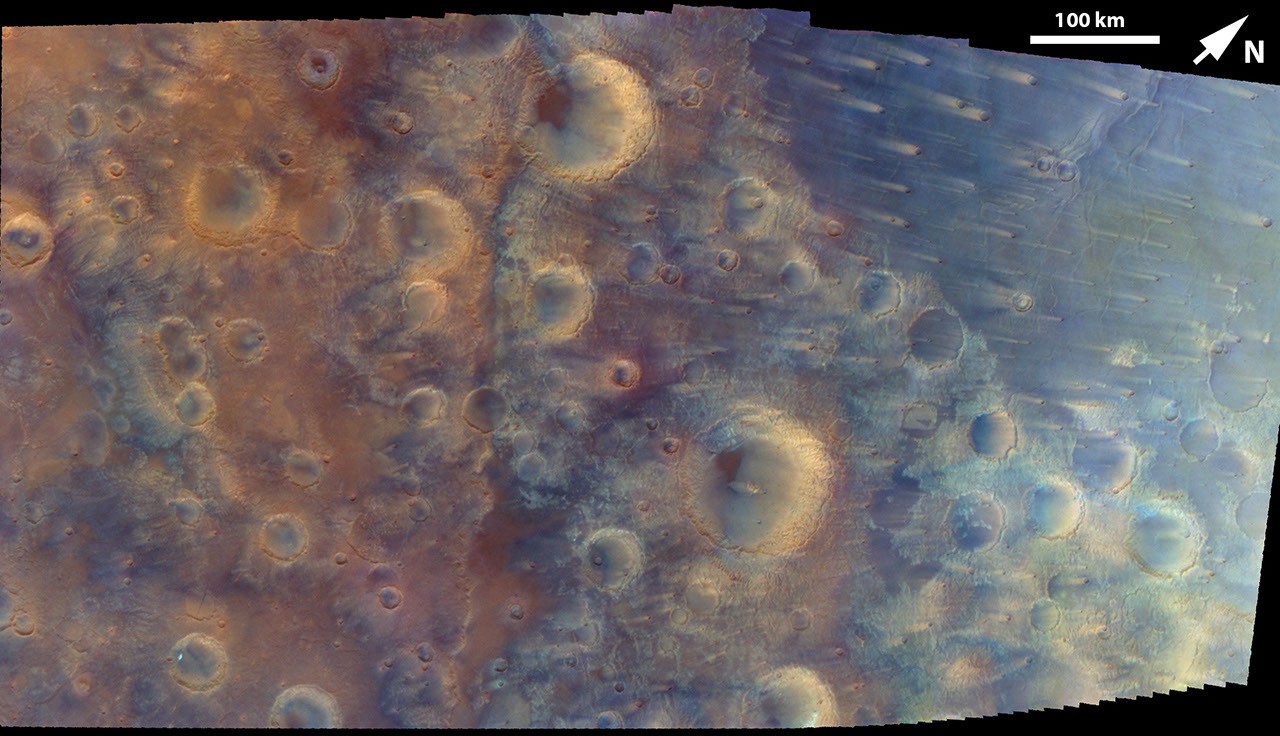
NASA’s Psyche Mission Delivers Mars Flyby Data, Time-lapse VideoThis timelapse video shows the approach, close approach, and departure of NASA’s Psyche spacecraft at Mars as it used the planet’s gravity for a boost on its way to the asteroid Psyche. Credit: NASA/JPL-Caltech/ASU/True Story FilmsNASA’s Psyche spacecraft flew by Mars on May 15, using the planet’s gravity to gain speed and slightly tilt its trajectory. The flyby also gave the team an opportunity to prep for the science they will be conducting when they reach the metal-rich asteroid Psyche in 2029. Using Mars as a stand-in for the asteroidduring the flyby, they could test the spacecraft’s science instruments. The results, downlinked and analyzed over the subsequent weeks, were impressive. Not only did the instruments operate precisely as designed, delivering data that matches what NASA already knows about Mars, they also provided a few new insights about the planet along the way. “The mission’s imager, magnetometer, and gamma-ray and neutron spectrometer teams worked overtime to make full use of this planetary encounter, and all instruments delivered great results,” said Lindy Elkins-Tanton, principal investigator for Psyche at the University of California, Berkeley. “We didn’t anticipate big discoveries, given how extensively the planet has been studied, but we did complement Mars science with the data we collected through Psyche’s unique perspective. ”This video introduces the team behind the imaging and instrument calibration efforts during NASA Psyche’s flyby of Mars on May 15, 2026. The spacecraft used the planet’s gravitational field for a valuable boost, but it was also able to do a little science along the way. Credit: NASA/JPL-Caltech/ASU/True Story FilmsPeppered by Mars neutronsThe gamma-ray and neutron spectrometer, which will help scientists determine the chemical elements that make up the asteroid’s surface material, got a real workout during the flyby. As high-energycosmic raysbombard a planetary body, the elements on the surface absorb the energy, emitting neutrons and gamma rays of varying energy levels. By measuring these emissions, scientists can match them to properties of known elements to determine what the body is made of. While the flyby altitude of 2,864 miles (4,609 kilometers) was too far away to measure gamma rays from Mars, hopes were high that neutrons escaping the planet’s surface and atmosphere could be detected. “Around the time of Mars closest approach, the neutron spectrometer detected a count-rate enhancement close to what we anticipated. It was very gratifying to see,” said David Lawrence, the science lead for Psyche’s spectrometer at the Johns Hopkins Applied Physics Laboratory in Laurel, Maryland. “As expected, we didn’t detect gamma rays from Mars, but we put the instrument through its paces, and it performed excellently. ”Magnetic MarsLike the gamma-ray and neutron spectrometer, themission’s magnetometerhas been operating since the spacecraft’s journey began with its 2023 launch. Designed to measure the asteroid Psyche’s magnetic field, the instrument will help the mission test the idea that the object is the metallic core of a planetesimal — a building block of a rocky planet. While the instrument has constantly been measuring the solar wind’s magnetic field during cruise — including when occasionalcoronal mass ejectionswashed over the spacecraft — this is the first magnetic field signature of a celestial body that the magnetometer has measured. “As the spacecraft passed close to Mars, the magnetometer saw an intense uptick in magnetic field corresponding to the bow shock region, where the solar wind slams into the planet’s magnetic field,” said Ben Weiss, Psyche’s deputy principal investigator and the magnetometry investigation lead at Massachusetts Institute of Technology in Cambridge. “This flyby calibration effort validated the instrument’s performance under dynamic conditions while also revealing the fascinating physics of planetary magnetism. ”Red Planet imagingStarting in early May and throughout the flyby, the spacecraft’s multispectral imager — a pair of identical cameras designed to photograph the surface of the asteroid in different wavelengths of light — had beendelivering viewsof Mars to the mission’sraw image feed. Because of thehigh-phase angleat which the spacecraft approached the planet, Mars initially appeared as a thin, bright crescent, with sunlight scattering through its atmosphere. During close approach, the imager team captured detailed views of the Martian surface, includingwindblown craters, thesouth polar ice cap, and the large double-ringedHuygens crater. They’re all visible in a time-lapse video that captures the monthlong flyby sequence of images. “The imager performed brilliantly, delivering some rarely seen views of the Red Planet,” said Jim Bell, the Psyche imager instrument lead at Arizona State University in Tempe. “Besides the obvious beauty of the photos, we were also able to fully test its calibration and sensitivity to scattered light, including picking out the Martian moons Phobos and Deimos from very far away as a part of a practice for the satellite search that we’ll use at the asteroid Psyche to look for any moonlets there. ”To help characterize and calibrate the imager, the team is comparing flyby images with imaging data from other missions at Mars, including NASA’s Mars Reconnaissance Orbiter, 2001 Mars Odyssey orbiter, and Curiosity and Perseverance rovers, along with ESA’s (European Space Agency’s) Mars Express and ExoMars Trace Gas Orbiter, and the United Arab Emirates Mars Mission’s Hope Orbiter. The Psyche spacecraft is now headed directly toward its target asteroid, located in the main asteroid belt between Mars and Jupiter. “This gravity assist was years in the making, and the navigation team nailed it — Psyche flew by Mars on exactly the trajectory we needed to set us on a path to rendezvous with the asteroid in the summer of 2029,” said Bob Mase, Psyche’s project manager at NASA’s Jet Propulsion Laboratory in Southern California. “The spacecraft is in great shape, and we’re on schedule to resume sustained thrusting with thesolar-electric propulsion systemlater this fall. ”