Roundtable debrief: From exposure to resilience: how businesses are responding to Middle East supply chain & energy disruptions - St. Gallen Symposium
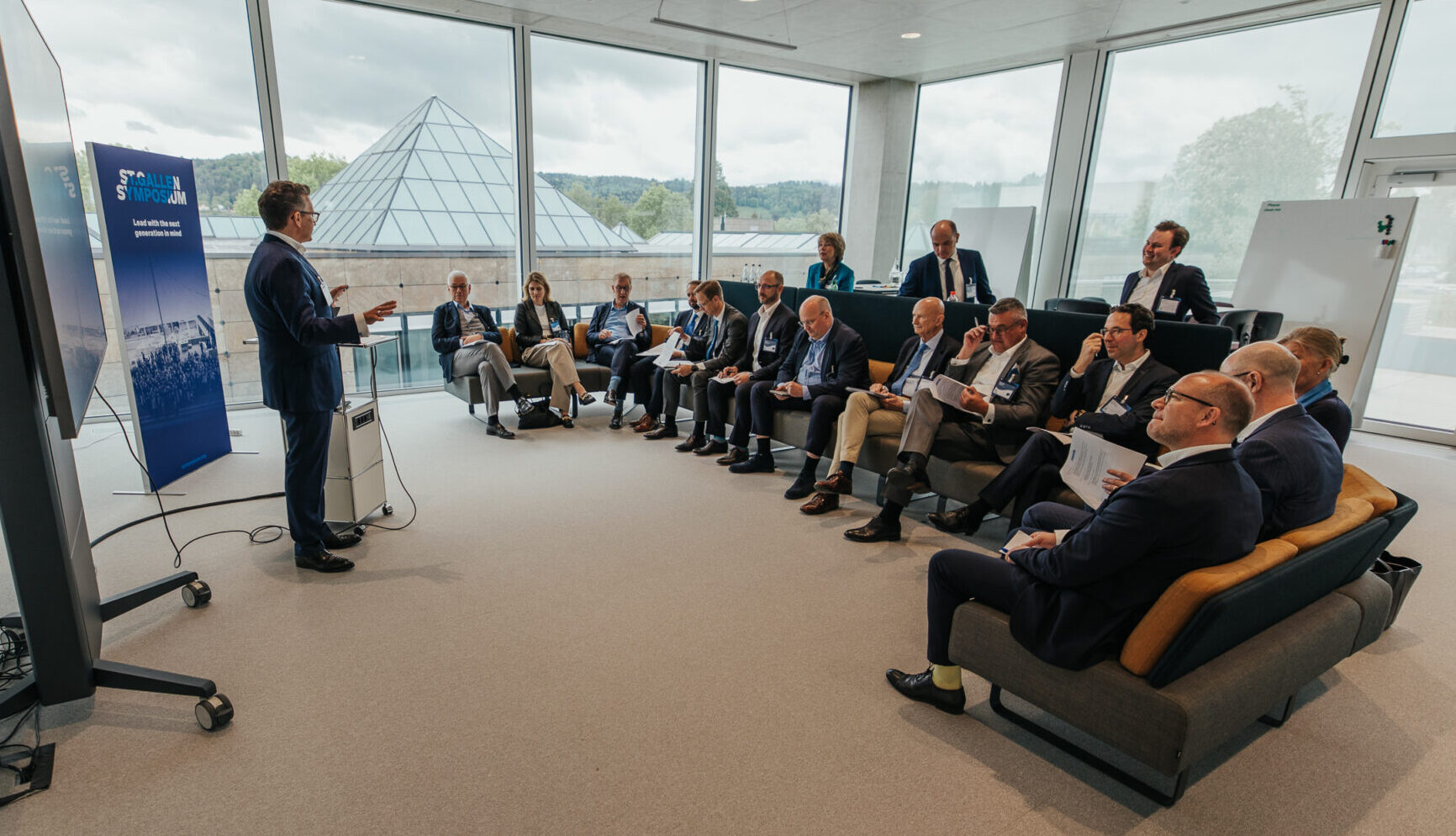
By Nikolaus Lang, Cristian Rodriguez-Chiffelle and Thomas Gratowski BCG hosted senior executives at the St. Gallen Symposium in early May to discuss the business impacts of the conflict in the Middle East. Given the importance of the region for global energy and logistics, the roundtable provided a platform for discussion about companies’ exposure to the conflict as well as their immediate […]
, Cristian Rodriguez-Chiffelle and Thomas GratowskiBCG hosted senior executives at the St. Gallen Symposium in early May to discuss the business impacts of the conflict in the Middle East. Given the importance of the region for global energy and logistics, the roundtable provided a platform for discussion about companies’ exposure to the conflict as well as their immediate responses and longer-term repositioning strategies. Talking to leaders from a wide range of companies, it became clear that the conflict is affecting businesses differently—a function of their industry and global footprint, among other factors. Nonetheless, the conversation crystallized many common themes that we aim to share here for a wider audience. ParticipantsProf. Nikolaus S. Lang–Global Leader, BCG Henderson Institute Thomas Gratowski– Insights Director, BCG Center for Geopolitics Cristián Rodríguez-Chiffelle– Partner & Director, Trade, Investment & Geopolitics, BCG H. S. H. Prince Michael of Liechtenstein– Executive Chairman, Industrial and Financial Establishment (Industrie- und Finanzkontor Ets. ); Co-Founder, International Institute of Longevity Thomas Harring– Group EVP, Hexagon Marco Tagliapietra– Director of Strategy Operations, Philip Morris International Anna Reindl– Head of Strategy, Tengelmann Twenty One Dr. Ann-Veruschka Jurisch– Member of the German Parliament (2021–2025); Secretary-General, Spectrum Value Management Eric Schöller– CEO, Groz-Beckert KG Dr. Christian Mumenthaler– Fmr. Group CEO, Swiss Re; Multiple Board Member Michael Ruesch–Head Switzerland, Benelux, Nordics & Italy, Swiss Re Prof. Christoph Lechner– Professor of Strategic Management, University of St. Gallen Andreas Kirchschläger– Founding Partner & CEO, elea OlofEngelbrekts– Head of Investment Banking Switzerland, Bank of America Dr. Jürgen Wigger– CEO, BEWITAL petfoodExposureThe 2026 conflict in the Middle East is not the first geopolitical challenge affecting business in recent years. In fact, there is a sense among business leaders of a “polycrisis,” meaning this conflict has been just the latest in a series of shocks. But no one denied that the Middle East conflict has its distinct effects on the business landscape. While only a few companies present experienced the physical destruction of assets in the region, many noted the direct effect on Middle East economies. Disruptions toenergy flows and logisticshave had repercussions beyond the region. In some cases, the (temporary) closure of both the Strait of Hormuz and of the region’s airspace led to direct supply bottlenecks and disrupted export routes. Energy and input prices, such as for fertilizer, had risen sharply and could face further upward pressures in coming months and impact a wider range of sectors. Participants also expressed concern about the second-order effects of higher energy prices. Changedinflation expectationswould cloud consumer sentiment and reduce future demand. Some participants even highlighted that the global economic impacts increased the risk of political instability, which in turn could lead to disrupted operations in heavily affected countries, for instance in Asia. Some European firms also reported rising competition from foreign companies with access to cheaper energy or Russian airspace for alternative routing. ResponseMany participants described how they had established crisis response units to deal with the immediate challenges from the conflict. Their response aimed at stabilizing operations in the medium term clustered around three priorities:Cost controlbecame an urgent focus. Business leaders reported the need to renegotiate supplier terms or change or diversify suppliers altogether to save cost and reduce exposure to further disruption. Executives took contrasting approaches inpreparing for a prolonged conflict. Companies in lower-margin industries emphasized the need to build liquidity buffers even if that meant cuttinginventory levels or investment. Other executives explained they were increasing the stock of goods that could face greater disruption ahead. Companies turned tonew logistics corridorsfor Europe-Asia trade. For instance, new air cargo routes have been established via Africa and the Americas, while alternative transshipment hubs have also gained in prominence. These new corridors have added time and cost but have largely ensured business continuity. RepositioningBusiness leaders differed on whether the conflict would lead to a structural repositioning of their businesses, with the longer-term discussion centering on building structural resilience. Some businesses had already startedshifting value chains, reconfiguring their manufacturing footprint, localizing production and relocating talent from conflict-affected areas to third countries. While these moves were driven by immediate necessity, some companies expected them to prove sticky, potentially reshaping sourcing and manufacturing strategies over the longer term. Looking ahead,reshoring and automationwere seen as increasingly prominent themes in major investment decisions, potentially triggering a shift in the role different regions play in manufacturing and logistics. There was a widely held view that businesses should leverage the strengths of Europe, and of Switzerland in particular. Some business leaders emphasized theneed to adaptto the crisis without foreseeing a wider repositioning. But across participants was a widely felt consensus that flexibility, speed, and the ability to adapt quickly under sustained uncertainty would in future be more important than maximum efficiency. Lastly, many participants also emphasized the need to buildinternal geopolitical capabilityas a permanent organizational muscle, not just an ad hoc response. Managing risk, responding to crises, and embedding geopolitics into corporate strategy require structured tools: scenario planning, trigger-based decision frameworks, and increasingly AI-powered monitoring systems. We ourselves havewrittenandtalkedabout the need to build geopolitical muscle. ConclusionThe discussion made clear once again that businesses are not just exposed to crises, but can turn how they react to them into a competitive advantage. The companies best positioned to do so are those that act across all horizons: swiftly identify business exposures, stabilize operations for the medium term, and build the structural resilience and geopolitical capability to navigate future disruptions. With the right scenarios and actionable plans in place, the difference between companies that weather disruption and emerge stronger and those that don’t often comes down to preparation. The exchange at the Symposium offered participants valuable perspectives on how to do so. We would like to thank Vinzenz Eisl from the St. Gallen Symposium for his contributions. Dr Nikolaus S. Lang is a Managing Director and Senior Partner in BCG’s Munich office and has been working for the firm since 1998. Nikolaus is the global leader of theBCG Institute, BCG’s think tank, global vice chair of BCG’s Global Advantage practice, and chair of theCenter of Geopolitics. Cristián Rodríguez-Chiffelle is Partner and Director at BCG, specializing in trade, foreign direct investment, and geopolitics. Previously, he served as CEO of InvestChile, the nation’s foreign investment promotion agency. Thomas Gratowski is Insights Director at BCG’s Center for Geopolitics, providing thought leadership and advice on the business impacts of geopolitics. He was previously head of macro and geopolitics at a boutique advisory firm.