Science Fiction is about Science, Right?
Apologies, this post is a bit of a term-paper and many readers may already know all I talk about below. I can only plead that as a writer of science fiction, I’ve lately been uncertain about a cert…
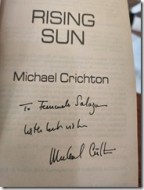
Apologies, this post is a bit of a term-paper and many readers may already know all I talk about below. I can only plead that as a writer of science fiction, I’ve lately been uncertain about a certain question, and so I thought I should get it all clear in my mind. That question is …What exactly is Science Fiction?Once upon a time no one thought to ask this question, because no one thought of “science fiction” as a thing. While Aristotle did classify literature into three types:Epic, Tragedy and Comedy, before the 20thcentury,genreas we know it – a classification based on subject matter and style – did not exist. With the rise of pulp magazines, and then paperbacks, a need emerged to classify things for reading customers, as described inthis paper. The genre system was an obvious commercial necessity. There were many works published in the early 20thcentury we understand to be science fiction, likeThe Machine Stops(1909) by E. M. Forster, orRossum’s Universal Robots(1920) by Karel Čapek – Wikipedia has a great article onthe timeline of science fiction. But as good a starting point as any for the “birth” of SFas a genreis 1926, the year thatHugo GernsbackstartedAmazing Stories– Gernsback coined the term “science fiction”. I daresay in Gernsback’s time there was zero question about what SF was – it was whatever Gernsback published. The attributes he most emphasized were these:·Technological Optimism. This was an Edison-ian attitude that we would build better and better versions of things we had: cars would go faster, then fly; airplanes would go faster, then go to space. ·Adventure. SF stories had to have exciting problems and enemies, and personal danger. The hero was almost always a scientist or a gadget-savvyMacGyver-type. ·Colonialism. Of course, Gernsback didn’t see it this way, but in his conception aliens and their worlds were to be conquered or assimilated. If all you know about Science Fiction is Star Wars, you could well think Gernsback’s thinking is still the definition of SF. But a lot of stuff has happened since 1926. The Ages of Science FictionScience Fiction fans and writers recognize acanonical evolution of science fiction:The Radium Age: 1900 – 1940The Gernsback era as I outlined above. Above and beyond Amazing Stories, representative works includeThe Scarlet Plague(1912) byJack London, Last and First Men (1930) byOlaf StapledonandBrave New World(1932) byAldous Huxley. The eighty or so years before this age was truly a seminal period, not just for sci-fi, but for two important movements: modernity and romanticism. Frankensteinwas published in 1818, setting the seed for the idea that man, not God, was the master of creation, if only he/she could figure it out. In 1830, Tennyson publishedThe Kraken, 15 lines that amazingly capture the vibe thatVernewould employ in20,000 Leagues Beneath the Sea(1870). 19th century moderns likeComteandMarx, together withRomanticslikeShelleyand later the VictorianTennysoncreated a point of view of the world both as an empirical system, but also as a sprawling epic – foundational traits of SF stories. The Golden Age: 1940 – 1960This is the age boomers like me think of when we think of SF. I was 14 when I readAsimov’s Foundation– borrowed from a classmate – and I was hooked. That was the late 60s and the“Big 3”– Asimov, Heinlein and Clarke – were considered the defining writers of the genre. I read all of Asimov, a lot of Clarke, and much of Heinlein. At this time, all SF was what today we would call “hard”, but there was also an even-more technical contingent typified byHal Clement, and by the infamous storyThe Cold Equations(1954), where a stowaway girl must be put out the spaceship’s airlock because, you know, maths. Writers of this age were all very different, but in my view a common quality in writing of this time is,the characters were not very interesting. Mostly they tend to be vehicles for the author’s argument. For exampleSalvor Hardinfrom The Foundation Trilogy is certainly an active character, making key decisions and actions in the early phases of the Foundation. But when I tried to re-read the book 5 years back, I got no sense that Hardin had any personal goals or independent will – he just fortuitously makes the moves Asimov wants. New Wave: 1960 – 1980Starting in the 60s, SF started exploring themes intended to do more than entertain, but to express big ideas and perspectives, generally not in line with the techno-optimism of the Golden Age. My cover-pick here is a favorite of mine,Lord of Light(1967) byRoger Zelazny; its a cool adventure to be sure, but it also takes on the idea of religion as a tool to dominate society; on top of that its characters are full of doubts and uncertainties, unlike the automatons of Asimov. But pardon me for not leading with the recognized exemplar of New Wave SF,Dangerous Visions(1967), 32 stories edited byHarlan Ellison. I won’t try and summarize that for you – an excellentvideo on this work is here. Beware if you decide to read this … all of the stories are quirky to say the least, and to my mind many are now dated. But they are all clearly a break with what came before. In my view, the most important New Wave SF authors are women:Ursula K. LeGuin, author ofThe Left Hand of Darkness(1969),The Word for World is Forest(1972), and many others;Joanna Russ, who wrote theThe Female Man, 1970; andJames Tiptree, Jr. , pseudonym of Alice Sheldon, her works includeUp the Walls of the World(1978), the noveletteThe Women Men Don’t See(1973) and many more. I first read Tiptree in the early 80s, when her identity as a woman was just becoming widely known, and I was amazed – not that she was a woman, but how good her writing was compared to other stuff I had been reading. To me, her stories have an economy and directness that resonates. The major contribution of women to New Wave makes sense, when you consider how previous ages did so much glorification of male power. The importance of the New Wave can’t be understated – I’ll get back to it towards the end. Cyberpunk: 1980 – 2000In 1982 I got anApple //epersonal computer and aCompuServeaccount. In 1992Michael CrichtonpublishedRising Sun, a murder mystery set in the intersection of American and Japanese high-tech industries. 1982’s filmBlade Runnerimplicitly showed Japanese culture “winning” out over the west – that Japan was going to become the predominant world technological power was a prominent theme of the time. This is the era ofCyberpunk, an outgrowth of the New Wave that emphasized near-future dystopia and particularly the power and danger of information technology, mostly with gritty, noir-style characters and plots. Gibson’sNeuromancer(1984) is the most-cited canonical cyberpunk work: a criminal hacker gets caught up in a plot to create a super AI and meets along the way spies, super-soldiers, space Rastafarians and more. There’s a case to be made that cyberpunk is the most culturally influential type of Sci-fi: Blade Runner,Cowboy Bebop,Ghost in the Shell,The Matrix,Max Headroom, and many more – all cyberpunk. BTW, I have an autographed copy of Rising Sun – Crichton sent it to me as payment for using a computer program I wrote in 1989 calledBatFilerand marketed asshareware, a pay-what-you-think-is-reasonable scheme. Here’s proof:End of History: 1990-2000+What this “age” means is that since the late 90s, sci-fi has gotten too diverse to say there’s a single defining theme. The cover I picked for this one, byAdrian Tchaikovskyis hard SF with a problem-solving core – its like a Golden Age book, but with better characters and craft. But I could have pickedAll Systems RedbyMartha Wells, wherein a deadly android achieves free will and decides to spend its time watching soap-opera like space TV shows; Murderbot books vibe on anti-capitalism and the existential dread that many Gen Z people feel. Or I could have pickedAncillary JusticebyAnn Leckie, where an AI starship seeks revenge against an evil empire for causing the death of its captain – aside from the political aspects of the book, it is also an exploration of personhood. Finally I might have pickedYou Sexy Thing, byCat Rambo, where an ensemble cast try to run a restaurant, flee from a malicious hyper-intelligence, rescue a space princess, and more – this iscozy sci-fi. This is where SF is today, many sub-genres, from hard, to SF thriller, to mainstream (thinkAndy Weir) to SF mystery to cozy to space opera and more. Wasn’t This Post About a Question?I started this entry with the question,“What exactly is Science Fiction?”One reason fans and writers keep debating this is the dramatic evolution of the genre, over the ages as I’ve summarized. Ever since Sherlock Holmes, detective stories are detective stories – there’s a crime, a detective, and in the end the mystery is solved. Yes, mysteries of today differ in tone and style; there’s a lot less ofAgatha Christie’s insufferably improbably murder methodsand a lot more psychological tension for detectives. But no one obsesses about different “ages” of the mystery genre. SF changing so much is a natural driver of questioning the genre itself. Just one facet of this debate was the so-called “Sad Puppies”, a right-wing campaign centered on theHugo Awardsthat intended to drive the idea that the only valid definition of Science Fiction was that of the Gernsback Era. The Sad Puppies essentially argued, “SF is a thing that has these attributes – you guys write whatever you want but don’t call it SF. ” While I completely oppose their politics, inasmuch as there is some nostalgia in the Puppies’ ravings, I get it. Early SF had implicit colonialism and sexism, but it also had praiseworthy ideas as well – I don’t want to see those works blithely cancelled. At the same time, our whole culture has evolved. In theWestern genre, compare stories likeThe Searcherswith its disempowerment of indigenous peoples to today’sDark Winds, a series featuring Navajo tribal policeman Joe Leaphorn. I don’t see any groups of westerns fans demanding a return to the racist good old days. There’s also a constant flow of less-political debates happening, such as the evergreen “Is Star Wars Science Fiction or Fantasy?” debate, or the “Speculative Fiction vs. Science Fiction” debate. Again, this is because SF is so protean – it’s human nature to want categories to be easily identifiable, and as I’ve tried to show, SF ain’t that. I’ll just get to my view on this question:The best science fiction is that which emerged in the New Wave – stories that offer a point of view abouthow the world works. “World” includes humans, culture, economics, the whole shebang of life. Yes, it will have characters, hopefully interesting ones. And it will be about the future, because then the story can posit any sort of situation, unlimited by known history, to frame its thesis. And finally, it will have science in it, because science is what drives us to both continually question the world around us, and to react to the answers that science uncovers. SF isnotabout the human conditionper se, or the irony of personal existence, or what is the best way to individually live – it is about the world we all live in, today – its laws, properties, dangers and rewards. Duneis a story about an empire, an oppressed people, giant worms, interstellar travel and more. But what it is really doing is telling us a lesson about the world:charismatic leaders are dangerous. Neuromancerhas super-computers, hackers, and pre-figured the ultra-connected world of today. But it is really about thedanger of corporations and the wealthy wielding unchecked power. The Dispossessedtells a story about the pursuit of scientific truth, and a clash of different planets, but its message is,there is more than one good way to organize a society. And more recently,The Three Body Problempresents ultra-advanced science, militant aliens, and a battle for survival that spans centuries – but its message isa collectivist society is better than an individual-driven capitalist one. Like I said, these important books give a point of view about the world – that doesn’t mean each one is true. I don’t discount SF-as-entertainment. Back in the day I really enjoyedKeith Laumer’sbooks about galactic diplomatJame Retief; and my own most favorite SF author,Jack Vance, master of genre writing, is much more of the Golden Age than New Wave or later. Then there’sHitchhiker’s Guide– yes, it has ironic observations (in the British style) about the absurdities of life, but c’mon …it’s funny. But I can get plain old entertainment anywhere. With SF I increasingly find I want more – more when I read, and more when I write. Consider the first paragraph ofThe Dispossessed, by LeGuin:“There was a wall. It did not look important. It was built of uncut rocks roughly mortared. An adult could look right over it, and even a child could climb it. Where it crossed the roadway, instead of having a gate it degenerated into mere geometry, a line, an idea of boundary. But the idea was real. It was important. For seven generations there had been nothing in the world more important than that wall. ”From the first line, LeGuin hits us not with just a description, but with anidea– the wall is bigger, more important than it seems. That make me want to read more, to get to the bottom of this idea and see what it means and where it leads – to yet more ideas, I expect. Till next time …