The Middle East's greatest killer is not what you think
When considering the forces claiming lives across the Middle East and North Africa (MENA), minds inevitably turn to warfare and terrorism. Yet the region’s most prolific killer does not carry a weapon. Its methods are salt, sugar, and sitting. The numbers are staggering. Cardiovascular disease kills approximately 1. 4 million people in the region every year; […]
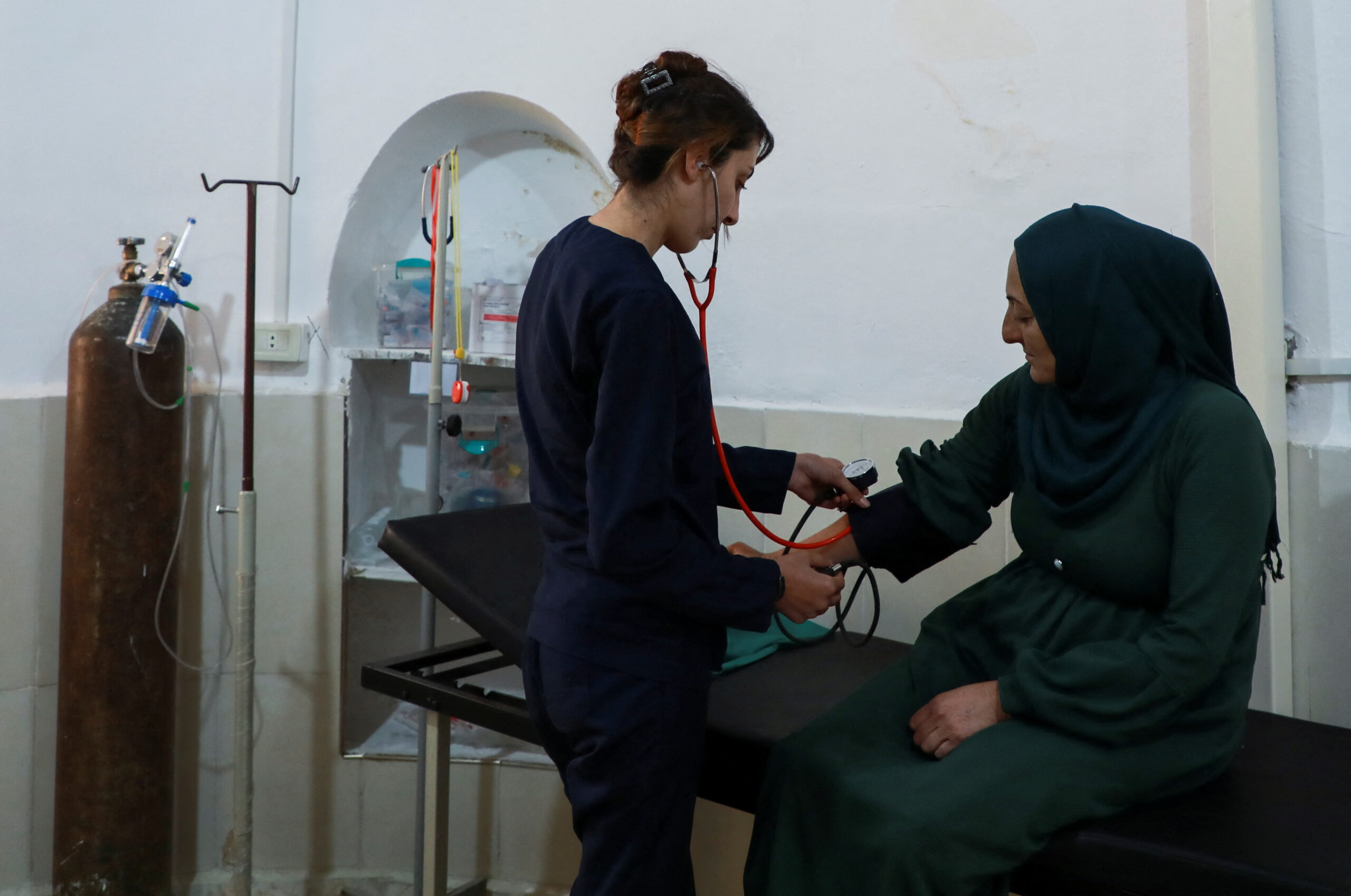
When considering the forces claiming lives across the Middle East and North Africa (MENA), minds inevitably turn to warfare and terrorism. Yet the region’s most prolific killer does not carry a weapon. Its methods are salt, sugar, and sitting. The numbers are staggering. Cardiovascular disease kills approximately1. 4 millionpeople in the region every year; diabetes adds796,000deaths to the toll. These so-called non-communicable diseases, along with others like stroke and mental illness, account for74 percentof regional mortality. I use the term “so-called” intentionally. Asmy colleagues and I have recentlyargued, a disease may not spread through a biological pathogen, but the risk factors largely driving their epidemic spread—in this case unhealthy diets and physical inactivity—are socially contagious. Social propagation through virtual and physical networks can be quantified and modulated in ways strikingly analogous to infectious disease prevention. This reframing opens a rare opportunity for global health diplomacy: regional and international cooperation around the surveillance, prevention, and management of cardiometabolic diseases should be pursued with the same diligence that one would apply to a biologically infectious disease outbreak. One can look to thePresident’s Emergency Plan for AIDS Relief (PEPFAR), which by some estimates saved25 million lives, as a model for what coordinated political will can achieve. Strategic investments in disease prevention, continuous monitoring, weight-loss medications, meal modification, smarter city planning, and increased physical activity are simple, relatively inexpensive ways to move the needle for millions of people who struggle with cardiometabolic diseases. SIGN UP FOR THIS WEEK IN THE MIDEAST NEWSLETTERIf this crisis goes unaddressed, the consequences will be devastating. Diabetes alone is projected to cost the region$1. 5 trillionannually by 2050. But this economic toll is only the beginning; the cardiometabolic crisis has also become a self-reinforcing driver of regional instability. Amid decades of carnage and conflict, leaders desperately need to shore up domestic support by delivering on a new social contract, and this public health crisis sits at its center. AsInternational Monetary Fundresearchhas demonstrated, economic inequality in the region during the 2000s was moderate and even declining in certain areas, yet protests and revolutions erupted anyway, producing a million deaths, displacing ten million people, and sending shockwaves through Western Europe. One convincing explanation for this phenomenon lies in the declining quality of public services, notably healthcare. Despiteimprovementsin life expectancy over the decades, citizens nevertheless held their governments responsible for preventable deaths, burdensome illness, and lost livelihoods that are often associated with cardiometabolic diseases. Pollingdata collected before the Arab Spring ranked healthcare as one of the top public concerns. For many, the social contract was shattered by the daily indignity of watching loved ones suffer and die from largely preventable diseases. The lack of preventative health care systems, adequate educational programming, monitoring and surveillance infrastructure, appropriate medication and clinical care, plays out most painfully at the household level. Avoiding cardiometabolic diseases requires inexpensive changes to dietary and lifestyle behaviors. By contrast, managing cardiometabolic diseases requires costly lifelong medication and monitoring by patients, families, and specialists. In a region where nearly38 percentof diabetic individuals remain undiagnosed, the physical and financial reckoning often arrives too late to prevent serious, irreversible damage. Research consistentlyshowsthat households dealing with noncommunicable diseases face a significantly elevated risk of catastrophic health expenditures. It is younger generations who bear the compounded burden of this. Youth unemployment in MENA has stubbornlyrefusedto fall below 25 percent for a quarter of a century, and the cardiometabolic epidemic is quietly worsening that picture. MENA has the world’shighest shareof diabetes deaths among working-age people under age sixty, robbing households of their primary earners when they are needed most. With governments already financially overwhelmed by health and security costs and unable to generate sufficient employment, frustrated youth with diminishing faith in their institutions become prime targets for the extremist organizations and destabilizing forces that thrive on disillusionment. This is compounded by conflict. Twelve MENA countries arecurrentlyfacing active humanitarian crises, where health systems overwhelmed by trauma and mass displacement have virtually no remaining capacity for chronic disease care. When supply chains collapse and health professionals flee, historically manageable conditions turn catastrophic, communities lose faith in whatever governing authority remains, and the foundations needed for reconstruction are eroded . There is, nonetheless, genuine cause for optimism. This is a preventable catastrophe and a natural space for robust regional and international cooperation. Thetoolsalready exist and are growing more powerful as artificial intelligence disrupts the fields of medicine and public health. Economicanalysisshows that scaling up World Health Organization–recommended noncommunicable disease interventions—reducing smoking, alcohol consumption, unhealthy diets, and sedentary lifestyles—across GCC countries would return $4. 90 for every $1 invested, averting roughly 290,000 premature deaths. What remains missing is the political will, regionally and internationally, to treat cardiometabolic diseases with the same urgency applied to infectious outbreaks and national security threats. The international community must draw on the lessons ofPEPFARand mobilize a global coalition of governments, pharmaceutical companies, medical device manufacturers, payers, providers, and most importantly the citizens of these countries. MENA’s greatest killer travels through behavioral networks of family, friends, and strangers, arriving quietly at the dinner table, in the taxi driver’s seat, at the office desk, and through personal devices. It is long past time leaders treat it accordingly—as the socially contagious, politically destabilizing, and largely preventable weapon of mass destruction that it is. Daniel E. Zoughbie, DPhil, MSc is an associate project scientist at the Center for Global Health Delivery, Diplomacy, and Economics at the UC Berkeley School of Public Health; a faculty affiliate of the Institute of International Studies at UC Berkeley; and a faculty affiliate at the New England Complex Systems Institute. He is the author ofKicking the Hornet’s Nest: U. S. Foreign Policy in the Middle East from Truman to Trump. This article is supported by Roche. The author is solely responsible for the article’s analysis and recommendations. Image: A nurse checks the blood pressure of a woman at a health clinic in Jinwar, an all-women village, in Al-Darbasiyah town that is controlled by Kurdish-led Syrian Democratic Forces, northeastern Syria, March 11, 2023. REUTERS/Orhan Qereman