What Does Science Say When “the Science” Refuses to Speak?
In a recent U. S. Senate hearing, Dr. Anthony Fauci refused to answer questions about his scientific views on theCOVID-19pandemic by invoking his Fifth Amendment right against self-incrimination. This is. . .
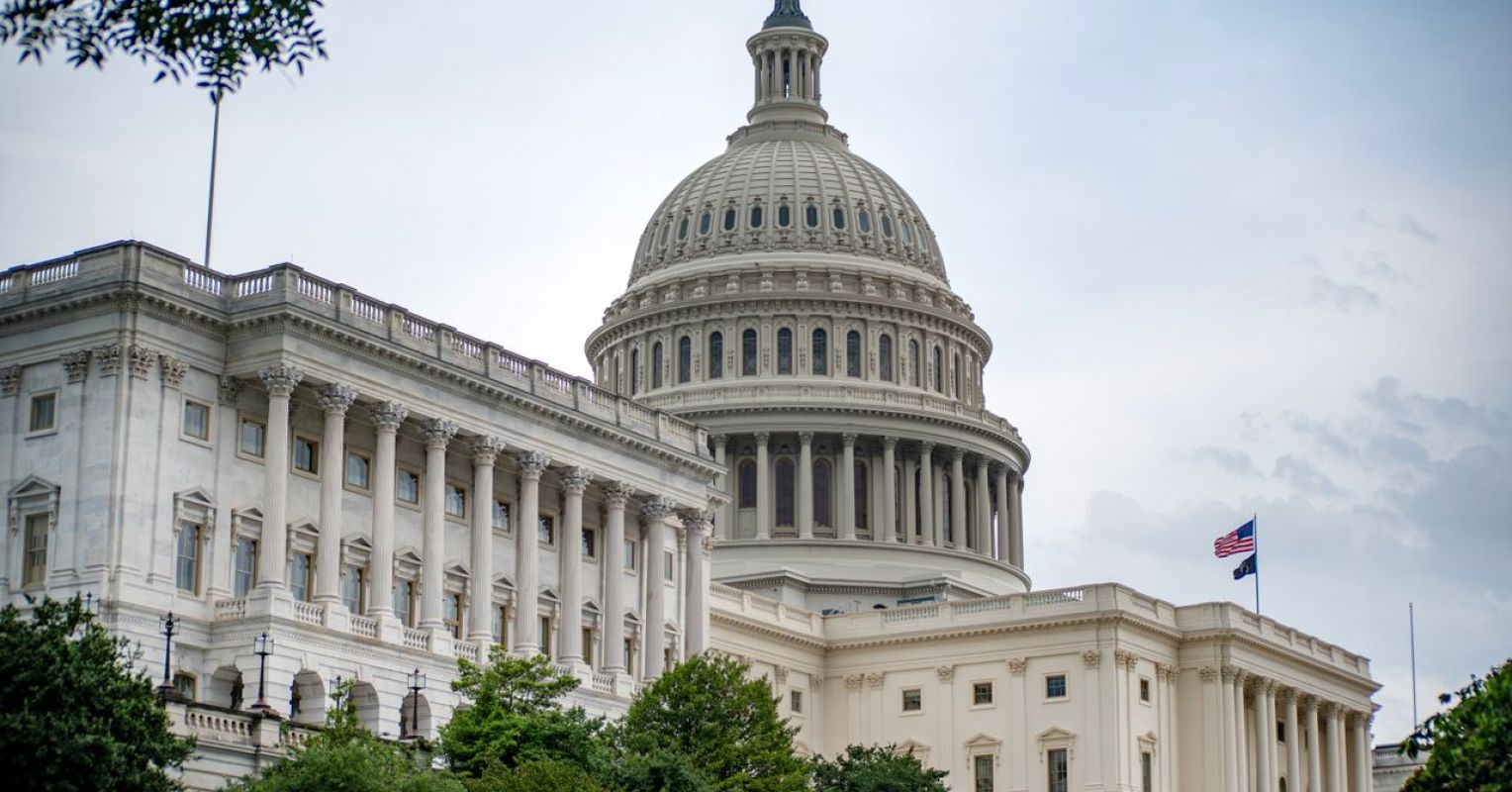
In a recent U. S. Senate hearing, Dr. Anthony Fauci refused to answer questions about his scientific views on theCOVID-19pandemic by invoking his Fifth Amendment right against self-incrimination. This is certainly understandable in the current hyper-charged political environment: Dr. Fauci explicitly stated he believed one purpose of the hearing was to legally ensnare him for subsequent criminal charges despite having been granted a broad pardon from President Biden. From the outset, several key points should be stipulated. First, Dr. Fauci has unique scientific knowledge on the origins of COVID-19, how vaccines were developed and implemented, how treatments were developed and implemented, and on how public health recommendations in response to the pandemic were generated and promulgated. Far from being a chess piece in a partisan political game, this knowledge and testimony is vital for informing and formulating discovery and policy recommendations for the next pandemic and is needed to rebuild public trust in science. Second, although Dr. Fauci has a moral if not legal obligation to present his findings, his testimony should not be coerced or extracted under threat of criminal prosecution. It is also crucial to stipulate that when the pandemic was unfolding, decisions had to be made while utilizing emerging and incomplete data: Imperfect knowledge will sometimes yield incorrect conclusions and recommendations. Indeed, this latter stipulation is precisely needed to ensure that mistakes are minimized in future pandemic response policy. Dr. Fauci's Questioning and Galileo’s InquisitionLessons from another famous episode when a prominent and controversial scientist was compelled to testify may be instructive. As in modern times, the capital city was abuzz with news and opinions regarding an upcoming hearing. But the hearing was in Rome in 1633 and was focused on Galileo Galilei. The questioning body was the Roman Inquisition, and unlike the U. s. Senate, the Inquisition could (and sometimes did) recommend that civil authorities conduct executions and burn people at the stake. The context of the Galileo hearing was a scientific and religious debate between the geocentric (earth-centered) and heliocentric (sun-centered) models of the solar system. In the early 1600s, Galileo replicated the findings of Nicolaus Copernicus and thereby contradicted the widely accepted centuries-old earth-centered models of venerated scientific geniuses such as Aristotle and Ptolemy. Perhaps worse, this conclusion ran afoul of widely accepted theological teachings, which placed humans as the center of a God-created universe (and solar system). To argue otherwise was viewed as heretical. After testifying, Galileo avoided execution but was sentenced to house arrest for the rest of his life, although only after being compelled to publicly retract his scientific findings. This tension between scientific integrity and political (and criminal) reality creates a crucial conundrum because one can compellingly argue that the U. S. —and the world—need unencumbered, forthright testimony from the scientist who knows the most about the scientific origins of COVID-19—and the data driving public health decisions made in response to the pandemic. Bear in mind that in previous senate testimony as the pandemic was unfolding, Dr. Fauci was forthcoming, fearless, and at times even confrontational in defending the scientific basis of his decisions in the name of science. The Dangers of Undermining ScienceIndeed, Dr. Fauci explicitly described his guidingphilosophyas the most prominent scientist leading the U. S. (and in some ways, the worldwide) response to the COVID-19 pandemic during an interview on “Face the Nation” on Nov. 28, 2021:But you're talking about systems, you're talking about the CDC, you're talking about the FDA, you're talking about science in general. So, if they want to—I mean, anybody who's looking at this carefully realizes that there's a distinct anti-science flavor to this. So, if they get up and criticize science, nobody's going to know what they're talking about. But if they get up and really aim their bullets at Tony Fauci, well, people could recognize there's a person there. There's a face, there's a voice you can recognize, you see him on television. So, it's easy to criticize, but they're really criticizing science because I represent science. That's dangerous. The final portion of this quote is worth highlighting:I'm not going to be around here forever, but science is going to be here forever. And if you damage science, you are doing something very detrimental to society long after I leave. And that's what I worry about. That is what every scientist past, present, and future should be worried about. It is our responsibility, as scientists, to publicly present our findings, even in the face of adversity. Accepting criticism is part and parcel of what it means to be a scientist. Scientists should rightly anticipate persecution in the arena of ideas and policymaking but not prosecution in a criminal arena. Controversy and Debate Are Inherent to Scientific ProgressThe current passionate scientific—and political—debate over scientific findings and their societal impacts are hardly new. In his bookThe Demon-Haunted World: Science as a Candle in the Dark,[2] astronomer Carl Sagan provides a masterful and persuasive review of how scientific findings—and scientists—are often controversial and contentious precisely because their theories and discoveries frequently conflict with “conventionalwisdom” and popular beliefs. One could argue that Dr. Fauci has a compelling self-interest to avoid Galileo’s fate of being placed under arrest and should protect himself. On the other hand, he also has a responsibility to publicly explain his findings anddecision-making, including when mistakes were made, and answer questions about his recommendationsafter the threat of coercion is explicitly removed. Science can only advance when new data and findings, including errors, are dispassionately and objectively reviewed. We can all hope that the authorities and Dr. Fauci (and his attorneys) can reach consensus on terms that no longer result in his “pleading the Fifth” in the face of scrutiny (or dare we say, an inquisition). The current impasse is no doubt “damaging science” and “doing something very damaging to society. ” Dr. Fauci does indeed “represent science,” for better and for worse, and should be afforded every opportunity to report his findings in order to illuminate to the U. S. and the world on the inputs and processes utilized during the COVID-19 pandemic response. ReferencesTranscript: Dr. Anthony Fauci on CBS "Face the Nation," November 28, 2021. cbsnews. com/news/transcript-dr-anthony-fauci-on-face-the-nation-november-28-2021/ Accessed August 3, 2026. Sagan, Carl, and Ann Druyan. The demon-haunted world: Science as a candle in the dark. Ballantine books, 1997.